
- Home
- Articles
- canada saskatchewan
- bacterial strain
Bacterial Strain Articles & Analysis: Older
10 articles found

Nitrogen compounds are a crucial aspect of pharmaceutical chemistry, particularly in the development of antibiotics. Their unique chemical properties, including the ability to form multiple hydrogen bonds and engage in various interactions, make them indispensable in the fight against bacterial infections. This article delves into the application of nitrogen compounds in antibiotic research and ...

Technological advancements and innovative research have continuously led to the discovery and development of new methodologies in the field of biological and medical sciences. One such breakthrough discovery is bacterial genome editing, which opens a new world of opportunities and challenges in the field of biotechnology and genomics. Understanding Bacterial Genome Editing Bacterial genome ...

Trillions of microorganisms live in the gastrointestinal tract, far outnumbering the body's own cells. The intestinal flora is involved in many physiological and pathological processes in the host, including digestion and absorption of food, metabolism of certain nutrients and pharmaceutical compounds, development of host immunity, intestinal inflammatory states, and more. Dysbiosis of the ...
Technological advancements and innovative research have continuously led to the discovery and development of new methodologies in the field of biological and medical sciences. One such breakthrough discovery is bacterial genome editing, which opens a new world of opportunities and challenges in the field of biotechnology and genomics. Understanding Bacterial Genome Editing Bacterial genome ...

In recent years, the increase in the number of multi-drug resistant pathogens and food safety have become serious global problems, and it is increasingly important to find or develop a new generation of antibacterial drugs or preservatives. Scientists have discovered that bacteria-produced bacteriocins can control clinically relevant susceptible and resistant bacteria, and purified bacteriocins ...
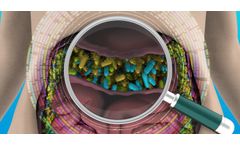
The gut is a complex ecosystem that contains an extremely large community of microbes known as the gut microbiome. The gut microbiome is made up of bacteria, archaea, viruses, fungi, and other eukaryotic microorganisms, including yeasts, flagellates, ciliates, and protozoa. The gut microbiota of a healthy individual consists of six phyla (Firmicutes, Bacteroidetes, Proteobacteria, ...

Can you imagine a world in which antibiotics no longer work? Almost a century after Alexander Fleming’s discovery of penicillin in 1928, the era of life-saving, life-enhancing antibiotics may be coming to an end. Antibiotics, able to effectively treat bacterial infections in humans, animals and plants, have enabled some of the greatest advances in modern medicine. Now, however, the ...
A novel bacterial strain Klebsiella sp. Y1 was isolated from the soil of a constructed wetland, and it was identified based on the 16S rDNA sequence analysis. The co-metabolic degradation of nicosulfuron with glucose by Klebsiella sp. Y1 was investigated. The response surface methodology analysis indicated that the optimal pH and temperature were 7.0 and 35 °C, respectively, for the ...
Glycerol is a promising feedstock for microbial cultivation and production of 1,3 propanediol (1,3 PDO). Here we report a newly isolated bacterial strain BA11 from soil, capable of fermenting glycerol to 1,3 PDO, and has been identified to be a strain of Klebsiella pneumoniae. Strain BA11 was fast growing showing peak 1,3 PDO production in 6 h of cultivation with productivity of 1.2 g/L-h without ...

This work focused on the study of the types of heavy–metal–resistant anaerobic bacteria from the sludge of a brewery wastewater treatment plant exposed to high concentrations of dissolved Cd (II), Cu (II) and Zn (II). Characterisations were carried out by polymerase chain reaction of the 16S rRNA gene of bacterial strain. Using special culture media, two types of strong heavy metal–resistant ...