
Cytokine Secreting Articles & Analysis: Older
16 articles found

In surgical tissue recovery, focus is on controlling infection, managing inflammation, and ensuring wound closure. Beneath the surface—anatomically and biologically— the extracellular matrix (ECM) is undergoing remodeling ensure long-term tissue integrity. The ECM is a dynamic, biologically active network that orchestrates the entire process of tissue repair, remodeling, and ...

In this article, we will explore what cytokines and chemokines are, the significance of the Rat Cytokine and Chemokine Panel, and how it enhances our understanding of immune responses in rats. What Are Cytokines and Chemokines? Cytokines are small proteins secreted by cells that have a profound influence on the ...

Once the TCR binds to the antigen, the T cell initiates an immune response, generating cytotoxic effects, secreting cytokines, and coordinating the activities of other immune cells.There are millions of different T cells in the human body, each with a different TCR. ...
Th2 cells mediate humoral immune responses by secreting cytokines such as IL-4 and IL6, which promote B-cell differentiation and antibody production. ...
Detection of inflammatory factors Cytokines have the ability to promote and suppress inflammatory responses, so it is important to understand the complex network of secreted cytokines. Cytokines do not operate independently, but are in a network of activation and inhibition. Assessing the inflammatory response by detecting ...
Cytokines in Cytokine Release Syndrome (CRS) CRS, a systemic inflammatory reaction stemming from diverse triggers such as infections, autoimmune inflammation, and medical causes, involves various cytokine classes including inflammatory effectors, initiators, modulators, chemokines, and colony-stimulating factors. ...

In order to maintain efficient growth, proliferation, and differentiation during in vitro cell culture, many cell cultures require the addition of various cytokines. Cytokines Backgrounds Cytokines are proteins synthesized and secreted by immune cells such as monocytes/macrophages and certain non-immune cells such as endothelial ...
Cytokines are small soluble proteins that are secreted by immune cells and tissue cells to play a regulatory role between cells, including interferon (IFN), interleukin (IL), chemokines, colony-stimulating factors (CSF), tumor necrosis factors (TNF) and so on. ...

ImmTAC promotes T cell-mediated effector function by secreting multiple cytokines exhibiting multifunctional responses, such as TNF-α, IFN-γ, IL-6, MIP1α-β, and IFN-γ-inducible protein10. ...
Cytokines are classified according to their different roles in the inflammatory response: pro-inflammatory cytokines and anti-inflammatory cytokines. Pro-inflammatory Cytokines Interleukin-1 (IL-1) IL-1 is a proinflammatory cytokine that activates a variety of immune and inflammatory cells and is ...
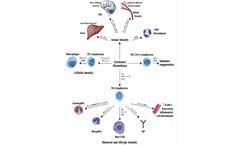
Cytokines are a class of small molecule proteins secreted by cells that mediate and regulate immune processes, and they act in an autocrine, paracrine and endocrine manner. ...

Natural killer (NK) cells are a distinct lineage of lymphocytes that mediate cytotoxic activity and secrete cytokines upon immune stimulation. CD94 (Group of Differentiation 94), also known as Killer cell lectin-like receptor subfamily D member 1 (KLRD1), is expressed on the surface of natural killer cells in the innate immune system. ...

For example, immune cells can be added either to the apical side, where they can intercalate into the monolayer, or to the basal side, where their cytokine secretions can interact with receptors on the basal side of the monolayer. We can also sample the cell culture supernatants to investigate epithelial responses; for example, by adding bacteria to the apical ...
Research has discovered that many cytokines and niche factors play a role in the initiation, progression, and remission of inflammation; however, developing an unbiased model that accurately recapitulates the in vivo inflammatory environment is a challenge. ...

Introduction The prevalence of atopic dermatitis (AD) is increasing worldwide.1 AD can be caused by numerous etiological factors,2,3 and typically characterized by the T helper (Th)2-dominated immune response.4 For example, IL-4, a key cytokine involved in atopic inflammation, is secreted from mast cells and drives the differentiation of T helper cells into Th2 ...

While it is well appreciated that receptors for secreted cytokines transmit ligand-induced signals, little is known about additional roles for cytokine receptor components in the control of ligand transport and secretion. ...