
Refine by
X Ray Imaging Articles & Analysis: Older
19 articles found

Radiopaque marker bands play a pivotal role in enhancing medical imaging accuracy, especially in healthcare practices involving fluoroscopy and X-rays. ...
These small metallic rings are integrated into catheters, guidewires, and implants to enhance real-time tracking under imaging systems like X-ray, fluoroscopy, and MRI.Why Marker Bands MatterEnhanced Visibility – Radiopaque materials create clear imaging markers Precision Placement – Helps guide devices to exact treatment ...
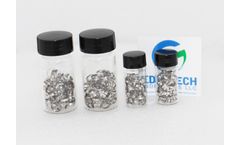
These small yet vital parts improve the visibility of medical instruments under imaging, enabling surgeons to work with exceptional accuracy. Made from advanced materials like tantalum and platinum-iridium alloys, wholesale marker bands are critical to achieving reliable and precise medical outcomes. ...

Marker bands have become indispensable in modern medicine, playing a crucial role in medical imaging and minimally invasive procedures. They act as significant indicators during real-time imaging, helping surgeons and radiologists achieve exceptional precision. ...

These bands are designed to be radiopaque, meaning they are visible under imaging techniques such as X-rays or fluoroscopy. This capability is crucial in applications like cardiovascular and endovascular surgeries where precision is non-negotiable. ...
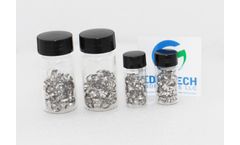
Table of contents: What Makes Radiopaque Marker Bands Essential in Modern Catheter Design Key Benefits of Using Platinum Iridium Marker Bands Comparing Tantalum vs Platinum Marker Bands in Medical Applications What Makes Radiopaque Marker Bands Essential in Modern Catheter Design Radiopaque marker bands play a vital role in improving catheter visibility under fluoroscopic ...
Marker bands serve a critical function in medical imaging and interventional procedures, offering Marker bands are essential for precise visualization during medical treatments. ...

Tantalum radiopaque marker bands play a vital role in this process by providing clear visibility under X-ray and fluoroscopic imaging. This enhanced visibility allows medical professionals to monitor and guide the placement and movement of devices within the body with exceptional precision. ...
Among the various types of marker bands, Radiopaque Marker Bands stand out due to their ability to enhance visibility under X-ray imaging. These bands are typically made from materials like Tantalum or Platinum-iridium alloy, which are known for their high density and radiopacity. ...
These small yet essential components are usually crafted from metals such as gold, platinum, or their alloys, providing radiopaque properties that allow them to be seen in X-ray imaging. This visibility is crucial in many minimally invasive surgical procedures, including angioplasty, where accurate positioning is essential. ...
Cerebral angiography, commonly known as CBT (Cerebral Angiography), is a diagnostic technique that provides a detailed view of the vascular architecture within the brain. This method utilizes X-ray imaging technology, enabling healthcare professionals and researchers to identify abnormalities and lesions within the brain's vascular system. ...
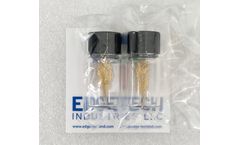
These small metallic rings, placed permanently into devices like catheters and pacemakers, provide a previously unseen level of clarity during procedures and surgeries. They allow for imaging equipment to precisely locate devices and ensure that they are in the right position. Even better, the marker bands are radiolucent, meaning that they are invisible under ...

A number of cardiac tests may be used to make a diagnosis, including non-invasive methods such as X-ray, magnetic resonance imaging (MRI), echocardiograms (EKG), electrocardiogram (ECG) and genetic testing, or minimally invasive procedures, such as cardiac catheterization. ...

What we often forget to relate to it is the information and images coming from the computer network and most often coming from the X-ray image servers. ...

Magnetic resonance imaging (MRI) is a frequently used diagnostic imaging modality that may be an alternative to other types of radiologic imaging (e.g., computerized tomography, nuclear medicine imaging). It can detect soft tissue characteristics (e.g., inflammation), and because magnetic resonance (MR) uses a magnetic field and radio waves to produce images, it does not expose patients to ...

The main objective of this work is to study the leachate migration in unsaturated porous media using X-ray computerized tomography (CT) and image-processing software. Silica sand and Yamazuna sand (collected from Japan) with different particle sizes are considered. ...

Various compositions of p(MMA–co–TIPA) were physico–chemically and biologically characterised through FTIR–ATR, SEM, EDX, in vitro biocompatibility and X–ray measurements. These copolymers exhibit good in vitro cell compatibility together with good X–ray visibility so they are good candidates for tumour detection and ...
Different irradiation configurations for typical mammographic facilities were evaluated in order to establish optimal irradiation parameters for improving X-ray image quality. The whole X-ray imaging process was suitably studied by means of Monte Carlo techniques. Relevant parameters were ...
In the last decade X-ray imaging based on phase contrast greatly advanced thanks to the use of unmonochromatic synchrotron hard X-rays. ...