


- Home
- Companies
- Sciton, Inc.
- Articles
- Starting a MedSpa: Complete Equipment ...
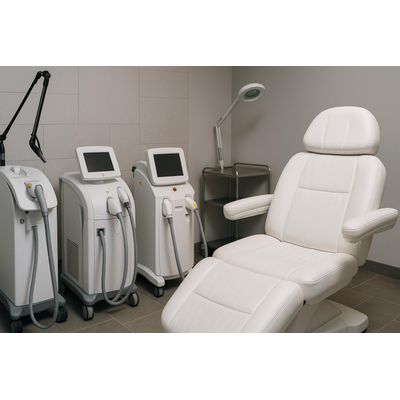
Starting a MedSpa: Complete Equipment Guide
Launching a medspa is capital-intensive. Equipment decisions shape your treatment menu, clinical outcomes, patient experience, workflow efficiency, and long-term profitability. The goal is alignment: your devices should support your clinical philosophy, staffing model, and revenue strategy, not drive them. This guide outlines the essential equipment categories to evaluate before launching a medspa.
Defining Your Clinical Identity
Before comparing devices, clarify your target patient and service strategy:
- Who is your ideal patient?
- Are you targeting corrective anti-aging or prejuvenation?
- Do you want to specialize or offer broad services?
- Will treatments be physician-only or delegated?
Launch Paths
- Corrective & Premium strategy: Advanced resurfacing and skin transformation; equipment priority HALO TRIBRID
- Preventative & Maintenance strategy: Light-based revitalization and skin renewal; equipment priority IPL multi-modality devices such as BBL HERO plus non-ablative laser
- High-Volume Entry strategy: Hair removal and injectables; equipment priority hair removal system such as OMNI laser hair removal
Market Positioning & Competitive Differentiation
Equipment signals market positioning. Evaluate what local medspas offer and whether competitors focus on injectables, basic IPL, advanced resurfacing, or luxury destinations. Differentiated platforms enable capability-based competition rather than price-based competition.
- Saturated injectable market — Equipment strategy: Invest in advanced resurfacing or hybrid platforms; Strategic outcome: Premium differentiation
- Heavy IPL competition — Equipment strategy: Add multi-modality or corrective systems; Strategic outcome: Expanded clinical depth
- Limited corrective services locally — Equipment strategy: Lead with transformation-based treatments; Strategic outcome: Market authority positioning
- Price-driven environment — Equipment strategy: Focus on platform efficiency and delegation; Strategic outcome: Margin protection
Core Revenue Platforms: Energy-Based Systems
Energy-based devices constitute the primary revenue engine in modern medspas. While injectables may deliver early cash flow, long-term differentiation and scalability are typically driven by energy-based platforms.
- Resurfacing & Hybrid Platforms — Primary concerns treated: Fine lines, acne scars, pigmentation, sun damage, textural irregularities; Strategic role: Differentiation and corrective transformation; Key evaluation considerations: depth variability, downtime flexibility, upgrade path, consumable costs, delegation capacity, service reliability
- Light-Based Systems (IPL / BroadBand Light) — Primary concerns treated: Redness, vascular lesions, rosacea, acne, pigmentation, early sun damage; Strategic role: Recurring maintenance revenue; broad demographic appeal; seasonal stability; Key evaluation considerations: year-round usability, delegation potential, treatment speed, reliability, long-term versatility
- Laser Hair Removal — Primary concerns treated: Unwanted hair across skin types; Strategic role: High-volume service; predictable package revenue; strong retention driver; Key evaluation considerations: multi-wavelength capability, repetition speed, spot size efficiency, integrated cooling, workflow transitions
Injectable Infrastructure & Treatment Room Design
Operational design impacts profitability. While lasers often differentiate a practice, injectables frequently generate early cash flow. Infrastructure matters more than many new owners realize.
- Adjustable medical-grade treatment chairs — Revenue impact: higher daily patient capacity
- High-lumen procedure lighting — Revenue impact: supports precise, efficient treatments
- Secure medication storage — Revenue impact: ensures compliance and safety
- Emergency crash cart — Revenue impact: readiness for adverse events
- Sharps disposal systems — Revenue impact: safe, compliant operations
Consultation Technology as a Conversion Engine
High-resolution photography, digital skin analysis, and integrated EMR platforms enhance patient education, trust, treatment acceptance, documentation, and long-term compliance. A structured consultation increases average ticket size and supports comprehensive treatment plans rather than single-session bookings. This category does not generate revenue directly but multiplies the revenue of everything else.
Platform Expandability & Future-Proofing
Choose equipment with a three-to-five-year horizon. Platform-based ecosystems allow adding handpieces or modalities without replacing entire systems. Flexibility reduces financial friction and protects capital.
- Single-purpose devices — Long-Term Outcome: Limited expansion, potential replacement
- Expandable platform architecture — Long-Term Outcome: Modular growth, capital protection
- Ongoing R&D manufacturer — Long-Term Outcome: Future upgrade pathway
Staffing, Delegation & Revenue Efficiency
Equipment must align with your staffing model. Not all devices are equally delegatable; some require physician-only operation, while others can be safely performed by trained nurse practitioners, physician assistants, or registered nurses. Delegation flexibility directly affects revenue per hour and scalability. Equipment that enables controlled delegation increases room utilization and reduces bottlenecks.
- Advanced resurfacing — Delegation potential: often physician-led or supervised; Revenue impact: higher ticket, lower volume
- Light-based systems — Delegation potential: commonly delegated; Revenue impact: high recurring volume
- Hair removal — Delegation potential: highly delegatable; Revenue impact: predictable package revenue
- Imaging & consultation tech — Delegation potential: staff-operated; Revenue impact: increased conversion rates
Service Reliability & Manufacturer Support
A device power is meaningless without dependable service. Evaluate manufacturing standards, domestic vs outsourced service, parts availability, repair response times, onboarding structure, and clinical training resources. Downtime equals lost revenue. Reliable service infrastructure protects your investment.
Designing Integrated Treatment Pathways
The strongest medspas build layered treatment journeys. When equipment works together, revenue becomes predictable and patient lifetime value increases. Example structure:
- Stage: Consultation — Purpose: Diagnosis & planning; Equipment category: Imaging + analysis systems
- Stage: Correction — Purpose: Pigment/redness; Equipment category: Light-based platform
- Stage: Structural Improvement — Purpose: Texture/aging; Equipment category: Fractional resurfacing
- Stage: Maintenance — Purpose: Ongoing skin health; Equipment category: Light or non-ablative systems
- Stage: Retention — Purpose: Recurring visits; Equipment category: Hair removal
Strategic Capital Allocation
Evaluate revenue per treatment hour, consumable structure, delegation capacity, scalability, and financing alignment. Measured investment pacing supports durable growth. Avoid chasing trends. Validate demand in your market.
Final Perspective
Starting a medspa is not about collecting devices. It is about constructing a cohesive, adaptable ecosystem. Your equipment strategy should align with your clinical philosophy, respond to validated patient demand, support delegation and workflow efficiency, expand as the practice grows, and protect long-term return on investment. When selected intentionally, technology becomes a growth engine rather than a liability. Build for durability. Scale with structure. Choose systems that evolve alongside your practice.
If you’re evaluating equipment for a new medspa, connect with a Sciton specialist to discuss platform-based systems designed for long-term growth, clinical versatility, and operational durability.
Original: https://sciton.com/starting-a-medspa-equipment-guide/