


- Home
- Companies
- Bertin Technologies
- Articles
- Studying Polycystic Kidney Disease by ...
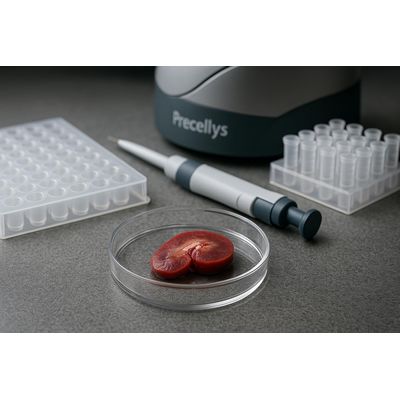
Studying Polycystic Kidney Disease by ATAC-seq Relies on Well-Controlled Nuclei Preparation
Autosomal dominant polycystic kidney disease (ADPKD) is among the most prevalent inherited kidney disorders, characterized by progressive renal cyst formation and potential progression to kidney failure. Chromatin accessibility profiling by ATAC-seq has become a key tool for elucidating epigenetic regulation in ADPKD, but data quality depends on upstream nuclei preparation in kidney tissue, where intrinsic complexity can introduce variability and batch effects if not properly controlled.
Researchers at Yale University addressed this challenge by developing a dedicated nuclei isolation workflow using the Precellys Evolution Touch instrument to extract nuclei from wild-type and pre-cystic mouse kidneys within a midi-throughput workflow. The method yields intact, highly reproducible nuclei that are well suited for ATAC-seq analyses, delivering strong sample-to-sample consistency.
The complete application note, detailing the nuclei preparation protocol and the demonstrated performance for chromatin accessibility analysis by ATAC-seq, is available through the Bertin Life Sciences Application Center.
Key takeaways
- Nuclei integrity supports reliable ATAC-seq reads.
- Reproducibility is achieved across samples, reducing batch variation.
- Midi-throughput workflow enables scalable processing of kidney tissue samples.