


Applied Medical Technology, Inc. (AMT) products
Enteral
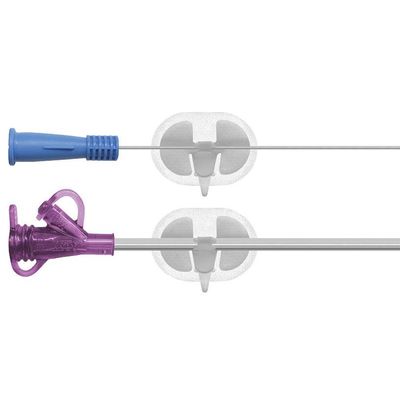
AMT - Tube Securement Device
The CINCH® is a practical solution for keeping medical tubing securely in place. Simply clean the desired skin area, apply the CINCH® to your body, place your medical tubing within the device and secure the tubing with the silicone strap. The CINCH® helps prevent medical tubing from becoming tangled or snagged. Medical tubing doesn’t have to slow you down. We’ve combined a soft and flexible silicone body with a breathable base material to give our patients comfort and mobility while holding their tubes securely in place. The AMT CINCH® comes in two sizes: Medium and Large. The Medium CINCH® secures medical tubes from 4F to 17F. The Large CINCH® secures medical tubes from 9F to 30F.
AMT - Comprehensive I.P. Kits
The intuitive design of AMT I.P. Kits ensures the essential tools for initial placement of a percutaneous gastrostomy feeding device are packaged in one easy-to-use kit.
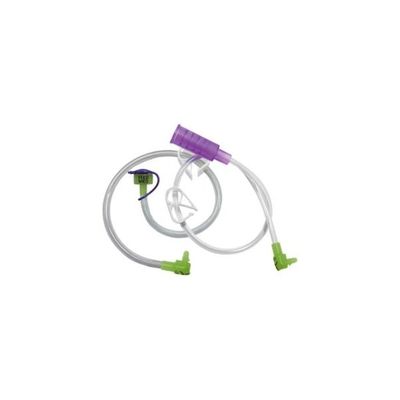
AMT - Feed / Extension Sets
AMT would like to remind our customers that we will continue to offer a complete Legacy Line and a complete ENFit® Line, pursuant to FDA regulations. As of January 1, 2022 all GEDSA Manufacturer Members (AMT is not a member) will no longer manufacture transitions sets and adaptors sold separately from other devices, as stated in the July 1, 2021 Revised ENFit® Connector Conversion Schedule. AMT is not a member of GEDSA and, while we believe in their efforts and align with their messaging of patient safety, our position has not changed.
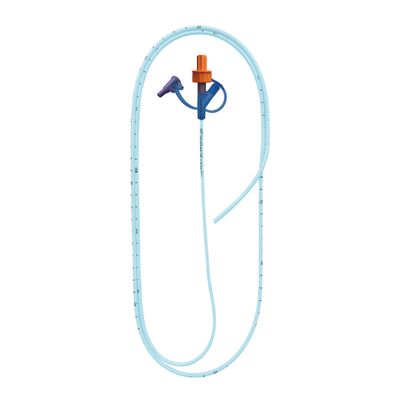
NutraGlide - Nasal Feeding Tubes
Understanding Nasal Tube Feeding: Individuals experiencing gastrointestinal complications may rely upon enteral nutrition (EN) support. One of the first and least invasive delivery methods for EN is having a nasal tube placed to provide gastrointestinal tract access. Nasal tubes are bidirectional, meaning they can be used for decompression/drainage, enteral feeding, administering medications, and so forth. A nasal tube is placed by inserting the tube through the nose, advancing it down the esophagus, and ending in the stomach (called nasogastric or NG tube) or the small intestine (called nasojejunal or NJ tube). Nasal tube feedings can be a great option for individuals requiring short-term enteral nutrition support ranging from 1 to 6 weeks.
Enteral - Bridle Family
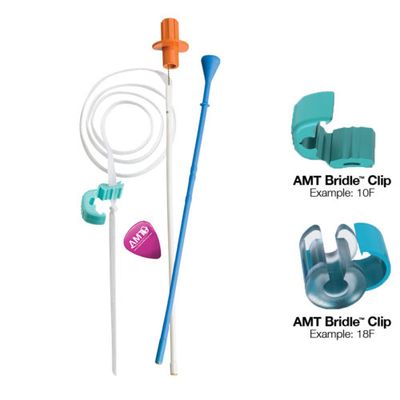
AMT Bridle - Nasal Tube Retaining System
What is it?: A nasal bridle is a securement method used to discourage patients, young or old, from pulling on their nasoenteric feeding tube. Reports show that 40 percent of nasogastric feeding tubes are dislodged, which may lead to the unnecessary surgical placement of a feeding device or conversion to parenteral nutrition support.* A nasal bridle is an effective and safe way to secure a patient’s nasal tube, retaining the nutrition flow to the patient.