


BioGnost d.o.o. products
Histology and Cytology - Fixation and Processing - Fixatives - Formalin Fixatives
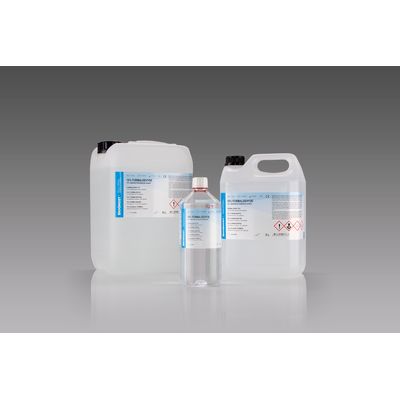
BioGnost - Model F10 - 10% Formaldehyde
An impeccable sample fixation is a prerequisite for a correct histological diagnosis. Tissue samples must be immersed in an optimally chosen fixative immediately after sampling because a timely fixation will prevent autolysis, putrefaction and other unwanted cellular changes. Although there are hundreds of histological fixatives and at least tens of formaldehyde-based fixatives, neutral buffered formaldehyde solutions with a concentration range from 4% to 10% are the most commonly used fixatives, primarily because of their simple and universal application. Tissue fixation using a buffered formaldehyde solution results in forming cross-links, i. e. it forms methylene bridges between proteins, that is, it results in keeping tissue components in their in vivo relation. If fixated properly, the tissue sample can withstand additional histological tissue processing and staining.
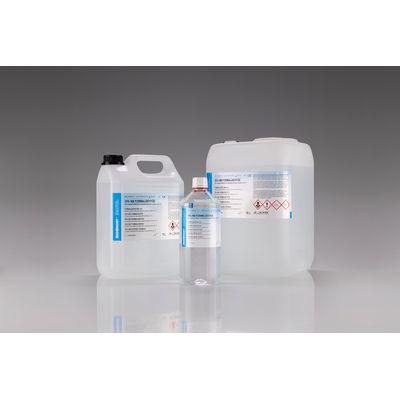
BioGnost - Model FNB10 - 10% NB Formaldehyde
An impeccable sample fixation is a prerequisite for a correct histological diagnosis. Tissue samples must be immersed in an optimally chosen fixative immediately after sampling because a timely fixation will prevent autolysis, putrefaction and other unwanted cellular changes. Although there are hundreds of histological fixatives and at least tens of formaldehyde-based fixatives, neutral buffered formaldehyde solutions with a concentration range from 4% to 10% are the most commonly used fixatives, primarily because of their simple and universal application. Tissue fixation using a buffered formaldehyde solution results in forming cross-links, i. e. it forms methylene bridges between proteins, that is, it results in keeping tissue components in their in vivo relation. If fixated properly, the tissue sample can withstand additional histological tissue processing and staining.
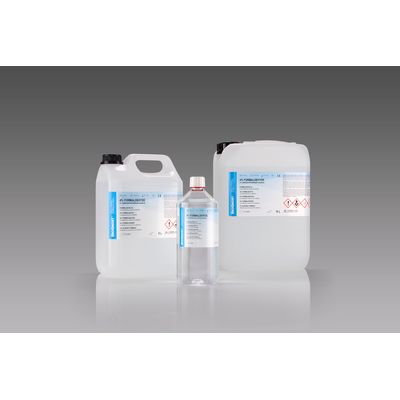
BioGnost - Model F4 - 4% Formaldehyde
An impeccable sample fixation is a prerequisite for a correct histological diagnosis. Tissue samples must be immersed in an optimally chosen fixative immediately after sampling because a timely fixation will prevent autolysis, putrefaction and other unwanted cellular changes. Although there are hundreds of histological fixatives and at least tens of formaldehyde-based fixatives, formaldehyde solutions with a concentration range from 4% to 10% are the most commonly used fixatives, primarily because of their simple and universal application. Tissue fixation using a formaldehyde solution results in forming cross-links, i.e. it forms methylene bridges between proteins, that is, it results in keeping tissue components in their in vivo relation. If fixated properly, the tissue sample can withstand additional histological tissue processing and staining.