


- Home
- Companies
- Citeq Biologics
- Products
Citeq Biologics products
House Dust Mite Allergens
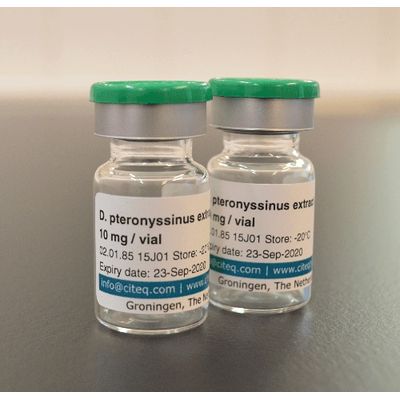
Citeq - Dermatophagoides Pteronyssinus
Our D. pteronyssinus house dust mites products are available in different forms. The most popular form is the regular D. pteronyssinus extract but we can also deliver whole cultures, purified allergens (Der p 1/ Der p 2), excrements and mite bodies. Want to receive more information about pricing? Please add the product of choice to your quote request. Just choose the form you want and click on the “add to quote” button. We will send a quotation as soon as possible.
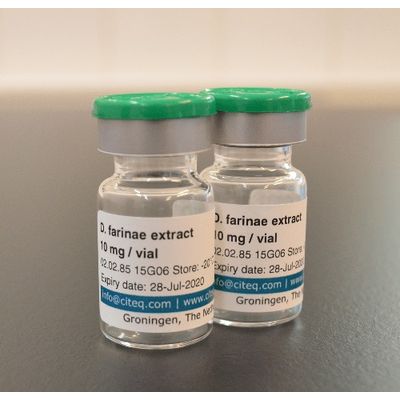
Citeq - Dermatophagoides Farinae
Our D. farinae house dust mites products are available in different forms. The most popular form is the regular D. farinae extract but we can also deliver whole cultures, purified allergens (Der f 1/ Der f 2), excrements and mite bodies. Want to receive more information about pricing? Please add the product of choice to your quote request. Just choose the form you want and click on the “add to quote” button. We will send a quotation as soon as possible.

Citeq - Euroglyphus maynei
Euroglyphus maynei belongs to the Pyroglyphidae family. Its common names are also house dust mite and dust mite. We deliver the E. maynei mites as whole culture and extract. Euroglyphus maynei is present in humid environments, especially where there is no liquid water to drink. Its primary requirement for reproduction is water, since the body of the mite contains up to 75% water. Euroglyphus mayne receives the water from water vapor which is drawn out from air. Therefore Euroglyphus maynei can commonly be found in settings where the humidity is above 70% and geographically is mostly prevalent in Europe.
Storage Mites
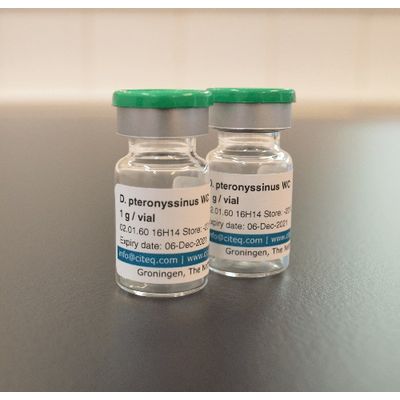
Citeq - Tyrophagus Putrescentiae
Tyrophagus putrescentiae, also recognized as storage mite or mould mite, is part of the Acaridae family. Our Tyrophagus putrescentiae extract and whole culture are delivered in freeze-dried form and available from stock.
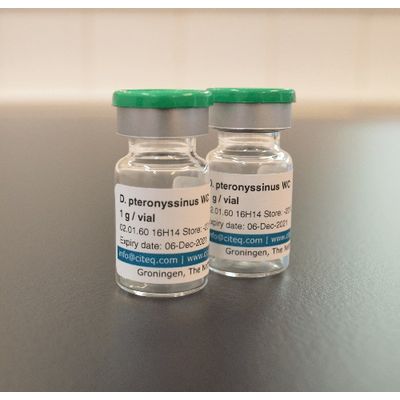
Citeq - Lepidoglyphus Destructor
Lepidoglyphus destructor, also known as storage mite, belongs to the Acaridae family. In Europe, Lepidoglyphus destructor has been reported to be a major source of mite allergy in rural and urban environments. Our Lepidoglyphus destructor extract and whole culture are delivered in freeze-dried form and available from stock.
Molds (Fungi)
Citeq - Aspergillus Fumigatus Medium
There are multiple groups of fungi that can be found all-over the world, even in the most extreme environments. The most fungi species can be found in the soil, on plant or other organic material. Fungi are known for producing major groups of compounds that can cause an allergic reaction.
Alternaria Alternata Mold (Fungi)
Alternaria alternata belongs to the Pleosporaceae family. Alternaria spores can reach levels of thousands of spores per cubic meter of air in temperate areas from spring to fall. 70% of mold-allergic patients have IgE reactivity to Alternaria. A. alternata spores are especially high in the outdoor air during summertime. Alternaria alternata is an important allergen with mycelial fragments and airborne spores, these characteristics are accountable for the allergic symptoms in human with rhinitis, bronchial asthma or skin diseases.
Cockroach Extracts and Whole Bodies
Blatta Orientalis Cockroach
The Blatta orientalis cockroach is 25 mm in length and is dark brown to black, hence the common name black beetle. The male has rudimentary wings, but neither the male nor female can fly. Oriental cockroaches, often called water bugs, prefer dark, damp, and cool areas like basements and areas around sinks, drains, and washing machines. Oriental cockroaches produce allergens on their bodies and in their feces, and they may be a potential cause of childhood asthma and allergic dermatitis. The Oriental cockroach tend to predominate in tropical and subtropical regions.
Hymenoptera Venoms (Bee and Wasp)
Apis Mellifera Venom (Bee Venom Extract)
Our bee venom extract is from the Apis mellifera who is also known as the Western honey bee or the European honey bee. The Apis mellifera belongs to the Apidea family and the Hymenoptera order. Hymenoptera venom is known to give a systemic allergic symptoms in 0.8-5.0% of the population. A. mellifera is, worldwide, the most common honey bee specie. Apis mellifera contains five major allergens (Api m 1-4 & 6) with a known sequence. The allergens of the A. mellifera exist out of a complex mixture of peptides, simple organic molecules, proteins and other bioactive elements.
Biotinylated Material
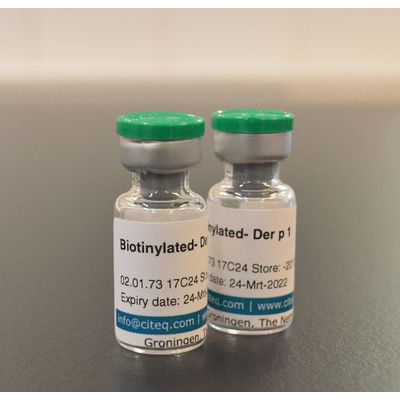
Unique Biotinylated Der P 1 Extract
The unique biotinylated Der p 1 extract was developed especially for research and diagnostic groups. Biotinylated-Der p 1 can be used to detect specific antibodies in serum of animal models and/or patients. For example, in animal models, with detecting specific Der p 1 antibodies it can be shown that the animal is correctly immunized, or that the animal reacts on the treatment (an in- or decrease of levels of specific antibodies). When in patients the specific Der p 1-antibodies are detected it shows high levels of specific Der p 1-antibodies which indicates that the patient has house dust mite allergy.