


DEARGEN Inc. products
DEARGEN - Model Dr. UG - Deep Learning Technology
Dr. UG is an AI platform for developing new drugs that is based on DEARGEN’s deep learning technology. It specializes in genome data analysis, biomarker prediction, molecule selection and optimization. DEARGEN discovers new disease targets with Dr.UG and further realizes precision medicine by designing small molecules for new drugs.
DEARGEN - Model DearDTI - Drug Technology
DearDTI presents drug candidates with a good efficacy by predicting the binding affinity, based on information about the compound-protein interactions.
DEARGEN - Model WX - Target Discovery Through Genome Wide Feature Data Analysis
WX presents biomarkers, based on raw transcriptome data. It is an artificial intelligence technology that can predict biomarkers, prognostic biomarkers and even the mode of action (MOA) of disease targets.
DEARGEN - Model MolEQ - Novel Compounds Technology
MolEQ designs novel compounds by optimizing multiple properties such as efficacy and toxicity of a lead compound.
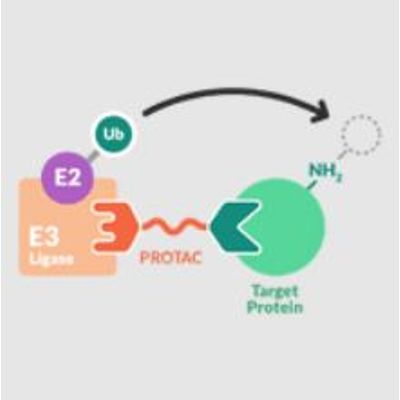
Model PROTAC - Proteolysis Targeting Chimera
PROTAC-Proteolysis targeting chimera is a technology that induces the Ubiquitin-Proteasome System (UPS) to degrade the target protein. When the target protein (Protein of Interest (POI)) is ubiquitinated by the ligase of E1, E2, E3, the proteasome recognizes that part of the protein and degrades the protein. PROTAC is composed of a protein of interest, a ligand that binds to the E3 ligase, and a linker that connects the two. PROTAC is emerging as a next-generation platform for new drug development that overcomes the problems of drug resistance and “Undruggable targets” of existing target therapies whose main purpose was to inhibit the function. Deargen discovers the structure of an optimized ligand and linker using a highly advanced AI solution, and is conducting research on anticancer target treatments through collaboration with leading companies in the PROTAC field.
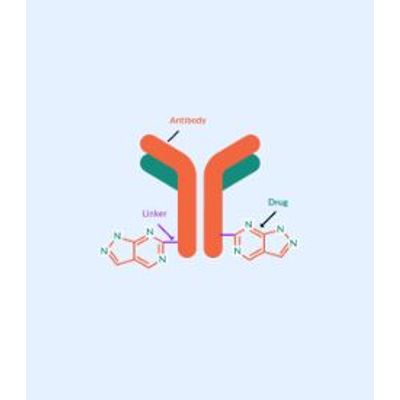
Antibody-Drug Conjugate - ADC
ADC (Antibody-drug conjugate) is a next-generation antibody-drug conjugate that has improved efficacy over existing antibodies. This drug combines the advantages of two factors: target specificity, which is a characteristic of an antibody, and cytotoxicity, which is a characteristic of a drug. Specifically, this is a technology focused on targeting and killing cancer cells by delivering drugs that cause cytotoxicity to tumor cells using antibodies that can bind to cancer cell-specific antigens. The Artificial Intelligence algorithm developed by Deargen can derive candidate substances that can control the target protein by predicting the affinity between the target protein and the drug. It is expected that the binding of the substance discovered through the AI solution to the tumor cell-specific antibody will provide more improved therapeutic effect compared to single agent treatment.
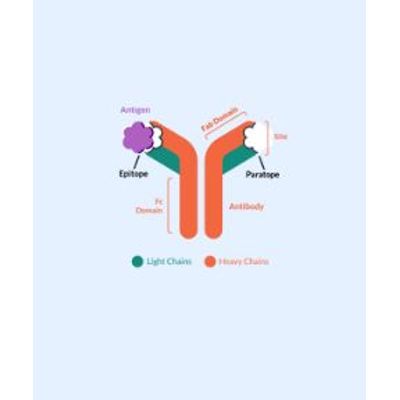
Epitope
Epitope is a part of an antigenic protein consisting of a sequence of 8 to 15 amino acids that provide the immunogenicity of an antigen protein. Immune receptors such as TCR, BCR, and MHC of various immune cells including T cells, B cells, and macrophages recognize epitopes and lead to various immune responses. As a simple example, when a bacteria enters the body, B cells recognize various epiptopes from the bacterial antigen and form antibodies against them. The process of biologically searching for epitopes is a method called epitope scanning, which cuts and searches the entire amino acid sequence of antigen into units of about 15 or more. This method has the problem of being classic and labor intensive. Deargen, together with its partner Optipharm, created an Artificial Intelligence model that predicts epitope and implemented epitope scanning in silico, and is currently conducting research and development such as cancer treatment vaccine and epitope library construction.
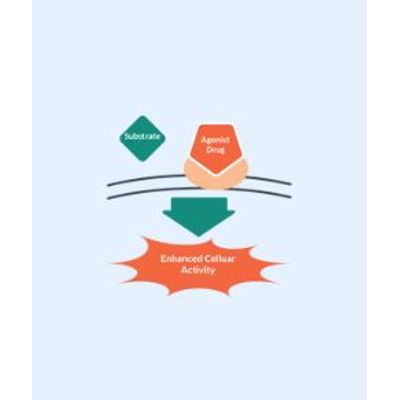
Agonist
Agonist refers to substances that activate a specific target protein. It can easily be viewed as the opposite of inhibitor. Until now, Deargen`s drug-target interaction (DTI) was predicted based on the binding affinity between the substance and the target protein, which causes barrier to distinguish between the inhibition and activation activity. In addition, the demand for agonist hit discovery is on the rise in the field of new drug development. To address these unmet needs, Deargen developed DearDTE (Drug-Target Efficacy), which can predict the activation of substances and target proteins. DearDTE is currently being used in cooperation with various partners such as SK Chemical, IN Therapeutics, Amyloid Solution, and Pohang University of Science and Technology
Inhibitor
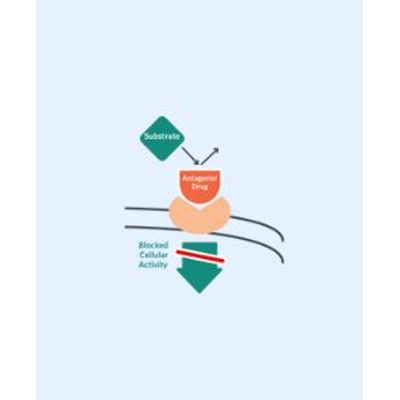
To hinder or inhibit the function of proteins that cause disease, many pharmaceutical companies develop drugs called inhibitors. Each of the 20,000 proteins in the human body has its own unique functions. Depending on the function of the protein, it can be classified into enzyme proteins, ion channel proteins, transport proteins, defense proteins, and structural proteins. Problems with the functioning of these proteins can lead to disease. This function of protein can be controlled by of a drug. In order for a drug to directly control a target protein, the drug and protein must first be bound. Deargen`s Artificial Intelligence solution is able eto predict the binding affinity between dozens and millions of drugs in the world and proteins that span all organisms, from viruses to humans. Through these prediction results, Deargen help to select the drugs that has direct effect on target protein, and in-depth validation can aid the discovery of inhibitors.