


Genetic Signatures Ltd. products
Gastrointestinal Infection
EasyScreen - Enteric Protozoan Extended Detection Kit
The most common protozoans that affect the gastrointestinal tract are Cryptosporidium spp., Giardia intestinalis, and Entamoeba histolytica1-3. Other protozoan agents that have been implicated in gastroenteritis in humans include Dientamoeba fragilis, Blastocystis hominis and Cyclospora cayetanensis.
Molecular Ova and Parasite Testing
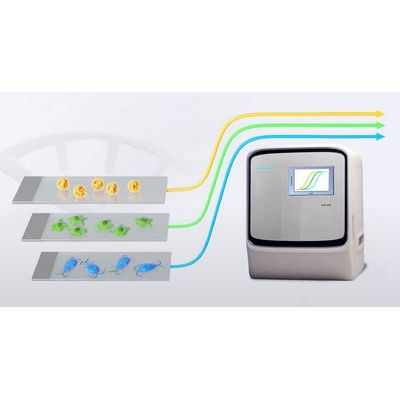
Genetic - Molecular Ova and Parasite Screening System
In the United States (US), gastrointestinal (GI) protozoan parasites are a significant healthcare burden, with more than 350 million cases of acute GI infections annually. Globally, protozoan infections are the leading cause of mortality of children under five years old.1,2 Hence, the importance of rapid and accurate diagnosis and treatment is essential for decreasing the significant burden of GI infections. The Center for Disease Control and Prevention (CDC) recorded a steady increase in reported GI protozoan outbreaks in the US over the past 12 years until 2020 (refer to the chart below). At this point, COVID-19 restrictions significantly decreased outbreaks due to reduced mobility, and decreased local and international travel. However, now that restrictions have lifted, reported weekly parasite infections from the National Notifiable Diseases Surveillance System (NNDS) indicate a lift in reported cases in early 2022.
Respiratory Pathogen Detection
EasyScreen - Model RP018 - Essentials Respiratory Detection Kit
The EasyScreen™ Essentials Respiratory Detection Kit enables multiplex real-time PCR testing for leading viral pathogens that cause respiratory tract infections, including SARS-CoV-2. A full list of the essential respiratory pathogen targets is listed in the table below. User friendly medium to high-throughput systems are available that support Genetic Signatures’ full range of unique 3base™ assays for detecting infectious disease. This patented 3base™ technology has many advantages over conventional 4-base assays, including improved sequence similarity for the detection of pathogen subtypes or gene families, and increased ‘immunity’ to potential genetic mutations, as seen in SARS-CoV-2.
Genetic - Respiratory Pathogen Reagents
The Respiratory Pathogen ASRs are rapid in vitro nucleic acid amplification tests for the qualitative detection of respiratory pathogen nucleic acid from respiratory specimens. Molecular methods offer the advantages of rapidity and the ability to detect pathogens regardless of growth requirements or the availability of reagents for rapid diagnostic testing. The reagents use multiplexed real-time PCR assays and is compatible with nucleic acids isolated using an appropriate EasyScreen™ Sample Processing Kit.
Sexual Health
Genetic - Model STI - Genital Pathogen and Reproductive Health Reagents
The STI Genital Pathogen and Reproductive Health Reagents are rapid in vitro nucleic acid amplification assays for the qualitative detection of sexually transmitted pathogens as well as commensal and reproductive health-associated bacteria.
Anti-Microbial Resistance
Genetic - Model ESBL and MCR - Detection Reagents
Beta-lactam antibiotics are the most commonly used antibiotics worldwide for the treatment of bacterial infections. Extended Spectrum Beta-Lactamase (ESBL) producing organisms hydrolyze cephalosporins, penicillins, and aztreonam, rendering them ineffective for the treatment of infected patients. This makes accurate and timely detection of ESBL and Carbapenemase Producing Organisms (CPO) important as it will have a significant impact on patient management.
Genetic - Model CPO - Detection Reagents
Carbapenem based antibiotics have become the first line choice in the treatment of ESBL infections. Of significant global concern therefor is the emergence of carbapenem resistant (CPO) bacteria in healthcare settings, as standard treatments may be rendered ineffective.
Meningitis Detection
Genetic - Viral Meningitis Detection Reagents
Viral meningitis can be caused by a number of viruses, including Herpesviruses, Human Parechovirus and Enterovirus. It is a common infection that causes “flu-like” symptoms, and is usually self- limiting, hence it does not require specific treatment in most cases. Rapid diagnosis is important however, to rule out a more serious bacterial meningitis infection, and to provide support to high-risk patients. Molecular detection methods offer the advantages of speed, and ability to screen for a larger number of pathogens than conventional methods.
Genetic - Bacterial Meningitis Detection Reagents
Bacterial meningitis develops quickly and requires immediate medical attention, as it can be fatal without prompt treatment. Several types of bacteria can cause meningitis. The Genetic Signatures` Bacterial Meningitis ASRs have been designed to detect the most common bacterial meningitis-causing infections.
Genetic - Fungal Meningitis Detection Reagents
Fungal meningitis is rare and can develop after a fungus spreads from somewhere else in the body to the brain or spinal cord. The Genetic Signatures Fungal Meningitis ASRs has been designed to detect a common fungal causing pathogen.