


Particle Measuring Systems (PMS) articles
Abstract
The role of quality systems in pharmaceutical organizations has grown faster than any other function during the last 15 years. During this period, a small group dedicated to traditional Compliance grew and expanded to include Quality Experts in areas such as validation, product release, operations, sterility assurance, and other specialized functions. Creating a deeper quality connection between manufacturing and engineering has always been the aim of that growt
Maurizio Della Pietra
Part of Particle Measuring Systems’ role in making the world make the world cleaner, healthier & more productive
As part of the Spectris PLC family of businesses, we aim to deliver value to society by providing solutions that make the world cleaner, healthier, and more productive
Nina Morton
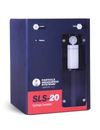
Welcome to the world of liquid particle counting and syringe sampling!
If you’re new to liquid particle counting, you might not know anything about how we know if liquids are clean. One method to determine a liquid’s cleanliness is syringe sampling.
Over the previous five Blogs in this series we have discussed the critical quality attributes to consider in a robust Quality by Design plan for the construction of a new Isolator/RABS fill line. The primary topics we explored are: Regulatory, Surround Areas, Cleaning, Process Interventions and Environmental Monitoring. Here we will talk about when these actions should take place, who should perform them, and what documentation and other activities may be necessary to ensure that you enjoy th
Maurizio Della Pietra
Set up and Process Interventions on a fill line are two of the most difficult operations to overcome if they are not designed to properly minimize impact to the product and the environment in the early stages of Isolator/RABS design. Set up of the fill line poses a significant risk of introduction of contaminants because many materials are introduced to the clean area by the operators.
These can be minimized with a thorough Process Optimization study early in the project. <
Maurizio Della Pietra
The cleaning and disinfection of a pharmaceutical fill line & surrounding areas is a critical component of contamination control. We all think we are familiar with the principles of cleaning protocols, but it is deceptively easy to get this form of control wrong without applying the standards of QbD to the new equipment and facility at the design phase. There are many things to consider from the equipment/building parts and materials to
Maurizio Della Pietra
The area surrounding an isolator/RABS pharmaceutical fill line can be a difficult area to control. There are many functions and moving parts that support the fill operations that occur in the controlled area just outside the controlled area that can greatly impact the process itself. Below are several pitfalls to be aware of that might be thwarting your contamination control efforts if you are currently working with a piece of fill equipment that did not include QbD in the design phase.
Maurizio Della Pietra
What does Quality by Design (QbD) in the design of clean manufacturing equipment and processes look like? This might be easier to visualize if we look at it from the perspective of the absence of it. Design and optimization based on only the engineering point of view, and not on understanding of the process, often leads to unintended impacts on the end-use of the equipment. These unintended outco
Maurizio Della Pietra
The following is the summary of a noteworthy discussion from the 2019 GMP Academy Master Course – Particle Measuring Systems, Rome, Italy
The first GMP Academy Master Course took place from November 26 – 28 at Particle Measuring Systems (PMS) in Italy. International experts met to share their knowledge and expertise of regulatory requirements and practical applications pertaining to contamination monitoring and control systems for aseptic processes and clean environments.
Reducing Operator Error
Reducing operator error is and always will be the goal of any system where human interaction takes place. This is seen on a regular basis in manufacturing. For example, it has been widely held for years that visual human inspection can be significantly flawed; hence, the development of highly-automated vision systems. Likewise, data collection and analysis are subject to the same forces. From instrument configuration to data calculations, virtu