


Scytek Laboratories Inc products
Enzyme Immunoassay Products
Scytek - Substrate Bulk Kit
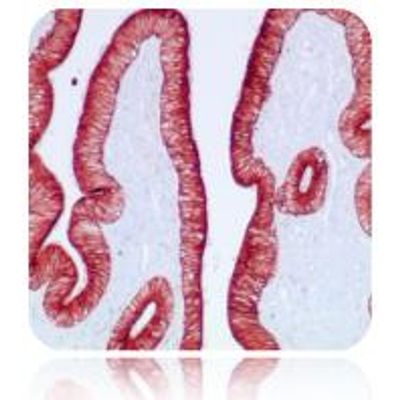
3-Amino-9-Ethylcarbazole, AEC Chromogen Concentrate and AEC Substrate is a widely used chromogen for immunohistochemical staining and immunoblotting. When in the presence of the peroxidase enzyme, AEC produces a vivid red end product that is soluble in alcohol. Stained slides must be mounted in any commercially available mounting media. This product is available in a convenient two component form: AEC Chromogen Concentrate and AEC Substrate. For maximum flexibility, this product is available in bulk amounts or dropper-top.

Scytek - Model 1A4 - Alpha-Smooth Muscle
Species: Mouse Monoclonal, Clone: 1A4, Isotype: IgG2a,k, Species Reactivity: Human, Baboon, Cow, Rabbit, Mouse, Rat, Chicken.Positive Control: Blood vessels,Specificity: This antibody recognizes the a-smooth muscle form of actin. It shows no cross reaction with actin from fibroblasts (b- and g-cytoplasmic), striated muscle (a-sarcometric), and myocardium (a-myocardial). Its epitope is composed of the acetyl group and the first 4 amino acids on the N-terminal end of the peptidic chain of a-smooth actin. ScyTek`s 1A4 stains smooth muscle cells in vessel walls, gut wall, and myometrium. Myoepithelial cells in breast and salivary gland are also stained as they also contain this actin.
Immunohistochemistry Products
Scytek - AEC Chromogen Concentrate
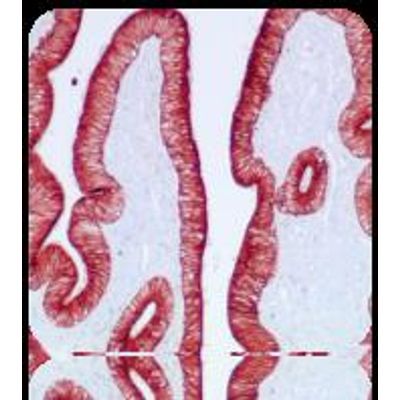
3-Amino-9-Ethylcarbazole, AEC Chromogen Concentrate is a widely used chromogen for immunohistochemical staining and immunoblotting. When in the presence of the peroxidase enzyme, AEC produces a vivid red end product that is soluble in alcohol. Stained slides must be mounted in any commercially available mounting media. This product is available in a convenient two component form: AEC Chromogen Concentrate and AEC Substrate. For maximum flexibility, this product is available in bulk amounts or dropper-top. Use with ScyTek AEC Substrate (ACE500 and ACE999).
Antibodies
Scytek - Model Clone 2F6 - Adrenocorticotrophic Hormone-ACTH
Species: Mouse,Immunogen: Synthetic peptide corresponding to aa 1-24 of human ACTH ,Clone: 2F6. Isotype: IgG1, kappa, Species Reactivity: Human, Mouse, and Rat. Expected to show a broad species reactivity. Positive Control: Normal pituitary gland or pituitary tumor. Specificity: This antibody is specific to Synacthen (aa 1-24 of ACTH); this antibody does not react with CLIP (aa 17-39 of ACTH). Anti-ACTH is a useful marker in classification of pituitary tumors and in the study of pituitary disease. It reacts with ACTH-producing cells (corticotrophs). It also may react with other tumors (e.g. some small cell carcinomas of the lung) causing paraneoplastic syndromes by secreting ACTH. Status: RUO.
Scytek - Model Clone 57 - Adrenocorticotrophic Hormone-ACTH
Species: Mouse, Immunogen: N-terminal fragment of human ACTH conjugated to KLH,Clone: 57,Isotype: IgG1, kappa, Species Reactivity: Human and Rat. Expected to show a broad species reactivity. Positive Control: Normal pituitary gland or pituitary tumor. Specificity: This antibody is specific to Synacthen (aa 1-24 of ACTH); this antibody does not react with CLIP (aa 17-39 of ACTH). Anti-ACTH is a useful marker in classification of pituitary tumors and in the study of pituitary disease. It reacts with ACTH-producing cells (corticotrophs). It also may react with other tumors (e.g. some small cell carcinomas of the lung) causing paraneoplastic syndromes by secreting ACTH. Status: RUO.
Scytek - Model Clone AH26 - Adrenocorticotrophic Hormone-ACTH
Species: Mouse,Immunogen: Synthetic peptide corresponding to aa 1-24 of human ACTH, Clone: AH26, Isotype: IgG1, kappa, Species Reactivity: Human, Mouse and Rat. Expected to show a broad species reactivity. Positive Control: Normal pituitary gland or pituitary tumor. Specificity: This antibody is specific to Synacthen (aa 1-24 of ACTH); this antibody does not react with CLIP (aa 17-39 of ACTH). Anti-ACTH is a useful marker in classification of pituitary tumors and in the study of pituitary disease. It reacts with ACTH-producing cells (corticotrophs). It also may react with other tumors (e.g. some small cell carcinomas of the lung) causing paraneoplastic syndromes by secreting ACTH. Status: RUO.