

SOPHiA Genetics software
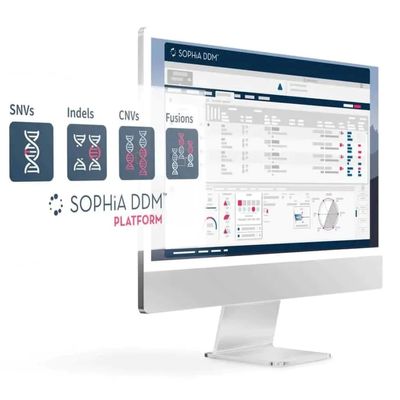
SOPHiA DDM - For Liquid Biopsy
Pioneering Innovation, Streamlining Adoption: We are pushing the boundaries of today’s liquid biopsy capabilities. Bring liquid biopsy to your lab with our streamlined DNA-only NGS workflow, taking you from cell-free DNA sample to comprehensive report in record time. Powered by state-of-the-art proprietary algorithms, the SOPHiA DDMTM Platform reveals deep genomic insights from cell-free DNA, advancing your oncology research to new horizons.
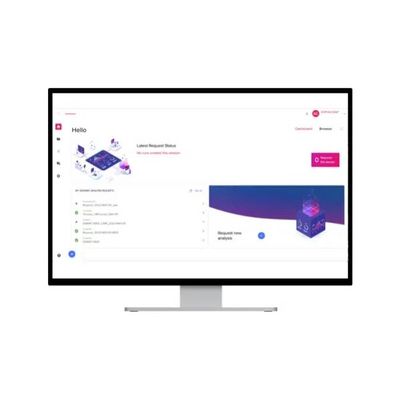
SOPHiA DDM - Dx RNAtarget Oncology Solution (ROS)
Enabling novel fusion detection in small samples to improve lung cancer management. Sensitive novel fusion detection optimized for small lung cancer FFPE biopsies enhance patient care. SOPHiA DDM™ Dx RNAtarget Oncology Solution (ROS) is a CE-marked in vitro diagnostic (IVD) application based on next-generation sequencing (NGS) enabling accurate and sensitive detection of novel (partner-agnostic) fusions and exon skipping events, even with minimal RNA sample input. Powered by the advanced analytical capabilities of SOPHiA DDM™ Platform, this sample-to-report application helps healthcare professionals increase their efficiency and confidence of getting actionable clinical insights and making data-driven decisions that improve the quality of patient management.
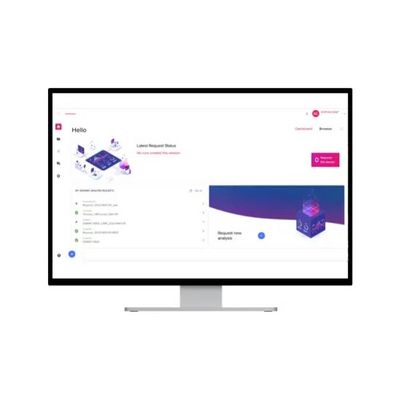
SOPHiA DDM - Model Dx - Homologous Recombination Deficiency Solution
Identifying patterns of genomic scarring in ovarian cancer samples. Accurate identification and reporting of Homologous Recombination Deficiency (HRD) status are critical for better patient management. SOPHiA DDM Dx HRD Solution is a CE-marked in vitro diagnostic (IVD) application leveraging low-pass Whole Genome Sequencing (WGS) and a proprietary deep-learning algorithm. Powered by the advanced analytical capabilities of SOPHiA DDM™ Platform, this sample-to-report application determines HRD status of tumors, helping healthcare professionals increase their efficiency and confidence of getting actionable clinical insights and making data-driven decisions that improve the quality of patient care.
MSK-ACCESS Powered with SOPHiA DDM - In-House Liquid Biopsy
Rise above the noise to see what truly matters. Elevate your precision oncology program. Push the boundaries of your in-house liquid biopsy capabilities with MSK-ACCESS® powered with SOPHiA DDM™, a decentralized version of the rigorously validated cell-free DNA (cfDNA) assay developed and used in clinical routine by Memorial Sloan Kettering Cancer Center (MSK)1,2. Discover an innovative solution that combines MSK’s expertise in cancer genomics with the robust analytics of the SOPHiA DDM™ Platform for paradigm-shifting liquid biopsy insights.
SOPHiA DDM - Hereditary Cancers
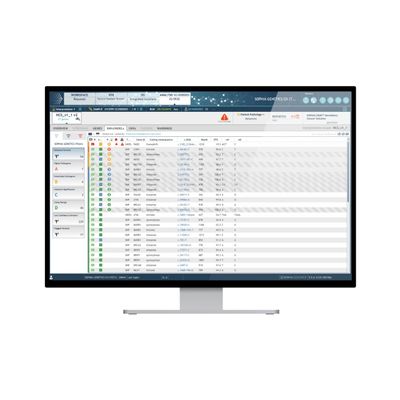
Confidently assess genetic variants predisposing to cancer. Hereditary causes account for ∼10% of cancer cases, and an estimated 20% of cancer patients have a family history of cancer.1 Identification of an individual with a suspected hereditable cancer can lead to additional examinations and help formulate the most appropriate prevention strategies. Evaluating the predisposition to develop inherited cancer depends on the ability to characterize genes and alterations associated with increased cancer risk accurately. Next-generation sequencing (NGS) is transforming the way genomic evaluation of hereditary cancers is performed and integrated into the daily workflow of clinical laboratories.
SOPHiA DDM - RNAtarget Technology
Maximize your biologically actionable insights from small tumor samples with the SOPHiA DDM™ RNAtarget Technology end-to-end solutions. Gene fusions have been associated with various tumors and are recognized as valuable cancer biomarkers in cancer research1. Targeted RNA sequencing is recommended to maximize novel fusion detection by identifying transcribed and potentially actionable fusions. RNA sequencing fusion detection has become an integral tool of cancer research, as it allows clinical researchers to identify genetic abnormalities that trigger oncogenesis and progression.
SOPHiA DDM - Comprehensive Genomic Profiling (CGP)
Deeper genomic insights, fewer missed opportunities. CGP enables clinical researchers to identify actionable variants and biomarkers across hundreds of genes using a single solution. The SOPHiA DDMTM Platform offers decentralized, in-house next generation sequencing (NGS) applications that help maximize insights from CGP data by leveraging advanced analytical capabilities, intutive interpretation features, and one-click reporting.
Oncology

SOPHiA - Model DDM - Cloud-Based Software Platform for Solid Tumors
SOPHiA - Model DDM - Cloud-Based Software Platform for Blood Cancers
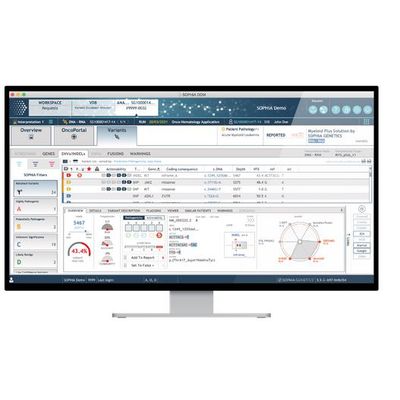
Hematological tumors represent the fourth most frequent cancer type in the developed world. In addition to the continuously evolving clinical guidelines2, harnessing of all the available information when investigating hematological disorders into meaningful insights can be outdated, inaccurate, costly, and time-consuming. This ultimately risks limiting researchers’ productivity, thus leading to potential delayed or inaccurate diagnoses.
SOPHiA - Model DDM - Cloud-Based Software Platform for Hereditary Cancers
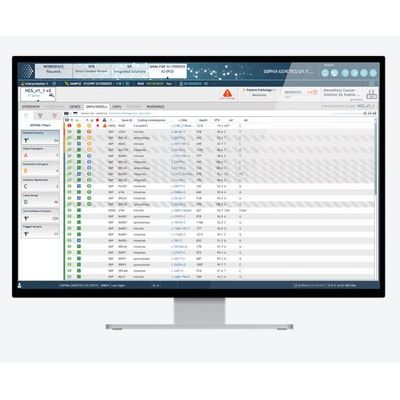
Hereditary causes account for ∼10% of cancer cases, and an estimated 20% of cancer patients have a family history of cancer. Identification of an individual with a suspected hereditable cancer can lead to additional examinations and help formulate the most appropriate prevention strategies. Evaluating the predisposition to develop inherited cancer depends on the ability to characterize genes and alterations associated with increased cancer risk accurately. Next-generation sequencing (NGS) is transforming the way genomic evaluation of hereditary cancers is performed and integrated into the daily workflow of clinical laboratories.