


Sumitomo Pharma Oncology, Inc. products
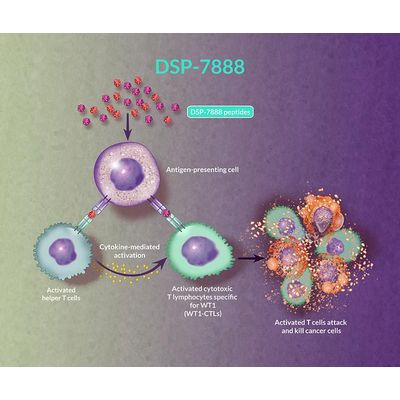
Sumitomo - Model DSP-7888 - Ombipepimut-S Emulsion WT1 Immunotherapeutic Cancer Vaccine
Ombipepimut-S Emulsion (DSP-7888) is an investigational immunotherapeutic cancer vaccine containing 2 peptides that induce WT1-specific cytotoxic T lymphocytes (WT1-CTLs) and helper T cells to attack WT1-expressing cancerous cells found in various types of hematologic malignancies and solid tumors.1,2 Researchers have identified that adding helper T-cell–inducing peptides improved WT1-specific CTL induction, which may contribute to tumor cytotoxicity.1
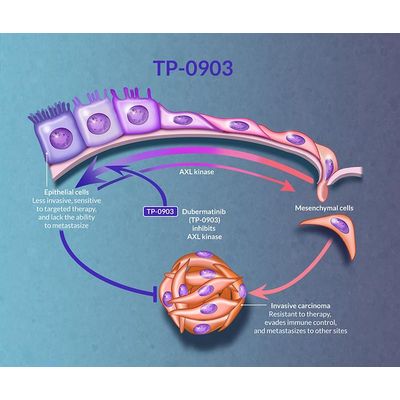
Dubermatinib - Model (TP-0903) - AXL Inhibitor
Dubermatinib (TP-0903) is an investigational inhibitor of AXL receptor tyrosine kinase (RTK), a protein known to be involved in acquiring resistance to chemotherapeutics, immune evasion, and developing metastatic capacity in cancer cells.9-11
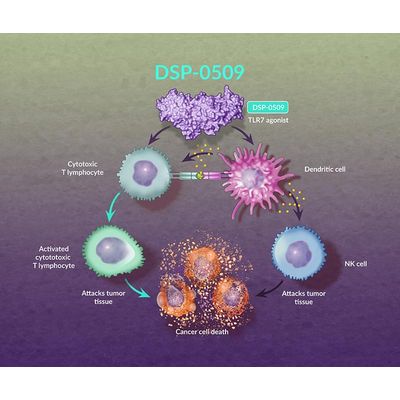
Sumitomo - Model DSP-0509 - TLR7 Agonist
DSP-0509 is an investigational Toll-like receptor (TLR) 7 agonist, which is hypothesized to induce cytokine production, activate cytotoxic T lymphocytes, and sustain immune-mediated antitumor activity.14
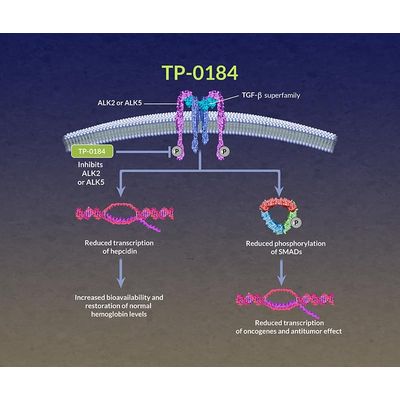
Sumitomo - Model TP-0184 - ALK2 and ALK5 Investigational Inhibitor
TP-0184 is an investigational inhibitor of activin receptor-like kinase 2 (ALK2) and ALK5 (also known as TGFβR1). This bimodal inhibitor is believed to downregulate multiple TGF-β superfamily signaling pathways and has shown antitumor activity in several cancers.
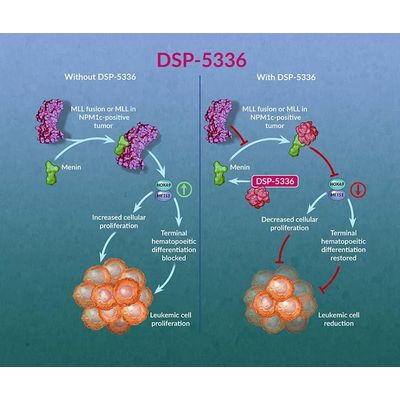
Sumitomo - Model DSP-5336 - Menin-MLL Binding Inhibitor
DSP-5336 is a small molecule inhibitor against the binding of menin and mixed-lineage leukemia (MLL) protein. Menin is a scaffold nuclear protein that plays various key roles in biological pathways, including cell growth regulation, cell cycle control, genomic stability, bone development, and hematopoiesis.26,27 Binding of menin to MLL fusion and wildtype proteins leads to the upregulation of HOXA family and MEIS1 genes that function to stall myeloid cellular differentiation and induce leukemogenic transformation.26,28,29 Preclinical evidence shows that the disruption of fusion and wild-type menin-MLL interactions inhibits leukemic cell proliferation and restores terminal differentiation of MLL-rearranged and nucleophosmin 1 (NPM1)–mutated leukemic cells.26,30
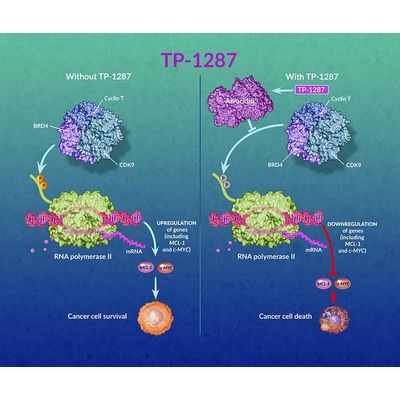
Sumitomo - Model TP-1287 - Investigational Oral CDK9 Inhibitor
TP-1287 is an investigational oral CDK9 inhibitor that has shown favorable oral bioavailability in preclinical models. TP-1287 is enzymatically cleaved, yielding the active moiety, a potent inhibitor of CDK9.35 Inhibiting CDK9 is thought to downregulate the transcription of target genes, including MCL-1, reducing leukemic blast viability in MCL-1–dependent hematologic malignancies, and c-MYC, an important oncogene across multiple tumor types.36-38
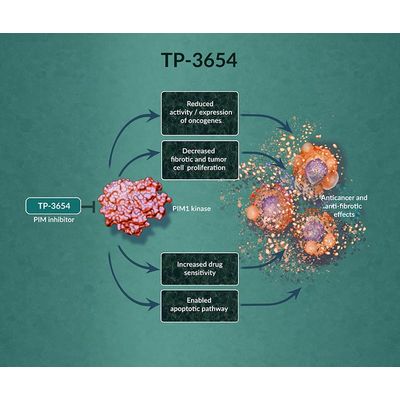
Sumitomo - Model TP-3654 - Investigational Oral PIM Inhibitor
TP-3654 is an oral investigational inhibitor of PIM kinases, which has potential antitumor and anti-fibrotic effects through multiple pathways, including induction of apoptosis.41,42
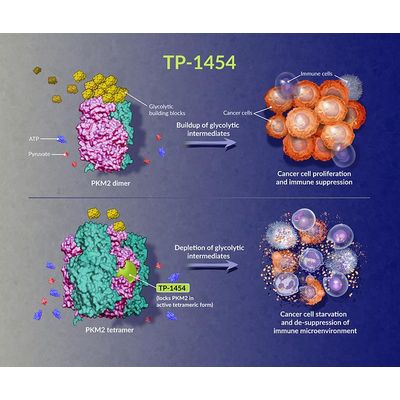
Sumitomo - Model TP-1454 - Investigational Oral Pyruvate Kinase M2 Isoform (PKM2) Activator
TP-1454 is an investigational oral pyruvate kinase M2 isoform (PKM2) activator.44 This activation is thought to starve cancer cells of important molecular building blocks, inhibiting tumor cell proliferation, and enhancing antitumor response.44,45
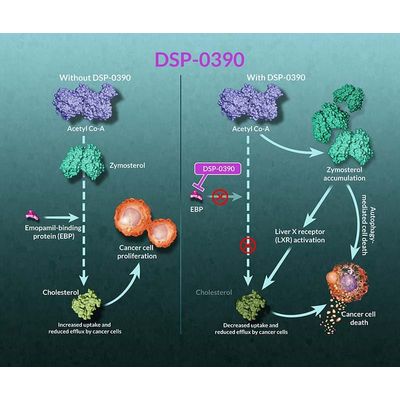
Sumitomo - Model DSP-0390 - Emopamil-Binding Protein (EBP) Inhibitor
DSP-0390 is an emopamil-binding protein (EBP) inhibitor. EBP is an endoplasmic reticulum membrane protein involved in cholesterol biosynthesis.47 When functional, EBP mediates de novo cholesterol synthesis for cell membrane structure and signaling, enabling aberrant growth of tumors.47-50 Inhibition of EBP causes an accumulation of its substrates zymostenol and zymosterol, which contributes to lethal autophagy in several types of cancer and efficient cellular cholesterol depletion via secondary LXR activation.47-50 The gene signature associated with cholesterol biosynthesis has been correlated with certain cancer cell proliferation and an aggressive phenotype.51

Sumitomo - Immunotherapeutic Cancer Vaccines
Immunotherapeutic cancer vaccines have generated a lot of interest from oncologists since it was discovered that immune activation can lead to a specific antitumor response.1 However, despite initial progress, most cancer vaccines have failed to drive sufficient tumor immunogenicity, leading to poor clinical responses.1 The reason for this may be that previous vaccine models used inadequate vaccine designs and/or target antigens.1