ABA survey: Support for online voting jumped after pandemic spread
Support for online voting increased sharply after the COVID-19 pandemic spread widely in the United States, according to a new survey by the American Bar Association.
The vast majority of Americans surveyed also said they are not willing to suspend freedom of speech or freedom of the press during a national emergency such as the current pandemic. But 54% supported suspending the First Amendment right of freedom of assembly during such an emergency.
The results are from the ABA 2020 Survey of Civic Literacy — the second annual survey that is released as part of the nation’s Law Day, celebrated every May 1.
The nationally representative survey was conducted in two parts – March 9-13 and April 7-11 – by DAPA Research. It measured public knowledge and opinions on a variety of legal and civic knowledge topics.
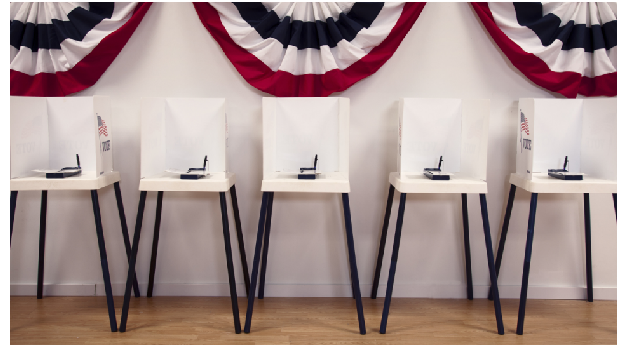
In the March survey, conducted before the pandemic overtook the country, 63% said they opposed allowing Americans to vote online rather than going to a polling booth. But the April poll, conducted when much of the country was under stay-at-home orders, found opposition to online voting shrank to 40%. Support soared from 34% in March to 55% in April.
Asked in April who has the legal authority to issue statewide quarantines or stay-at-home orders, most people (71%) correctly identified governors, but 18% inaccurately thought it was the president.
In both surveys, public support for allowing voting before Election Day was strong.
In other findings:
- Voter fraud and voter IDs:52% said that they believed voter fraud is a major problem in the U.S., and 82% supported requiring voters to present an ID to prove their identity before voting.
- Restoring voting rights:72% supported restoring voting rights to felons who have completed their prison sentences.
- Electoral College:Less than half (46%) knew that votes in the Electoral College are allocated to states based on the number of senators and representatives they have in Congress. One-third thought electoral votes are based on the number of registered voters in each state.
- Equal Rights Amendment:83% supported the ERA, a constitutional amendment that would guarantee equal legal rights to all regardless of gender.
- 19th Amendment: 57% knew that the 19th Amendment guaranteed women the national right to vote. Nearly 1 in 5 incorrectly thought it guaranteed rights to all, regardless of gender.
- Supreme Court:While 61% knew that John Roberts is chief justice of the United States, 11% thought it was Ruth Bader Ginsburg.
The ABA Division for Public Education and the Law Library of Congress celebrated Law Day with a free public program on the legacy of the 19th Amendment. Panelists discussed why the 19th Amendment still matters and how the women’s suffrage movement changed America.