


- Home
- Companies
- Aktiv Pharma Group, Inc
- News
- Online Sales of Prescription Drugs via ...
Online Sales of Prescription Drugs via Donation
Many public services, e.g. the public school system, make up resource deficits by soliciting or accepting private charitable donations. This strategy does not work for prescription drug donations as they require a medical order for sale to a private customer; a prospective donor can’t simply walk into Walgreens and buy epinephrine, heparin, insulin, Zofran, Dilaudid or ketamine. Emergency services in the United States are often reliant on traditional retail pharmacies to source medications for routine use. We propose a business method by which donors may use a website or mobile application interface to pay for prescription medications, at which point the order would be approved by an appropriate medical practitioner and sent for delivery to the receiving agency.
We propose a process for purchasing a prescription drug product by a third party donor to be provided by a first party supplier to a second party recipient. Said donor may be an individual, a business, a non-profit, or any other organization. Said supplier may be a manufacturer, distributer, wholesaler, pharmacy or other entity competent to supply prescription medications. Said recipient may be a clinic, a first responder organization, a police force, a fire department, or any other entity competent to provide emergency medical services.
A computerized application controls the transaction. The application has a user interface which permits the donor to select an appropriate drug product, select the recipient, and to pay for the product. This generates a request for approval of an order for the drug product, which is sent to a person legally competent to approve prescription drug orders. Upon approval, the product is then provided to the recipient by the supplier. Such legally competent person may be a physician, a regional medical director, a state medical director, a federal medical director, a nurse practitioner, a pharmacist, a paramedic, or other such person depending on the medication, recipient, and donor.
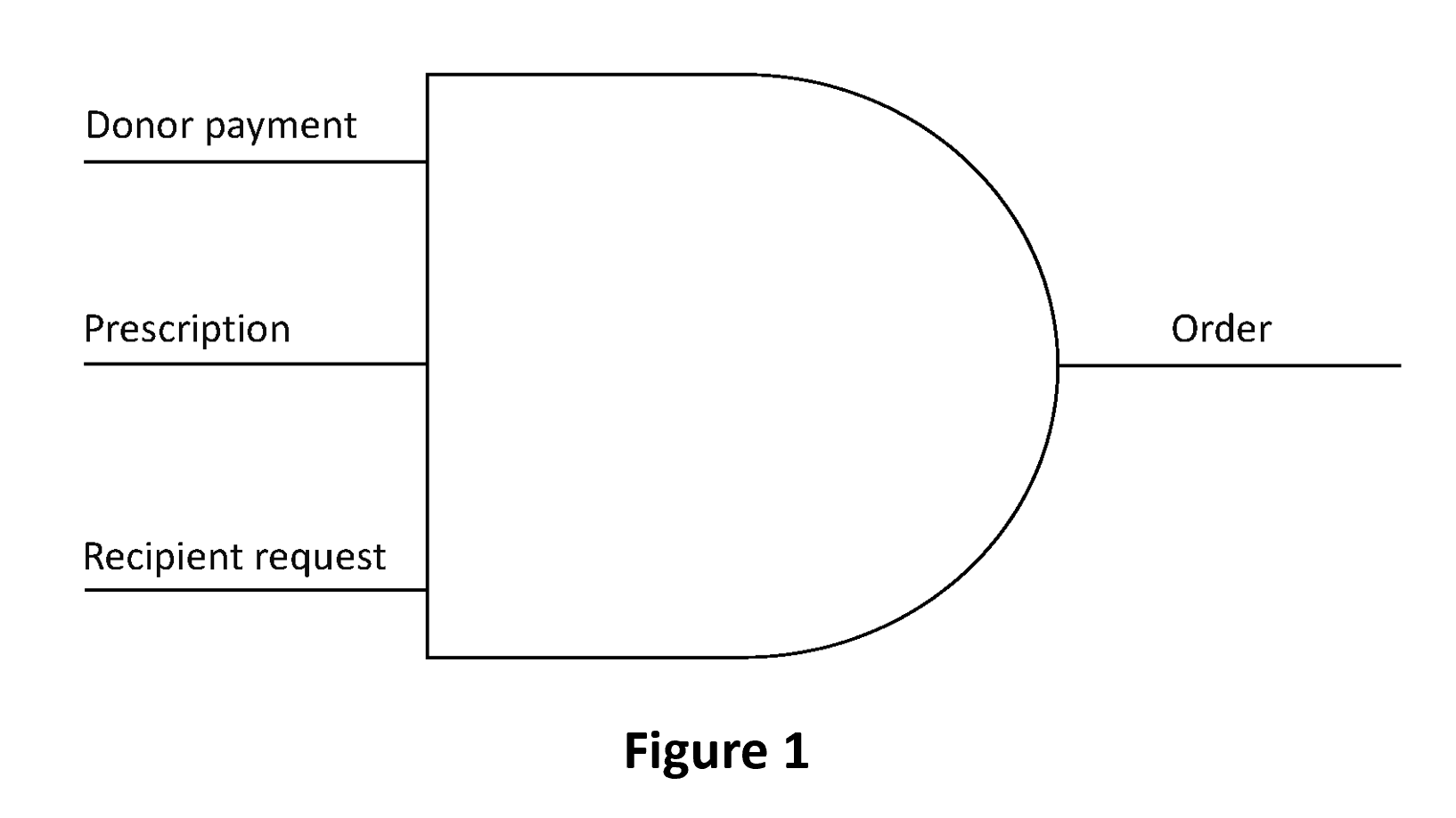
Figure 1. The Application issues an order for the Product to the supplier Inventory when the Product is requested by the Recipient, a request is approved by the Approver, and payment is made by the Donor.
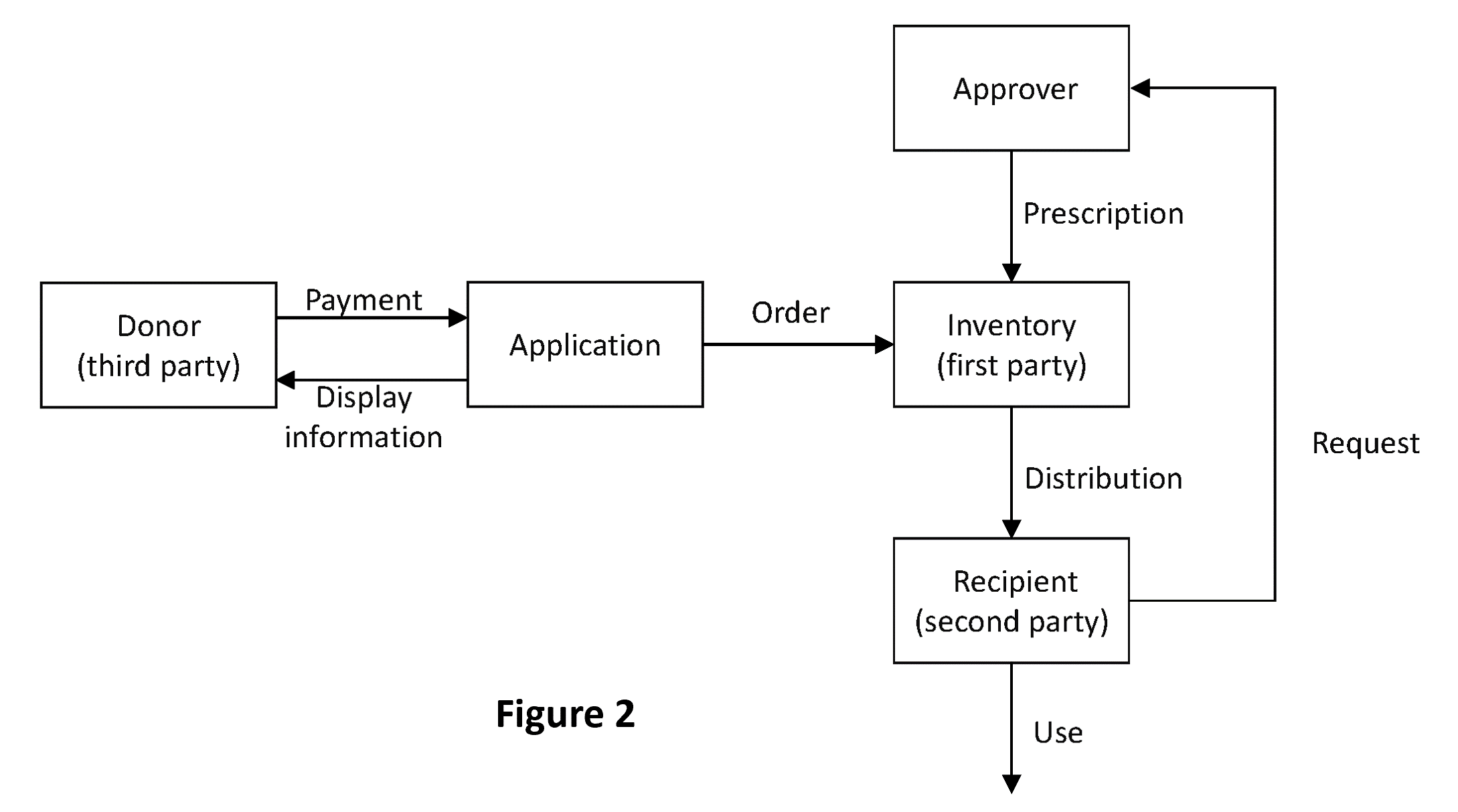
A Recipient may submit a request for the Product through the Application as shown in
Figure 2, and such requests may be made visible to users of the Application such that they are aware of the supply need.
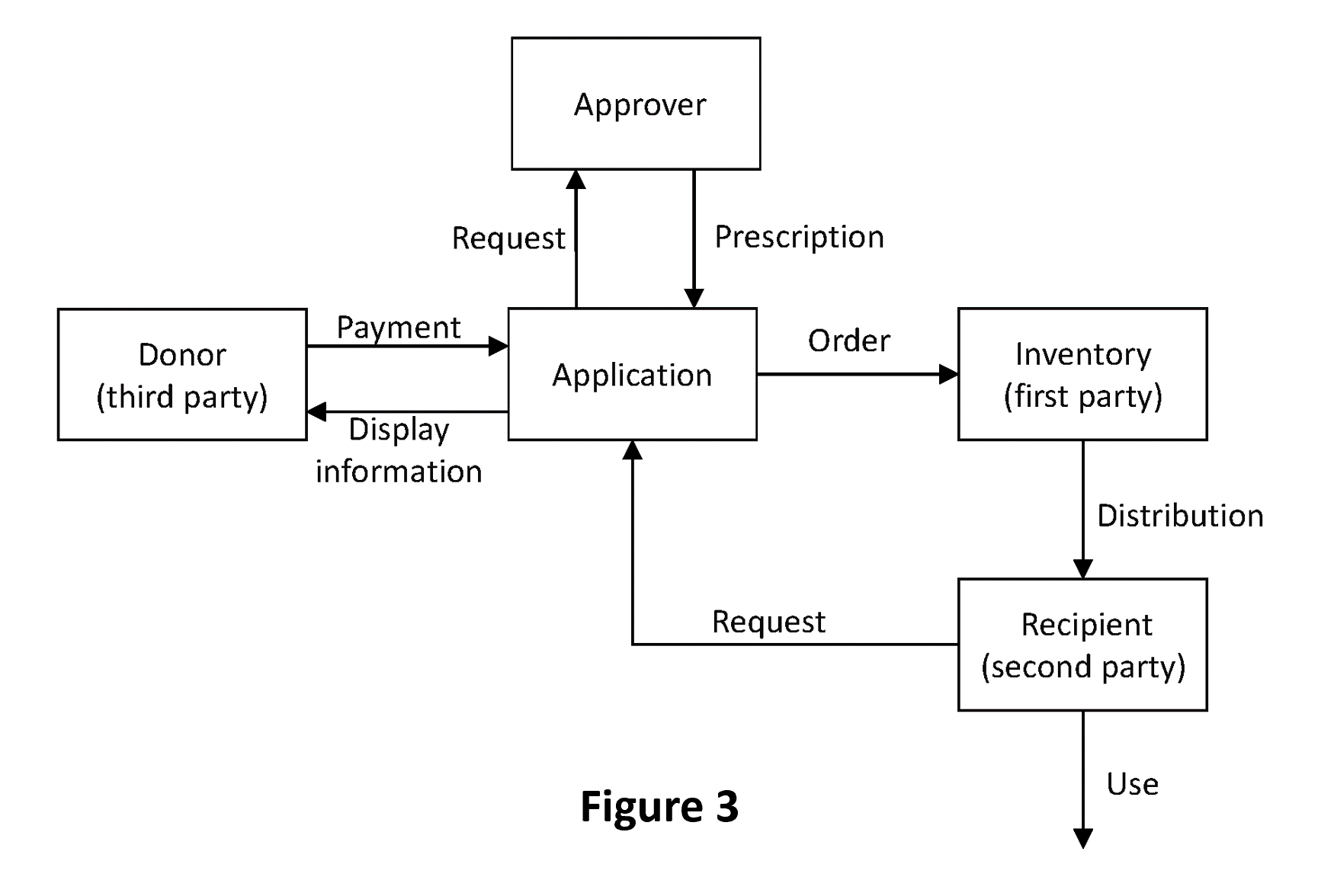
A Recipient may alternatively submit a request to an Approver directly as shown in Figure 3, which Approval may then issue a prescription. The prescription may be recorded by the Application and may be made visible to prospective Donors via the Application interface.
The Donor may issue a payment for the Product that will result in a general order to Inventory to may designate the paid product to a specific Recipient. A Recipient may be selected by one or a combination of characteristics such as type of Recipient, e.g. an emergency medical service, a region, e.g. a state, county, or city, by Product stock status, e.g., fully stocked, partly stocked, or short, by economic situation, or by other values.
The Application may display such Recipient information on a Recipient profile page or through other interface designs such as a map of a region and indicating the Recipient location and their stock status. The Application may display a table of recipient criteria and allow sorting the Recipients based on Donor priorities.
Upon purchase and approval the Product may be shipped to the Recipient from the Inventory supplier, or the Recipient may pick up the Product from Inventory. Legal compliance efforts may be necessary to release the product to the Recipient, such as recordation of Recipient information and signature..