


- Home
- Companies
- STARmed America
- Products
- STARmed ELRA - Bipolar RFA Electrode ...
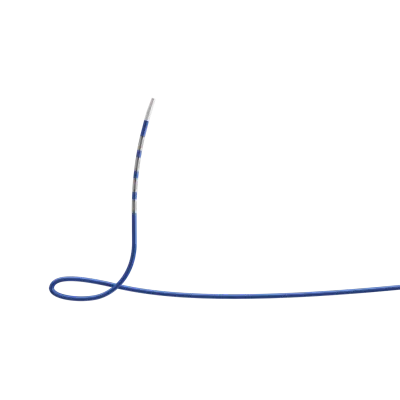
STARmed ELRA - Bipolar RFA Electrode Catheter for Biliary Duct Obstruction
The ELRA™ Bipolar RFA Electrode Catheter is designed for targeted radiofrequency ablation (RFA) in the treatment of biliary duct obstructions. The device operates using a bipolar electrode, allowing energy delivery between two poles on the same catheter tip, which ensures precise ablation in confined anatomical spaces like the biliary ducts. When used in conjunction with the VIVA combo RF Generator, the ELRA™ system enhances procedural efficacy through real-time impedance monitoring and a unique temperature sensing system that automatically disengages upon completing ablation or sensing inadequate contact. The catheter is available in multiple sizes with ablative lengths ranging from 11mm to 33mm, catering to various anatomical requirements and therapeutic indications. It is equipped with a 7FR catheter and a conical tip for smooth navigation within intricate ductal structures in percutaneous or intraoperative settings.
The flexible RFA electrode
The ELRATM Endoluminal RFA electrode is an innovative bipolar electrode catheter. It has been designed to deliver safe and effective radiofrequency ablation (RFA). The ELRATM electrode is ideal for the treatment of biliary duct obstructions and malignant biliary strictures. With its bipolar electrode configuration, the ELRATM RFA catheter offers precise energy delivery and optimal patient outcomes.
- Bipolar electrode for precise, localized ablation
- Available in multiple active tip lengths (11, 18, 22, and 33 mm)
- Ideal for treating malignant biliary strictures using minimally invasive techniques
- Flexible catheter design for ease of navigation via percutaneous approach
- Compatible with STARmed VIVATM combo RF Generator system
ELRATM is a bipolar RF electrode that enables RF energy delivery between two closely spaced electrodes. This configuration allows for targeted ablation of tissue within the biliary ducts, reducing thermal injury to surrounding structures. The electrode is often used in combination with an endoscopic biliary stent. The goal is to restore duct patency and ensure proper bile drainage.