


ZimVie Inc.
- Home
- Companies
- ZimVie Inc.
- Products
- Model T3 - Dental Implant
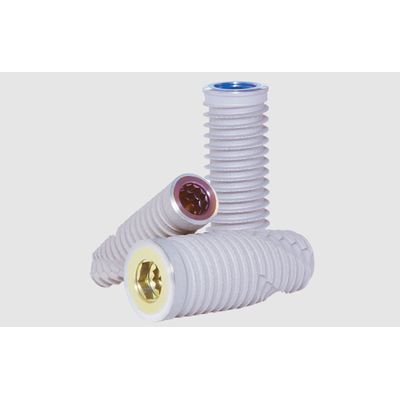
Model T3 -Dental Implant
FromZimVie Inc.
The T3 Dental Implant is Designed to Deliver Aesthetic Results Through Tissue Preservation. T3 Dental Implants: Built for stability and optimized placement: Contemporary Hybrid Surface - Provided by complex multi-surface topography. Seal Integrity - Provided by a stable and tight implant/abutment interface. Integrated Platform Switching - Provided by a medialized implant/abutment junction
Most popular related searches
dental implant
dental implant system
implant abutment
implant
implant system
fatigue testing
implant interface
connective tissue
bone loss
surgery procedure
Contemporary Hybrid Surface
Coarse and Fine Micron Surface Features Create an Average Mean Surface Roughness Value of 1.4 μm in the Threaded Portion of the Dental Implant.14
- Coarse and fine micron features
- Fine micron features on the dental implant collar
- Option for nano-scale features along the full length of the dental implant
Integrated Platform Switching
Integrated platform switching medializes the implant/abutment junction (IAJ) inward, creating a biologic width between connective tissue and the IAJ, helping to maintain bone levels.20
- Reduced crestal bone loss
- Reduction in crestal bone remodeling vs. non platform-switched dental implants22
A stable, tight implant/abutment interface minimizes abutment micromotion and reduces potential microleakage.15
- Seal integrity test was performed by Biomet 3i July 2011 - June 2012. In order to test the dental implant systems, a dynamic - loading leakage test was developed and executed. The test set-up was adapted from ISO14801, Dentistry - Implants - Dynamic Fatigue Test for Endosseous Dental Implants.
- Five samples each of the three competitive dental implant systems were evaluated.
- The mean seal strength (N) at which each of the systems leaked or fractured is detailed in the graph.
The T3 Short Dental Implant’s length and features are designed to provide an implant treatment option in some challenging clinical cases where the bone height is insufficient for standard length dental implants.
The Clinical Challenge:
In areas with minimal bone height, providing dental implant treatment may require complex surgical procedures, such as:
- A sinus lift procedure in the maxilla
- Vertical ridge augmentation in the mandible due to the proximity to the mandibular nerve