


- Home
- Companies
- FESHI, Brand of Jiangsu Futai ...
- Products
- FESHIN - Model H20231 - Endoscopic ...
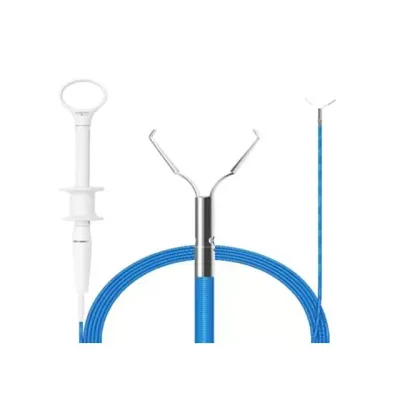
FESHIN - Model H20231 -Endoscopic Disposable Flexible Hemostatic Clips
Under the visual condition of endoscope, clamps were placed in the upper and lower digestive tract to clamp the soft tissues of digestive tract to achieve hemostasis.
Hemostasis clips are small medical devices used to achieve hemostasis, which is the process of stopping bleeding. These clips play a crucial role in surgical procedures by providing a safe and effective way to control bleeding and promote healing. They are typically made of biocompatible materials such as titanium or stainless steel, ensuring compatibility with the human body. Moreover, the design of these clips allows for easy application externally, allowing healthcare professionals to precisely close off blood vessels or other structures and effectively prevent further bleeding. By utilizing hemostasis clips, medical professionals can enhance patient safety and improve surgical outcomes.
Secure Closure:
Hemostasis clips provide a secure and reliable closure mechanism to stop bleeding effectively.
Versatility:
These clips are available in various sizes and designs, allowing for versatility in different clinical applications.
Ease of Application:
Hemostasis clips are designed for easy application, enabling healthcare professionals to quickly and accurately place them in the desired location.
Non-Invasive:
As external devices, hemostasis clips offer a non-invasive approach to achieve hemostasis, avoiding the need for more invasive procedures.
Hemostasis clips find application in various medical fields, including:
-
Surgery:
Surgeons may use hemostasis clips during surgical procedures to control bleeding from blood vessels or other structures.
-
Endoscopy:
Hemostasis clips are commonly used in gastrointestinal endoscopy procedures to manage bleeding ulcers or other sources of bleeding.
-
Interventional Radiology:
Hemostasis clips can be employed in interventional radiology procedures to achieve hemostasis after minimally invasive interventions.
-
Trauma Care:
In emergency situations, hemostasis clips may be utilized to control bleeding in traumatic injuries before more definitive treatment can be provided.
- It is important to follow the manufacturer's instructions for the proper application and removal of hemostasis clips.
- Healthcare professionals should be trained in the correct techniques for using hemostasis clips to ensure patient safety and optimal results.
- Care should be taken to avoid excessive tissue trauma during clip application, as it can potentially lead to complications.