


Jubilant Therapeutics Inc.
Model LSD1/HDAC6 -Cancer Stem Cell
Strong scientific and clinical rationale for LSD1/HDAC6 inhibition in haematological and solid tumor.
Most popular related searches
cancer stem
stem cell
cancer cell
T-cell
solid tumor
immune suppressive
immune modulating
cancer specific
immune suppressing
immune modulator
- LSD1 is essential for cancer stem cell survival and maintenance of AML blasts. Both LSD1 and HDAC6 lead to immune suppression through distinct mechanisms
- Both targets are over-expressed in AML and multiple other cancers
- LSD1 and HDAC6 are part of co-repressor complexes leading to modulation of cancer-specific genes
- Current SoCs for AML have a low response rate, limited single agent activity and dose-limiting toxicities
- Novel therapies targeting multiple pathways are beneficial
- LSD1 inhibitors alone have shown limited single agent activity
- Selective inhibition of HDAC6 may reduce the toxicity associated with pan-HDAC inhibitors
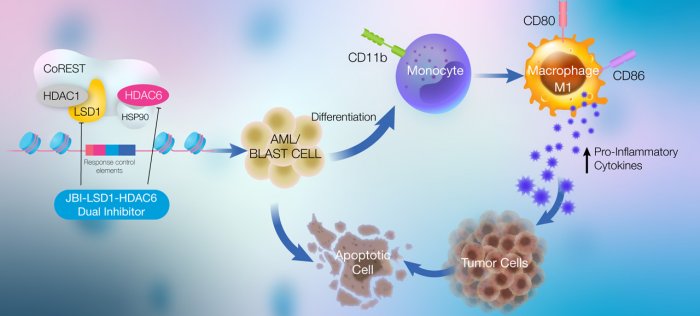
The transcriptional corepressor complex CoREST contains multiple proteins including demethylase (LSD1) and deacetylases (HDAC) that regulate the gene expression. Dual LSD1/HDAC6 inhibitor comprehensively blocks the CoREST complex, to show a unique pharmacologic action relative to HDAC or LSD1 inhibitors.
- Faster clearance, sustained target engagement in malignant cells; minimized systemic toxicity
- Potential to target MLL rearranged tumors, MDS and other liquid tumors
- Synergy or overcome resistance when combined with chemotherapy/standard of care
- Combine with checkpoint inhibitor for solid tumors
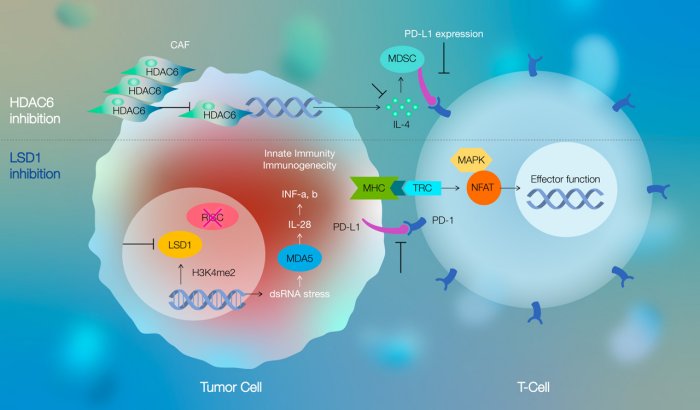
- HDAC6 inhibition leads to decrease in PD-L1 expression (via IL-4 inhibition)
- Selective HDAC6i could be used as immunological priming agents to sensitize immunologically “cold” tumors and subsequently improve ongoing immune check-point blockade therapies
- LSD1 inhibition leads to double-stranded RNA (dsRNA) stress and activation of type 1 interferon, which stimulates anti-tumor T cell immunity and restrains tumor growth.
- LSD1 depletion enhances tumor immunogenicity and T cell infiltration in poorly immunogenic tumors