




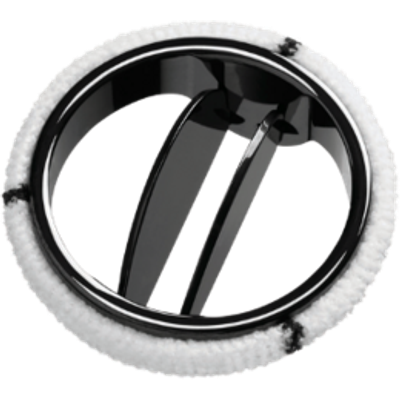
Abbott - Mechanical Heart Valves for Aortic and Mitral Valve Replacement
Abbott's mechanical heart valves offer a reliable solution for patients requiring aortic and mitral valve replacements. Featuring a bileaflet design, these valves prioritize low thrombogenicity to ensure excellent patient outcomes. The pivot guard design provides significant benefits during and after implantation. With specific models like the Regent™ and Masters Series, these valves accommodate a broad range of patient needs, including pediatric cases with the world's smallest 15 mm valve. Known for their low complication rates, these devices are suited to deliver optimal hemodynamic performance, reducing shear stress and thromboembolic risks. The availability of various cuff options allows for tailored implantability, and the expanded product sizes enable precise fittings. This technology addresses both symptomatic aortic and mitral valve issues, offering essential options for high-risk groups and long-term durability for everyday patients.
Unique design features have established Abbott mechanical heart valves—including the Regent™ and Masters Series—as a gold standard for reliability and performance, while maintaining low complication rates.
Design-driven hemodynamic confidence and low thrombogenicity
Our mechanical heart valves (MHV) lead the way with a proven bileaflet design that results in low thrombogenicity and excellent patient outcomes.
- Leaflets open to an 85-degree angle in systole due to their upstream positioning, enabled by unique pivot guards (shown at right)
- Strong, uniform velocities within hinge recesses aid washout of blood elements
- Low carbon surface area means less thrombus formation
- Orifice-to-annulus ratio (as high as 84%) ensures large effective orifice areas (EOAs) and reduces prosthesis-patient mismatch
The Pivot Guard Design
An Abbott Hallmark
Featured in all Abbott mechanical heart valves, the pivot guard offers benefits both during implant and post-implant
- Recessed design minimizes interaction with sub-annular native mitral valve apparatus
- Minimized carbon surface area can lessen thrombus formation
- Pivot guards help shield pivot mechanism from pannus ingrowth
- Enables a consistent 85-degree opening angle, promoting minimized leaflet flutter and more laminar flow through the orifice
Low Thrombogenicity
A necessity in mechanical heart valve (MHV) replacements
Designed with low thrombogenicity at the forefront
- Large internal diameters up to 26.1 mm available promote low pressure gradients
- Low gradients can help minimize shear stress and thrombogenicity
- Uniform velocities within hinge recesses help aid washout of blood elements
- Abbott hinge design enables complete leaflet sweep, further aiding washout