


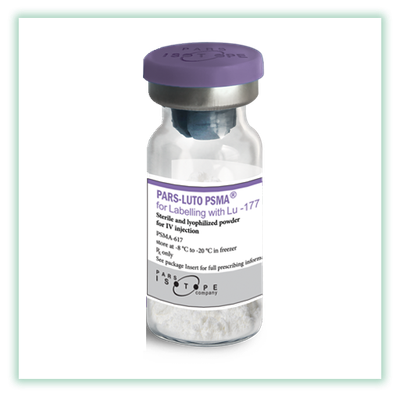
Research, development and production of PARS-LUTOPSMA theranostic radiopharmaceutical kit in form of a single vial, was implemented and unveiled by Parsisotope Company for the first time in the world. This radiopharmaceutical has been designed for the treatment of prostate cancer and its metastasis in various organs including internal soft and skeletal tissues.
Prostate cancer is the most common cancer among men that metastasizes to the bones rapidly and leads to a painful condition for the patient. This kit is used for the treatment and then the treatment follow-up steps of the metastatic prostate cancer after being labeled with Lu-177 radioisotope. The radiopharmaceutical resulting from this radiopharmaceutical kit binds to prostate-specific membrane antigen (PSMA) through receptors.
The radiopharmaceutical obtained from this radiopharmaceutical kit binds to prostate-specific membrane antigen (PSMA) through receptors. This antigen itself is a membrane glycoprotein and its expression level increases with increasing tumor activity. Due to its high selectivity and precision, this radiopharmaceutical sits on prostate cancer cells and various metastases related to this cancer intelligently and in a quite targeted form, and radionuclide therapy is performed very effectively, safely and focused on cancer cells. This treatment reduces the size of tumors and the number of cancer cells, and as a result, according to the physiological characteristics, helps patients to recover and it can lead to complete treatment.
