


- Home
- Companies
- CleanSlate UV
- Products
- CleanSlate - Model UV-C - Ultraviolet ...
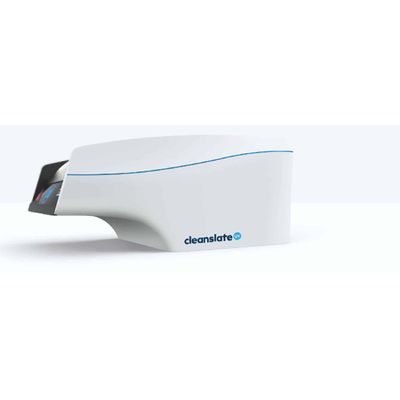
CleanSlate - Model UV-C -Ultraviolet Light
Germicidal UV has been used in healthcare, food and biotech for over 30 years. UV light is categorized according to wavelength: UV-C light, which is normally blocked by the ozone layer, can be used to inactivate germs such as bacteria, viruses and spores.
How Does UV-C Light Inactivate Pathogens?
UV-C light disrupts the DNA and RNA of pathogens, eliminating their ability to replicate. It does not physically remove the cells. This technology works by line of sight, so the light must reach a surface in order for bacteria or viruses to be inactivated.
Chemical wipes damage touchscreens and leave a lot of room for manual error. Most wipes require you to leave the chemical solution on the surface, untouched, for 2-4 minutes in order for them to be effective.
All mobile device companies prohibit the use of disinfectants on their screens. Some allow for a ‘gentle application’ of 70% isopropyl alcohol (70% IPA), but this concentration is not strong enough to inactivate resistant bacteria and viruses on phones.
UV light won’t harm touchscreens, cameras, or IR sensors. It is optimal for hard, non-porous surfaces such as smartphones.
It works via line of sight
What it can’t see, it can’t sanitize. Devices cannot touch or overlap, and any sanitizing solution needs to give very clear instructions to prevent this.
It is very sensitive to the presence of biomatter or ‘soiling’
This biomatter acts like a set of armor for germs, protecting it from direct exposure to UV light. This is why it’s critical to ensure that any UV-C solution you examine has been tested with a level of biomatter present. Otherwise, a solution is assuming that you will pre-wipe devices, which negates the many benefits of using UV-C light in the first place.
Wipe down device if heavily soiled.
In the event that a device is heavily soiled (i.e. heavy food grease), facilities should provide a way to wipe down the device prior to UV disinfection that doesn’t rely on harsh chemicals (ex. a damp microfiber cloth).