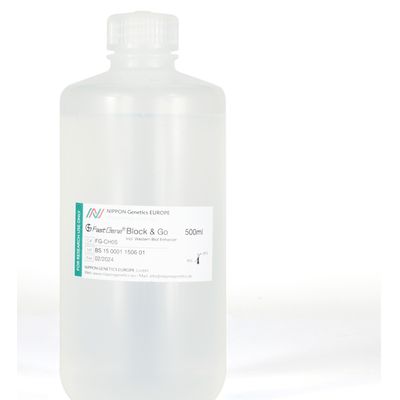
Nippon FastGene Block & Go - Model FG-CH05 -Western Blocking Solution and Signal Enhancer
FastGene® Block & Go serves a blocking solution as well as signal enhancer in Western blot analysis. It provides blocking and primary and secondary antibody hybridization in one step. Furthermore, it enhances the signal developed with HRP (horseradish peroxidase) or AP (alkaline phosphatase) substrates. FastGene® Block & Go reduces time and labor-intensive Western bot procedure.
Most popular related searches
- 2-in-1 solution: Blocking reagent and signal enhancer
- 3-in-1 step procedure: Blocking of the membrane + primary antibody + secondary antibody in one step
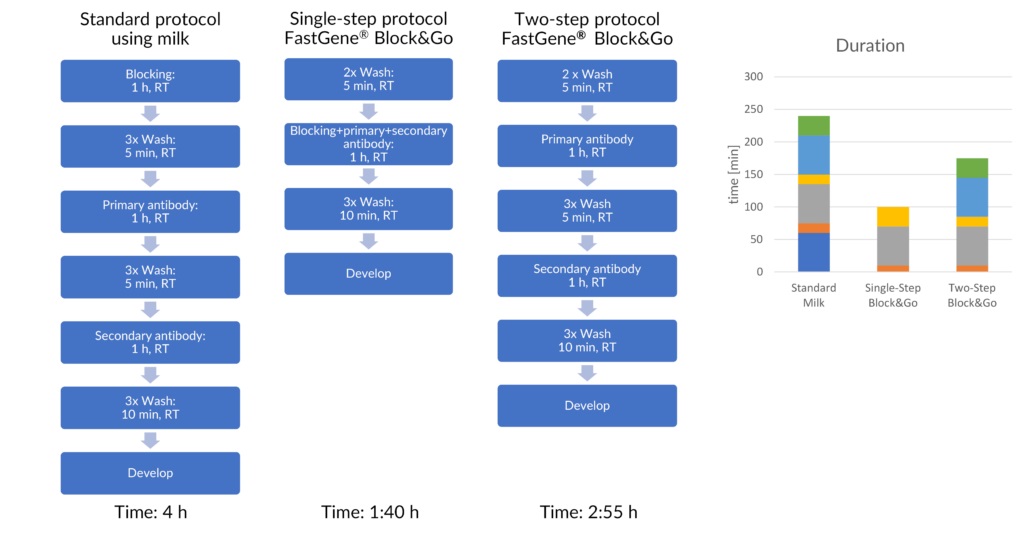
- Time-saving: Up to 2.5 h less hands-on-time compared to conventional protocol using milk or BSA
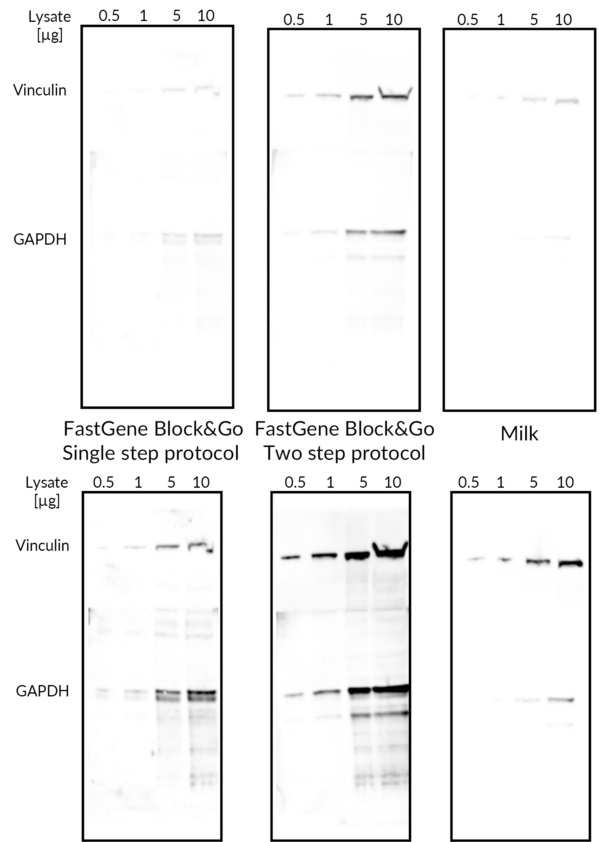
- Increased detection sensitivity: Detection of proteins from up to 0.5 µg lysate
- Flexible use: Usable in single step or two step protocols
- Protein-free: Reduced overall background and minimization of non-specific signals
- 3 steps in one: blocking of the membrane, primary and secondary antibody in one step
- Enhanced antibody signal: 2-5-fold increase in signal intensity for most protein targets.
- Enhance time-saving: It saves at least 2 hours in the antibody detection process during the Western Blot, with only one hour needed.
- Effective with any ECL: After the antibody detection process, the signal can be developed with both HRP (horseradish peroxidase) and AP (alkaline phosphatase) substrates.
- Less hands-on steps: No 3 wash steps are required, meaning no need to transfer the membrane in&out of the container.
- Compatible with PVDF & NC membrane: Regardless of the pore size, ‘Block & Go’ minimizes the background from non-specific protein binding by antibodies.
- Protein free: Reduces overall background and minimizes non-specific signals often seen with ECL detection.
By combining 3 steps in one step (blocking + primary antibody + secondary antibody), the procedure can be reduced about 1 h (2-step procedure) or even 2.5 h (1-step procedure) compared to conventional protocol using milk or BSA.