


- Home
- Companies
- Aphios Corporation
- Products
Aphios Corporation products
Oncology Therapeutic
Aphios - Model Zindol - Chemotherapy
Despite the widespread use of the 5-HT3 receptor antagonist anti-emetics such as Palonosetron (Aloxi; Eisai), Ondansetron (Zofran®; GSK), Granisetron (Kytril®; Roche Pharmaceuticals), and Dolasetron (Anzemet®; Aventis), CINV continues to be reported by up to 70% of adult patients receiving highly emetogenic chemotherapy agents and 58% of school-age and adolescent-age children receiving highly emetogenic chemotherapy. Anticipatory nausea (AN) is reported by approximately 20% of patients at any one chemotherapy cycle and by 18-57% of patients by the fourth chemotherapy cycle.
Aphios - Model APH-0701 - Prostate Cancer Prevalence and Demographics
Prostate cancer is the most prevalent cancer among men, and it is the second leading cause of cancer death among men in the United States. More than 500,000 cases are diagnosed annually. In the U.S. this year, 1 in 6 males will develop the disease and 30,000 others will die of it. Although prostate cancer mostly affects elderly men, the number of younger men with prostatic carcinoma is significant. In addition, the general increase in longevity has further emphasized the need for effective treatment of prostate cancer, especially for those forms that are androgen-insensitive and metastatic.
Aphios - Model APH-0911 - Taxoid Sugar Pills (Prodrugs)
Poor Solubility and Associated Formulation and Bioavailability Difficulties. Although paclitaxel is an effective anticancer drug, its solubility is low (~ 0.4 µg/mL), which limits its medical utility to intravenous applications. Docetaxel (Taxotere®) was developed as a paclitaxel derivative having improved water solubility; its solubility, however, is only ~ 14 µg/mL. Several encapsulation techniques have been utilized to reformulate paclitaxel in more biocompatible solvents. These include liposomes, dextran, PEG and albumin, the latter of which has been approved by the FDA under the name Abraxane. While these formulations may reduce or eliminate toxicity and side effects associated with Cremophor EL®, they are still administered intravenously.
Aphios - Model APH-0912 - Combination of A Taxotere® Prodrug And Monoclonal Antibody
APH-0912 is a combination of a Taxotere® prodrug and monoclonal antibody targeted to treat metastatic cancer. The prodrug is a combination of a docetaxel molecule, the potent anticancer drug, and a sugar molecule to enhance solubility covalently linked to a tumor-specific antibody. This molecular combination is not bioactive prior to administration. After infusion and adsorption onto targeted cancer cells facilitated by the cancer-specific monoclonal antibody, serum enzymes will break down the prodrug into the bioactive docetaxel and a sugar molecule.
Infectious Disease Therapeutic
Aphios - Model APP-0205, APP-309 - Anti-Influenza Therapeutics
Flu – A Serious, Deadly Disease with Pandemic Potential. In 1918, the Spanish flu (H1N1 influenza virus) rapidly killed 50 to 100 million people worldwide, affecting one of every five Americans. Today, influenza remains a common and serious respiratory illness that contributes to the reduction of quality of life and results in a significant loss of manpower hours each year. Every year, 40 million Americans catch the flu and 20,000 to 40,000 Americans die from it, making it the deadliest infectious disease in the United States. In the case of a pandemic caused by a mutated H5N1 virus or other flu strain, the mortality rate will increase by several orders of magnitude. Tamiflu® is the leading antiviral effective against H5N1, but there have been instances where the H5N1 virus and mutant strains have become resistant to Tamiflu®. Thus, there is a need for additional effective anti-influenza therapeutics.
Aphios - Vaccine Adjuvant Technology
Vaccination is the most cost-effective tool for the control and prevention of infectious diseases. However, multiple inoculations are often required to achieve desirable protection even with potent antigens. In order to increase the therapeutic efficiency of such vaccines, adjuvants are used with vaccines to augment the immune response. There are several types of adjuvants with different modes of action. Adjuvants form a depot of antigen at the site of inoculation with slow release of antigens. Adjuvants can improve the performance of vaccines by targeting the antigen to antigen-presenting cells, eliciting specific cytokines that direct Th1 or Th2 immune responses. Most of the adjuvants increase the production of specific antibodies. Adjuvants that enhance cell-mediated immunity for vaccines against bioterrorist agents are desirable since many of these agents are intracellular pathogens.
Aphios - Model APH-0812 - Combination Therapy
A combination therapy consisting of PKC agonists with or without HDAC inhibitors, designed to reactivate latent HIV reservoirs so that HIV can be eliminated by antiviral therapy and eradicated from the body. HIV Latency: Although highly active antiretroviral therapy (HAART) is undoubtedly a lifesaving therapy for millions of AIDS patients, the persistence of latent HIV-infected cellular reservoirs represents a major hurdle to virus eradication. Latently infected cells remain a permanent source of viral reactivation. For this reason, the eradication of viral reservoirs is at present the major goal for HIV-1 therapeutics.
Model APH-0202 - Oral Nanoformulation Containing Betulinic Acid
An orally bioavailable nanoformulation of betulinic acid that works as an HIV maturation inhibitor. APH-0202 is an oral nanoformulation containing betulinic acid. A pentacyclic triterpene, betulinic acid is a component of the bark of the white birch tree, Betula alba. Phospholipid nanosomes can be utilized to enhance the formulation and efficacy of betulinic acid. Oral bioavailability can be enhanced by nanoencapsulating betulinic acid nanosomes and/or betulinic acid in biodegradable polymer nanospheres.
CNS Disorders
Model APH-1104 - Novel a-Secretase Modulator and Potential AD Therapeutic
An alpha (α)-secretase modulator for ameliorating Alzheimer’s Disease pathophysiology and cognitive impairment with neuroprotection. Aphios is developing APH-1104, a more potent analog of Bryostatin-1, which is neuroprotective by α-secretase activation via novel PKC isoforms, down-regulation of pro-inflammatory and angiogenic processes and the substitution of β-amyloid for its soluble and harmless relative, s-APPα. Aphios has successfully developed and patented efficient methods for manufacturing and formulating APH-1104. In 2008, Aphios investigated APH-1104, a less potent analog of APH-1104, as an intravenous formulation for Alzheimer’s disease in an open-label n=1 clinical trial in the Bahamas. Although limited, the preliminary results of this exploratory study were striking and encouraging.
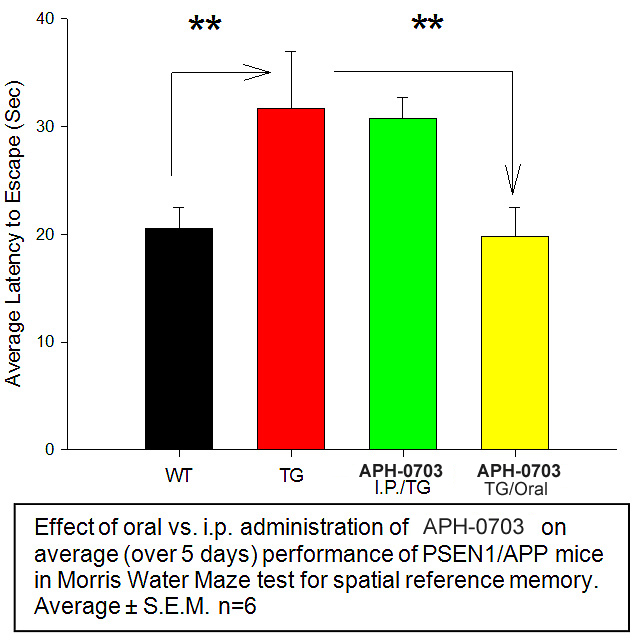
Model Xantol - Enhanced St. John’s Wort Botanical Drug
An enhanced St. John’s Wort botanical product standardized by hyperforin for use as an alternative to prescription antidepressants. Xantol™ is an enhanced St. John’s Wort (SJW) product standardized by hyperforin content [US Patent]. Aphios utilized its patented SuperFluids™ fractionation and manufacturing technologies to develop Xantol™. Aphios is developing Xantol™ for mild to moderate depression, as a natural alternative to prescription antidepressants with adverse side effect profiles.