


Bioplate products
Titanium
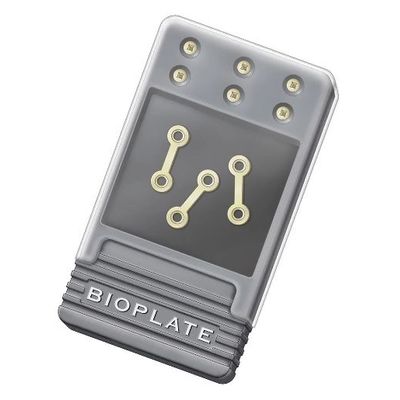
Bioplate - Customized Plate and Screw Sterile Kits for Craniofacial Surgery

MaxFax - Maxillofacial Surgery
Other Products
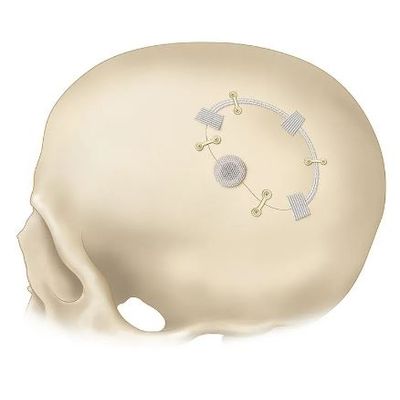
Bioplate - Osteopore Bioresorbable Bone Scaffold for Craniotomies
The Osteopore Bioresorbable Bone Scaffold is specifically designed to address craniotomy gaps, promoting improved aesthetics, reduced pain, and enhanced patient satisfaction. Made from polycaprolactone, this biocompatible implant fully resorbs over a span of 18-24 months via in vivo hydrolysis. Its 3D-printed structure mimics cancellous bone, encouraging vascularization and tissue integration. This interconnected porous architecture is ideal for tissue ingrowth, thus aiding in effective bone regeneration. With its design, the scaffold adapts to the shape of cranial defects, optimizing direct contact with viable bone, while being non-radioactive and MRI-safe. However, it`s unsuitable for load-bearing regions and areas exposed to environmental influences. Warnings include avoiding repeated sterilization and maintaining sterility of packages. Potential risks include infection, scaffold material reactions, and neurovascular issues, emphasizing the importance of following surgical guidance.
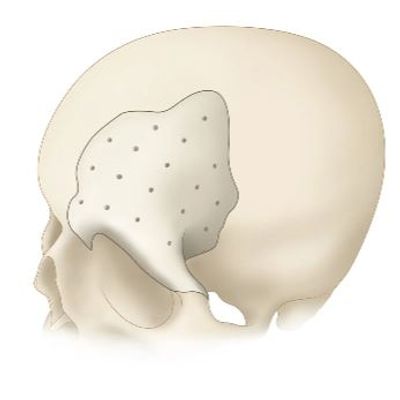
CRANIOFIT - Customized PEEK Cranial Plates for Complex Cranioplasty
The CRANIOFIT Customized PEEK Plates are tailored to address intricate cranial deformities, offering a solution designed for precision in craniofacial reconstructive surgery. These plates are crafted from polyetheretherketone (PEEK), a clinically validated bioengineered material known for its robustness, comfort, and longevity. They are lightweight and customized to enhance facial symmetry and patient satisfaction, while minimizing postoperative complications. Indicated for replacing bony voids in cranial and craniofacial skeletons, excluding maxillofacial regions, these implants avoid complications such as infection and poor blood supply, enhancing the reliability in surgical outcomes. It`s crucial to avoid use in patients with systemic infections or significant degenerative diseases. Potential risks include material allergies and implant movement but are mitigated with proper surgical care.