

Precision Coating Company, Inc products
Fluoropolymer Coatings - PTFE Medical Device
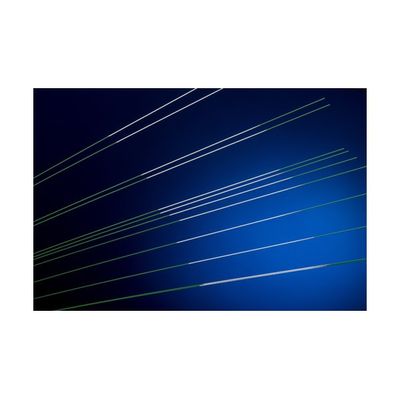
GlideLine - Two Coating PTFE Systems
The GlideLine™ family of medical device coating finishes is the broadest offering of applied fluoropolymer (PTFE) coatings in the industry, customized to optimize the design, quality, and performance characteristics of your high-quality medical products. You can choose two types of medical grade fluoropolymer coating chemistries for medical devices; an aqueous-based PTFE coating and a solvent-based coating.
Aqueous-Based Coating Systems
The dispersion grade of PTFE resins (aqueous-based MCTPE Series) remain in a wet stage from the above polymerization process into the final liquid coating in dispersion form. Here chromic acid, surfactants and wetting agents, and pigments help promote adhesion to the substrates to which applied during the high temperature bake cycles. MCTPE Series is a zero-PFOA coating.
Solvent-Based Coating Systems
On the other hand, the solvent grade of PTFE coatings (PC 4006 Series and PC 403 Series) use a dry fully cured ground powder of PTFE. This fully cured ground micro powder of PTFE is then added to a solvent system containing a binder and pigments (no chromic acid or PFOA). Since the PTFE is already fully cured, only the final cure of the binder has to be reached in order to promote maximum adhesion to hold the PTFE particles in place. This is typically hundreds of degrees less than the dispersion grade helping to decrease oxidation of exposed metals.
Fluoropolymer Coatings - Medical FEP
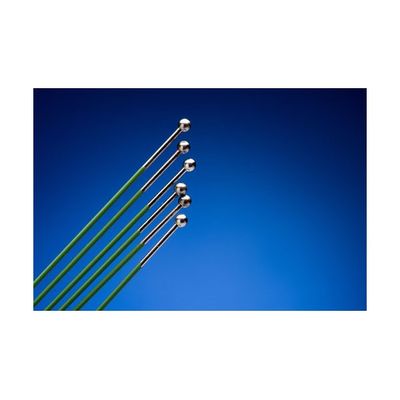
Model 393 - Fluorinated Ethylene Propylene (FEP) Medical Coated Wire
Precision Coating offers a solvent grade of FEP (fluorinated ethylene propylene) coatings (PC 9020) for those applications that require exceptional release (non-stick) properties. FEP differs from PTFE in that it is melt-processible and requires a different fixturing protocol to apply to medical grade wire. PC 9020 Series coatings are zero-PFOA and chromic acid free. PC 9020 Series can withstand 400° F continuous operating temperatures with intermittent 500° F.
Applications - PTFE
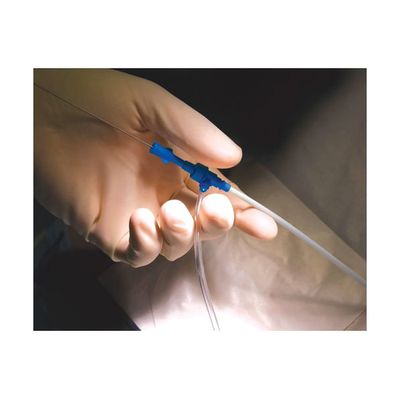
Interventional Cardiology
Precision Coating applies medical grade PTFE to devices used in interventional cardiology procedures focused on catheter-based treatment of structural heart diseases. Catheterization involves the insertion of a sheath into a peripheral artery or vein and cannulating the heart under X-ray visualization. A typical procedure would involve the deployment of stents and balloons to care for an acute myocardial infarction.
Guide Wires and Core Wires
Typical devices coated in interventional cardiology procedures are guide wires and core wires. PTFE provides low friction to a wire allowing for ease of insertion of a catheter and high release (non-stick) to prevent blood from clotting on the wire. Wire sizes range from 0.013” to 0.022” diameter with coating tolerances from 0.0002” to 0.0007”.
Long Metal Hypotubes
A long metal tube, a hypotube is a critical component in interventional cardiology devices as well as raw material for needles. PTFE coatings are applied to hypotubes of various lengths and diameters. Precision Coating has over 25 years of experience coating interventional cardiology devices.
Anodic Coatings - Specialty Anodic Coatings
MICRALOX - Model Ultra - Specialty Anodic Coatings
When maximum performance for strong alkaline cleaning is critical to quality, MICRALOX Ultra provides 50X the chemical resistance compared to decorative Type II anodizing. Aluminum parts coated with MICRALOX Ultra can withstand high-pH cleaning and sterilization protocols commonly used in European markets. MICRALOX Ultra coated parts can also withstand many other aggressive environments that would otherwise strip conventional anodic coatings and subject the parts to extensive corrosion.
MICRALOX - Model Lumina - Specialty Anodic Coatings
The clear, translucent oxide of MICRALOX Lumina provides a perfect balance of breakthrough chemical resistance and design flexibility for medical device applications. Whether left natural, or dyed one of nine vivid colors, MICRALOX Lumina coatings achieves 16X the resistance in a hot alkaline strip test compared to Type II decorative anodizing. Unlike conventional anodizing and hard coat, the partially crystalline anodic coatings of MICRALOX Lumina hold up over a life-time of regular cleaning and sterilization without fading, chalking, or corroding.