


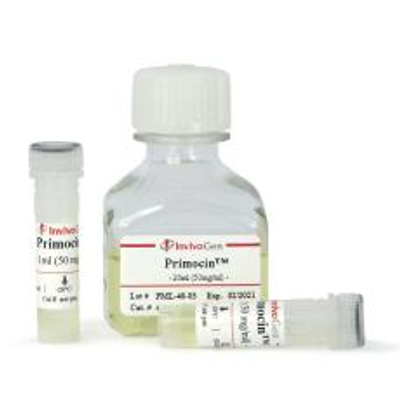
InvivoGen - Model Primocin -Antimicrobial Agent for Primary Cells
Primocin is designed to offer complete protection of primary cells from microbial contamination. Primocin is a broad-spectrum antibiotic formulation that is gentle on your cells but lethal to the microbes. There are a number of common sources of microbial contamination especially in the isolation of primary cells from both animal and human tissue, including commensal flora and/or subclinical infections.
Primocin® is composed of four compounds, of which three, act directly on Gram-positive bacteria, Gram-negative bacteria, and mycoplasmas. The primary mode of action for these compounds is to block microbial DNA and protein synthesis. The fourth compound in Primocin® eradicates fungi, including yeasts, by directly targeting processes at the fungal membrane.
Primocin® is successfully used in many types of primary cell cultures (see citations) including:
- Differentiated mouse- and human-derived cells such as astrocytes and immune cells (e.g. natural killer cells)
- Stem cells such as mouse- and human-derived embryonic and pluripotent stem cells
- 3D cellular models (i.e. organoid and spheroids) such as colon epithelial and carcinoma organoids
Primocin® is made in-house at InvivoGen and is of the highest quality with rigorous quality control performed to ensure the absence of lot-to-lot variation.
- Active against bacteria, mycoplasma, and fungi
- A common addition to various standardized primary cell culture protocols
- Used throughout culturing process (e.g. culture media, wash solutions, and biopsy storage media)
- Highly cited in the literature
- Product concentration: 50 mg/ml
- Culture type: Primary cell cultures, 3D cell cultures, organoids, embryonic, and pluripotent stem cells
- Tested applications: Protection from microbial contamination
- Appearance (form): Liquid
- Appearance (color): Yellow
- Working concentration: 100 μg/ml
- Endotoxin: < 0.5 EU/mg
- Quality control: Each lot is functionally tested and validated using microbial reference strains. Absence of toxicity is validated on mammalian control cells.