
- Home
- Applications
- neurorehabilitation
Refine by
Neurorehabilitation Product Applications
5 applications found

Assistive rehabilitation technology for your hospital, clinic or therapy centre: Axinesis’s cost-effective and clinically proven neurorehabilitation devices help optimize patient outcomes while simplifying your workflows and maximizing therapy time. ...
ByAxinesis based in Wavre, BELGIUM
Stroke upper limb rehabilitation with Axinesis: If you have a neurological condition, rehabilitation should help you achieve optimal outcomes while being safe and engaging. Axinesis’s neurorehabilitation devices support effective upper extremity rehabilitation in conditions such as stroke, Parkinson’s disease, cerebral palsy and multiple ...
ByAxinesis based in Wavre, BELGIUM
People who have suffered a Traumatic Brain Injury have successfully used a REX. A clinical trial has been conducted by the Australian Institute of Neuro-rehabilitation (AIN), Nelson Bay, New South Wales (NSW), Australia and the University of Newcastle, NSW; and is supported by The Newcastle Permanent Charitable Foundation and Rex Bionics plc. The trial was open to volunteers from the Hunter Region of NSW, who have had a Stroke or Traumatic Brain Injury more than three months previously and have difficulty ...
ByRex Bionics Ltd based in Auckland, NEW ZEALAND
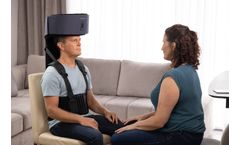
This website is designed to assist patients, family members, and caregivers in obtaining valuable information about the EMAGINE study, and to support the process of eligibility evaluation, and research study enrollment for potential participants. The BQ 2.0 system (designed and manufactured by BrainQ Technologies Ltd.) is an investigational device, meaning it has not been approved by the FDA, the use of which has had no related adverse events to date. ...
ByBrainQ Technologies based in Jerusalem, ISRAEL
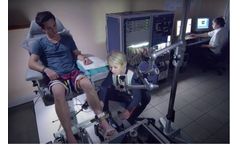
Neurological impairments such as strokes, spinal cord injuries, traumatic brain injuries, cerebral palsy, multiple sclerosis, and Parkinson’s disease can significantly affect a patient’s mobility, and many patients affected with these conditions have a significant long-term mobility impairment. One of the main challenges of existing neuro-rehabilitation treatment methods is effectively preserving or reestablishing the coordination between motricity (active movement) and the related neurosensory ...
ByTechno Concept based in Manosque, FRANCE