
- Home
- Articles
- australasia
- exoskeleton
Refine by
Exoskeleton Articles & Analysis
9 articles found

Source of Marine Polysaccharides Marine polysaccharides are primarily sourced from a diverse range of marine organisms that thrive in oceans and seas. Seaweeds are the primary and most abundant source of marine polysaccharides. Seaweeds with high polysaccharide content, such as red algae (Rhodophyta), brown algae (Phaeophyceae), and green algae (Chlorophyta), have been extensively studied for ...

At the moment, there’s a wide range of rehabilitation aids available for people with impaired mobility: diverse walkers, light and robust crutches, tons of various wheelchairs. All of them have certain flaws and weaknesses. For instance, state-of-the-art wheelchairs make it possible to go in for sports, travel at a rather high speed, and are user-friendly, but all of those aspects ...
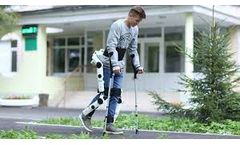
A medical exoskeleton is intended to help the health-challenged people. It is a dedicated biomechanical device for rehabilitation in case of lost or restricted mobility of limbs. Its operating concept is based on repeating the human motion biomechanics under proportional mitigation of the efforts required to make such. The patient independently controls the device via a smartphone app. Subject ...
Already now, an exoskeleton is a resuscitated fantasy, a device that helps ordinary people get the physical abilities of a superhero. But this is far below the limits of contemporary technical capabilities. Presently there are several exoskeleton varieties. Subject to their intended purpose, these could be for military or medical use. The former enable to massively enhance the strength and ...
The Atlas 2030, the world's only exoskeleton for children, is capable of achieving much more effective therapy in the treatment of Spinal Muscular Atrophy The Mak Active Knee, the exoskeleton that works like a robotic knee, is achieving previously impossible rehabilitations due to speed and absence of pain Elena Garcia Armada, founder of Marsi-Bionics and scientific researcher at the CSIC, ...

Researchers at Kent and Canterbury Hospital, U.K., are recruiting 20 patients with multiple sclerosis (MS) who can walk at least eight meters with a walking aid to test the effectiveness of a five-week exercise program using assistive robotic technology. A patient completes balance and strengthening exercises using the Rex robot. (Photo courtesy of East Kent Hospitals University NHS ...
Marsi Bionics will be present with Fundación ONCE at South Summit, the international meeting for entrepreneurship and investment. On October 2 and 3, we will exhibit our ATLAS and MAK exoskeletons at the ONCE Foundation stand. Elena García Armada will give the keynote on the 3rd in the ONCE Foundation space in which she presents her new accelerator for social innovation ...
People with multiple sclerosis (MS) are being sought to take part in a study that aims to investigate the benefits of a robotic walking device. Karen Saunders, a consultant clinical and research neuro-physiotherapist, is the co-investigator on a feasibility trial that is evaluating the use of a balance exercise programme that makes use of a Rex robotic exoskeleton. During the trial, the robotic ...

What is an artist doing working in a cutting-edge science lab? That’s a question I hear almost every time I explain my summer internship at EpiBone. Fortunately, I feel my whole life has been preparing me to answer it. I have always sat firmly at the intersection between art and science. My best subjects in school were the visual arts and the natural sciences, a seemingly unlikely pair. ...