
Refine by
Water Quality Articles & Analysis
41 articles found

Ion chromatography (IC) is an analytical technique used to separate and quantify ionic and polar analytes. IC has become widely accepted by the pharma industry and regulatory bodies for an expanded range of applications like water quality and chemical analysis. It has qualified in recent years to analyze pharmaceuticals. The United States Pharmacopeia-National Formulary (USP-NF, US Pharmacopeia ...
ByB&W Tek

Cyanotoxins are toxic substances produced by cyanobacteria, or blue-green algae, which can proliferate in water bodies under conditions like high nutrient levels and warm temperatures. There are over 1,118 different cyanotoxins identified globally in freshwater environments across 66 countries, illustrating the widespread nature of this ...

Effective hand hygiene reduces the risk of meat contamination and the transmission of foodborne disease Clean hands are essential to health and effective handwashing is one of the simplest ways to prevent the spread of germs. Hand hygiene is particularly important in minimizing food safety risks along food animal chains, as there are many diseases that can be transmitted to humans from polluted ...

Commercial aquariums are carefully designed ecosystems that showcase the beauty of underwater life while utilizing science and technology to maintain the well-being of aquatic residents. Ozone is crucial in enhancing water quality and supporting the Life Support Systems (LSS). The Ozone Advantage: Revolutionizing Water Quality Management Ozone, consisting of three oxygen atoms (O3), is ...

The identification of microbial groups is an important step in understanding the interrelationship of microorganisms in a community. It is done to determine all present microbial taxa and their relative abundance, and as well their phylogenetic relationships. One of the methods used to establish phylogenetic relationships is by sequencing common genes. One of the easiest genes to be sequenced are ...

The swift spread of the Coronavirus disease (COVID-19) across the globe has resulted in unexpected and at times, under planned for, impacts. In some countries, the outbreak has moved businesses to halt on-site operations and urged employees to work from home. The water industry, however, is quickly adapting to the new reality and leveraging remote capabilities to continue supplying clean and safe ...

Introduction “Our priority is to provide our customers with the high purity water and steam that is critical to the development and manufacturing of life-saving medications now and for future generations.” —George Gsell, MECO President Nexus Pharmaceuticals, maker of difficult-to-manufacture, high quality, FDA-approved specialty and generic drugs, is opening a $250 million, ...

Capacity: 500tons/day Leachate Influent water quality: SS<=500mg/L, pH 6-9, Temperature 20-40, CODcr<=15000mg/L, BOD5<=5000mg/L, NH3-N<=1800mg/L, TN<=2200mg/L, Total hardness(as CaCO3)<=1500mg/L, Total Alkalinity(as CaCO3) <=10000mg/L, SiO2<=50mg/L 15000us/cm<conductivity<=20000us/cm, recovery rate 70-75% 20000us/cm<conductivity<=25000us/cm, recovery rate ...

Capacity: 600tons/day Influent water quality: CODcr<=20000mg/L, NH3-N<=2000mg/L, SS<=800mg/L, Total Hardness(as CaCO3)<=1200mg/L, Total alkalinity(as CaCO3)<=8000mg/L, SiO2<=50mg/L, pH 6-9, temperature 20-37degree Celsius 15000us/cm<conductivity<=20000us/cm, recovery rate 70-75% 20000us/cm<conductivity<=25000us/cm, recovery rate 65-70% ...

Overview of pharmaceutical sludge: Pharmaceutical wastewater is a type of organic wastewater with complex components, high biological toxicity, and difficult-to-degrade substances. It is a recognized source of serious environmental pollution. Pharmaceutical wastewater is discharged intermittently, and the water quality and volume fluctuate greatly. Pharmaceutical sludge refers to the ...

Communicating about climate change has never been easy. The subject is complex, marred by uncertainties and tends to evoke emotionally and politically charged responses. How then do we talk about climate change as the global community grapples with the COVID-19 pandemic today? How do we do this in a post-pandemic world? In the last few years, climate change moved to the centre stage of global ...

Physiological Injury of Aquatic Plants 1. Insufficient Light During the growth, due to insufficient light, the photosynthetic intensity of aquatic plants will be reduced, the normal growth and development will also be affected. For example, red water plants such as Ammania gracilis and Rotala macranda, due to insufficient light, the anthocyanins in the leaves will decrease; while ...
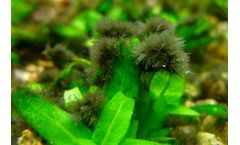
Estimated reading period: 3 minute Article words: 482 How to get rid of black hair algae? also known as black brush algae, is one of the most common algae in the planted tank, and one of the most difficult algae to remove in the planted tank. It has certain damage to aquatic plants and will affect the beauty of the entire planted tank. The reason why there are black hair algae in a planted ...

Large amounts of antibiotic resistance genes (ARGs) have been found throughout estuaries in coastal China, and scientists say they’re causing potentially dangerous changes to local bacteria. When bacteria mutate and become resistant to antibiotics, it endangers human health and life. If antibiotics can’t work properly, infectious diseases will increase, and health-care costs will ...

There is an increasing awareness that drinking water contributes to sporadic gastrointestinal illness (GI) in high income countries of the northern hemisphere. A literature search was conducted in order to review: (1) methods used for investigating the effects of public drinking water on GI; (2) evidence of possible dose–response relationship between sporadic GI and drinking water ...
After rain events in densely populated areas, combined sewer overflows (CSOs) can have severe health-related effects upon surface water quality, as well as diffuse overland runoff and wastewater treatment plants (WWTPs). All of these sources emit pathogens and fecal indicator bacteria into the surface water, which the EU Bathing Water Directive addresses by giving threshold values for the ...
Whereas the hygienic condition of drinking and bathing water by law must be monitored by culture-based methods, for quantification of microbes and antibiotic resistance in soil or the aquatic environment, often molecular genetic assays are used. For comparison of both methods, knowledge of their correlation is necessary. Therefore the population of total bacteria, Escherichia coli, ...

Beneficial bacteria are a natural solution for improving water quality in ponds, lakes, reservoirs, and canals. Beneficial microorganisms that are naturally present in the aquatic environment are typically at low levels, so they work much slower at reducing nutrients to maintain water quality. Aquatron and Waste and Sludge Reducer contains two billion bacteria per gram. At this elevated ...
This study represents the first systematic review and meta-analysis conducted to assess the association between swimming in recreational water and the occurrence of respiratory illness. Most studies focus their attention on gastrointestinal illnesses occurring after exposure to microbial polluted water. Fourteen independent studies that included 50,117 patients with significant heterogeneity ...

Instream flows of the rapidly urbanizing watersheds and estuaries of the Gulf of Mexico in Texas (USA) are increasingly dominated by reclaimed waters. Though ionizable pharmaceuticals have received increasing attention in freshwaters, many research questions remain unanswered, particularly in tidally influenced urban coastal systems, which experience significant spatiotemporal variability in ...