
- Home
- Articles
- cape verde
- myeloid leukemia
Myeloid Leukemia Articles & Analysis
13 articles found

The BCL2 gene, short for B-cell lymphoma 2, is a critical regulator of apoptosis, or programmed cell death. It belongs to a larger BCL2 gene family, which includes both pro-apoptotic and anti-apoptotic proteins that maintain a delicate balance between cell survival and cell death. Dysregulation of this gene family is implicated in a variety of diseases, most notably cancer. What is BCL2? The ...

In the past ten years, the number of antibody drug conjugates (ADCs) entering clinical trials has steadily increased. Currently, 9 ADCs have been approved, of which 5 are used for hematoma and 4 for solid tumor treatment. After more than 20 years of development, ADC biopharmaceuticals are becoming the main force in the treatment of cancer. Currently, one of the most important challenges when ...
Antibody-drug conjugate (ADC) is one of the fastest growing fields in tumor therapy, which consists of monoclonal antibody (Antibody), linker (Linker) and active drug (Payload). So far, there are only 15 drugs on the market in the world. However, with the development of some perfect antibody modification techniques, advanced site-specific coupling techniques and powerful small-molecule toxins, ...

Cancer is a heterogenous mixture of diseases characterized by, among other things, the abnormal, uncontrolled growth of cells derived from otherwise healthy tissues (Hanahan 2022). Although cancer cells sometimes grow into balls of cells and stop there (so-called benign tumors), often they gain the ability to disperse throughout the body, seed the growth of other tumors, disrupt the function of a ...
Antibody-drug conjugates (ADCs) usually consist of monoclonal antibodies (mAbs) covalently linked to cytotoxic drugs via chemical linkers. With high specific targeting ability and strong killing effect, it has achieved precise and efficient removal of cancer cells, and has become one of the hot spots in the development of anticancer drugs. In 2000, the FDA first approved the ADC drug Mylotarg ...
Representing the expression, post-translational modification, and protein-protein interaction for certain cells, tissues, or organs, proteomics has become an increasingly important means to understand the molecular mechanism and signal transduction of human disease and cancer. Protein levels in the body are in a steady state of equilibrium. Accumulation of proteins usually leads to qualitative ...

Sandwiching the wobble protein between two other layers allowed scientists to get the most detailed picture of a protein that is key to the spread of acute myeloid leukemia. Acute myeloid leukemia (AML) afflicts more than 20,000 Americans each year, killing more than 11,000 of them, according to the American Cancer Institute. And many people who receive intensive chemotherapy or stem cell ...

Gene editing technology, represented by CRISPR/Cas9, has greatly accelerated the development of gene therapy, bringing hope to many genetic diseases that otherwise had no cure. In June 2021, Intellia Therapeutics' NTLA-2001, a CRISPR gene editing therapy for the treatment of transthyretin amyloidosis (ATTR) invented by Nobel Laureate Jennifer Doudna, was proven to be safe and effective in a ...
Novel cytotoxic drugs New cytotoxic drugs have been developed to target cancer cells with low antigen expression or resistance to auristatins or maytansinoids. For this purpose, PBD dimers have been developed, which have a molecular structure containing two alkylated imine functional groups capable of forming covalent bonds with DNA.PBD dimers are about 50-100 times more potent than conventional ...
Antibody-drug conjugate (ADC), a compound that connects a cytotoxic small-molecule drug to a monoclonal antibody via a rationally established linker, which selectively delivers an efficient cytotoxic agent into the tumor, has made significant progress in the previous decade. The first ADC drug approved by the US FDA was gemtuzumab ozogamicin (Mylotarg) in 2009. Currently, the FDA has authorized ...
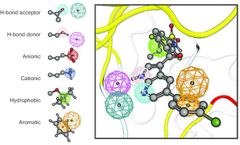
Structure-based Pharmacophore Molecular docking technology remains the most popular structure-based drug design method, which takes full advantage of protein-ligand interaction information. However, in virtual screening, compared with molecular docking, pharmacophore-based methods have obvious advantages in terms of computational cost and accuracy, and docking-based virtual screening methods ...
The anti-apoptotic myeloid cell leukemia 1 (MCL1) protein belongs to the BCL2 family that supports survival and is frequently amplified or upregulated in human cancers. MCL1 is highly unstable and its stability is regulated by phosphorylation and ubiquitination. Here, the authors suggest that acetylation is another key post-translational modification that regulates MCL1 protein instability. The ...
Antibody-drug conjugates (ADCs) continue to rise at home and abroad, but ADCs are not a new thing. Why has ADC been surging for so many years? What kind of magic power it contains, and what makes its growth path so tortuous? Let's take a brief look at the magical "magic bullet"-ADC. ADC (antibody-conjugated drug) is not a new concept. As early as the early 20th century, the Nobel Prize winner ...