
Airway Pressure Articles & Analysis
13 articles found

Have you started snoring suddenly and have other health issues that have emerged recently? Although snoring is usually considered as a harmless annoyance, it is actually a symptom of deeper health issues, such as hypothyroidism. This is when the thyroid reduces the production of thyroid, a vital hormone and there is a deficiency in the body. Though the connection between hypothyroidism and ...
Obstructive Sleep apnea happens when the throat muscles relax and the tongue falls back into the throat, partially blocking the airway. That in turn leads to improper breathing as the airflow is blocked. ...
Additionally, the sleep deprivation that sets in with time leads to irritability and mood swings, affecting your day-to-day functioning and quality of life. Continuous Positive Airway Pressure (CPAP) therapy is considered to be the gold-standard treatment for sleep apnea. ...
One of the more commonly asked questions sleep apnea experts answer is “Does sleeping sitting upright help with sleep apnea?” We already know that when a person with sleep apnea sleeps on their back, gravity closes or significantly narrows their airway (the space formed at the back of the mouth and upper throat areas). At the same time, the amount of air that enters their lungs ...
Is your sleep interrupted every night by your partner’s chronic, loud snoring? If your answer is “YES!”, then you’re probably aware of what a nightmare this can be and how to deal with a snoring partner. Here are several reasons: Resentment is growing in your relationship because your partner isn’t taking the issue seriously and isn’t trying to find a good ...
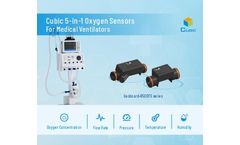
Medical ventilators are significant medical devices, using positive pressure to circulate air through the lungs of patients who cannot breathe effectively on their own. ...

The development of groundbreaking sleep apnea devices, including auto-adjusting pressure machines, bilevel positive airway pressure machines, continuous airway pressure machines, and implantable devices, makes it easier to treat patients with disruptive sleep issues. ...

High-frequency jet ventilation (HFJV) was used in order to improve ventilation at a similar or lower mean airway pressure (Paw) compared to CMV. CASE: This patient was a 3.2kg male infant born at 33 WGA. ...

The SIAP study investigates the effect of using Ergotrics' Inflatable Prone Support (IPS) on intra-abdominal pressure (IAP) during spine surgery. Study background The objective of this study is to demonstrate the ability of the inflatable Prone Supports (IPS) to lower the IAP of patients in the prone position. Whenever the patients’ position is changed to prone, the IAP is increased due to ...

Obstructive sleep apnea occurs when the airway is blocked, usually by muscles in the throat. Symptoms of apnea include daytime tiredness, loud snoring, and awakening throughout the night (prompted by lack of oxygen). ...

Methods:This study used a simulated ICU room with a breathing-patient simulator exhaling nebulized bacteriophages from the lower respiratory tract with various respiratory support modalities: invasive ventilation (through an endotracheal tube with an inflated cuff connected to a mechanical ventilator), helmet ventilation with a positive end-expiratory pressure (PEEP) valve, ...
Methods: We examined exhaled air dispersion during NIV using a human patient simulator reclined at 45° in a negative pressure room with 12 air changes/h by two different helmets via a ventilator and a total facemask via a bilevel positive airway pressure device. ...
Abstract Background: As part of our influenza pandemic preparedness, we studied the exhaled air dispersion distances and directions through two different face masks (Respironics; Murrysville, PA) attached to a human-patient simulator (HPS) during noninvasive positive-pressure ventilation (NPPV) in an isolation room with pressure of -5 Pa. ...