
Refine by
Bio Libraries Articles & Analysis
16 articles found
Many oncology drugs have been abandoned by pharmaceutical companies due to poor performance in phase I, II, or III clinical trials. These drugs represent untapped potential treatments for indications outside of those initially investigated. With research and development costs for a single new drug estimated between $2–3 billion, abandoned drugs represent an opportunity to bring drugs to ...
Population growth, aging populations and increases in cancer incidence have necessitated new approaches to identifying effective treatments. One such approach involves the repositioning, or repurposing, of drugs already FDA approved in either non-oncology disease states and/or approved in a limited number of tumor types. The repurposing of these drugs for new indications represents an ...
In this white paper, Predictive Oncology (POAI) highlights a recent successful project in partnership with the University of Michigan Natural Products Discovery Core (NPDC) through the ACE program. The ACE program supports academic researchers in their early drug discovery and development initiatives by providing access to the POAI proprietary active machine learning platform and ...

The advent of organoid technology has transformed biomedical research through the development of 3D models that precisely replicate human organ structures and functions in a physiological context. Creative Bioarray establishes itself as a world leader in life science innovation through its complete range of organoid services that enhance drug discovery, disease modeling, and personalized ...
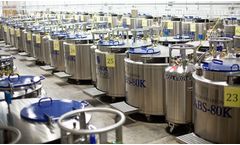
What is a Biorepository? A biorepository, or "biobank", is a specialized facility designed to store, archive, and distribute biological samples for research or clinical purposes. Biorepositories house biological samples, such as blood, plasma, urine, saliva, tissues, DNA, and organs, among other specimen types, collected from consenting individuals. Critical associated information, including ...

The Cryopreservation Process The Cryopreservation Process is where biological matter (cells, tissue, organs, etc) is preserved by cooling to a very low temperature. This process stops the normal cell functions and holds the sample in suspended animation. When the time comes to thaw the sample, normal biological function resumes.Cryopreservation Process Steps The cryopreservation process can be ...
“New technological components to allow interoperability and data analysis in biobanks” Call: EUROSTARS-2 (International Intercompany Action) Reference No.: E!114111 / CIIP-20202004 This project has received funding from the Eurostars-2 joint program with co-financing from the CDTI and the Horizon 2020 Research and Innovation Framework Program ...

It was great to be back in person at the 2022 BIO International Convention this year. It came as no surprise to us at Recursion that artificial intelligence (AI) and machine learning (ML) were hot topics at the conference, with more than half a dozen sessions exploring how these technologies are driving digital transformation in biopharma. We heard from leaders who are applying AI at ...
The Danish National Genome Center has awarded Lifebit a four-year contract to implement Lifebit’s Federated Trusted Research Environment software, Lifebit CloudOS, within Denmark's national supercomputing center. LONDON, UK - 28 April 2022 – Lifebit, whose leading technology enables secure analysis over sensitive datasets for researchers and interconnects such large patient cohorts ...
ByLifebit
The Covid-19 pandemic highlighted the disparity between those who succumbed to severe illness while others remained relatively unaffected, underscoring the urgent need to shift the healthcare industry’s focus from a one-size-fits-all approach to more personalised healthcare. Personalised medicine promises to transform healthcare with treatments tailored to a patient’s unique genetic ...
ByLifebit
Genome initiatives spearheaded by burgeoning numbers of data custodians such as Genomics England (GEL), a Lifebit customer, leverage technological advances to amass large volumes of patient data. As a result, data custodians are veritable gold mines of genome data that could transform precision medicine and provide an equitable solution for diverse healthcare requirements. Pharmaceutical ...
ByLifebit
Scientists have determined how a protein in the brain uses information about the body's energy balance to regulate children's growth rate and the onset of puberty. The study focuses on the melanocortin 3 receptor (MC3R), a member of the protein family, which has long been thought to play an important role in metabolism and energy balance. Roger Cone, a physiologist at the University of ...

Both current in vitro and in vivo models used in the development of candidate therapies for the treatment of intestinal diseases have severe limitations. RepliGut®, an in vitro human intestinal epithelial stem cell model, addresses many of these issues and has significant potential to reduce the time and cost of drug development. This model may even help to identify optimal therapies for ...
There is a growing need to address the high failure rate of drug candidates as they progress through clinical trials. Altis Biosystems aims to bring its technological advances to the forefront, enabling the drug development process to more effectively translate results from preclinical experiments to late-stage clinical trials. Breaking the Conformity of Inadequate Testing Platforms The ...
The variety of normal and diseased human tissues needed to perform comprehensive screening of drug candidates is a key resource for next-generation preclinical models, but obtaining these tissues is challenging. Gene editing enables Altis Biosystems to offer a diverse array of RepliGut® human gut models tailored for specific research programs. Many Challenges Around Accessing Tissues ...

Biobanks have become one of the core resources for biomedical research. At the same time, a number of risks associated with processing and storing of biological material and corresponding data have been diagnosed. This paper focuses on how institutionalised transnational networks of biobanks generate practical answers to some of these risks. Drawing upon three case studies – GenomEUtwin, ...