
Blood Dna Articles & Analysis
8 articles found

This technology identifies the diversity and specificity of T cells by measuring the sequences of the rearrangement regions of the TCRβ chain or α chain genes.(1) Sample Preparation: Total RNA or DNA is extracted from blood, tissue, or other samples enriched with immune cells.(2) Amplification: PCR amplification is performed using specific primers for multiple ...
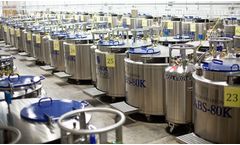
Biorepositories house biological samples, such as blood, plasma, urine, saliva, tissues, DNA, and organs, among other specimen types, collected from consenting individuals. ...
A blood donor survey in Chile found 13.6% of blood donors were PCR positive for Bartonella species. This means that researchers identified DNA evidence of the bacteria in the blood. Another study of 500 blood donors in Brazil, coauthored by Galaxy Diagnostics scientists, found 3.2% of donors had ...

SEVILLE, Spain--(BUSINESS WIRE)--Universal Diagnostics (UDX), an in-vitro diagnostics company developing minimally-invasive, blood-based solutions for detecting cancer early, announced today that it has started a prospective, multi-center observational study in the US for its investigational advanced adenoma (precursor lesions) and colorectal cancer (CRC) detection ...
Christian Hense, chief operating officer of Universal Dx, said that the method's workflow begins by collecting about 4ml of plasma from 8ml to 10ml of a patient's blood sample for cell-free DNA (cfDNA) extraction. After Universal Dx performs a series of processing steps to enrich for targets of interest, Hense said that the team then uses methylation-sensitive ...

Peripheral blood lymphocytes of apparently healthy donors were exposed to low-dose ionising radiation and/or human-genome CpG-DNA fragments accumulating in total extracellular DNA. ...
The present work evaluates the radioprotective effect of curcumin on γ-radiation-induced genetic toxicity. The DNA damage was analysed by the frequencies of Sister Chromatid Exchanges (SCEs). ...
Comet assay is a sensitive technique and it provides a unique opportunity to investigate intercellular differences in DNA damage and repair in any eukaryotic cell population. This assay can be used to detect DNA single strand breaks, alkali-labile sites and incomplete DNA repair sites, under alkaline conditions and DNA double ...