
Cartilage Ecm Tissue Articles & Analysis
6 articles found

Glycosaminoglycan (GAG) is a general term for the glycan part of proteoglycan macromolecules. Glycosaminoglycans are large linear polysaccharides composed of repeating disaccharide units, and their main configuration contains amino sugars and uronic acids (glucuronic acid and/or iduronic acid). Glycosaminoglycans can be divided into chondroitin sulfate, dermatan sulfate, keratan sulfate, ...

As an important branch of biomedical materials, bioceramics are mainly used to manufacture hard tissue repair devices and artificial organs in vivo, and generally have good biocompatibility. According to the chemical activity in the physiological environment, bioceramics can be divided into three types: Nearly inert bioceramics, only weak or no chemical reaction occurs when exposed to the ...
ByMatexcel

Researchers from IRCCS Istituto Ortopedico Rizzoli and Indian Institute of Technology, Delhi (IIT) used their REGENHU bioprinters to fabricate an in vitro phenotypically stable engineered articular cartilage by embedding human bone marrow-derived stromal cells (hMSCs) in a cell-laden silk fibroin–gelatin (SF-G) bioink. The bioprinted constructs allowed the in vitro study of chondrogenic ...
ByRegenhu

Prolotherapy has been a part of modern orthopedic practices since the 1940s. It is growing in popularity not just in the U.S., but globally as well. Also known as “regenerative injection therapy” (RIT), prolotherapy is a procedure used to treat musculoskeletal conditions including tendinopathies, osteoarthritis, and chronic pain of the cervical spine, lumbar spine, and pelvis (Sit et ...
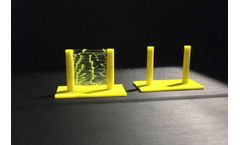
Space bio-3D printing from Human Cartilage to Thyroid Gland in Rodents and to Space Artificial Meat: SUNKYE Satisfies the Connection and Signal System of Bio-3D Printing in Micro-gravity Environment Space bio-3D printing may be a concept we've heard recently. But as with 3D printing technology, there was only a short accumulation before it happened! Do we need Space bio-3D printing? Can't we ...

Food manufacturing and packaging go hand in hand. What may not be so obvious, however, is that the links between the two are about to become a lot more, er, ineggstricable. That’s right, thanks to some pioneering work out of England, we’ve learned that eggs themselves may contain the answers to some of the world’s environmental woes. Scientists out of the University of ...