
Cytokine Growth Articles & Analysis
26 articles found

A key aspect of studying the immune system involves analyzing cytokines, chemokines, and growth factors—molecules that regulate immune responses and influence disease progression. ...
A Luminex Cytokine Panel allows the simultaneous quantification of multiple cytokines, chemokines, and growth factors in a single sample. ...
Additionally, several cytokines are undergoing clinical trials, including interleukins like IL-1, IL-3, IL-4, IL-6, and IL-11, as well as transforming growth factor beta (TGF-β) and macrophage colony-stimulating factor (M-CSF). ...

Wound Healing: Studies suggest that the application of Wharton’s jelly in chronic wounds can promote healing and tissue regeneration. The growth factors and cytokines present in Wharton’s jelly enhance angiogenesis and tissue repair, making it a promising candidate for wound management therapies. ...
GMP growth factors and cytokines designed for therapeutic manufacturing are an essential component of defined media. ...

Services of Protein Fusion Technology Using fusion expression technology, CD Formulation is able to modify marketed cytokines to develop a steady stream of new, superior products. As a leading fusion protein technology services company, we have years of experience in long-acting protein-based drugs. ...
In addition, persistent activation of NF-κB increases the levels of a number of cytokines that promote cancer growth, such as IL-1β (acute leukemia growth factor), TNF (malignant lymphogranuloma, T-cell lymphoma, and glioma growth factor), and IL-6 (growth factor in multiple myeloma). ...
These signaling molecules form intricate networks that contribute to immune responses, inflammatory reactions, cell proliferation, and growth. Cytokine Dysregulation in Systemic Immune Diseases The perturbation of immune tolerance leads to disruption in cytokine homeostasis. ...
Cytokine Classification Cytokines are categorized into various subtypes, including interleukins (IL), interferons (IFN), tumor necrosis factor (TNF), colony-stimulating factor (CSF), chemokines, and growth factors (GF). ...

In order to maintain efficient growth, proliferation, and differentiation during in vitro cell culture, many cell cultures require the addition of various cytokines. ...
These three signaling pathways collectively mediate cell growth, survival, activation, and the induction of differentiation and death. ...
N-terminally truncated IL-36α, IL-36β, and IL-36γ are 1000 to 10,000 times more active than the non-truncated cytokines, and the antagonistic activity of IL-36Ra depends on the removal of its N-terminal glutamic acid. ...
GMP growth factors and cytokines designed for therapeutic manufacturing are essential components of defined media. ...

Tumors include not only cancer cells but also extracellular matrix (ECM), stromal cells (e.g., fibroblasts and mesenchymal stromal cells), vascular networks and immune cells such as T and B cells, NK cells, and various immunosuppressive cells such as tumor-associated macrophages (TAMs) and myeloid-derived suppressor cells (MDSCs), all of which constitute the tumor microenvironment (TME). TME ...
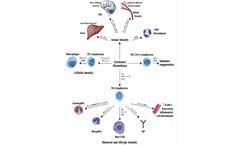
More than 200 types of human cytokines have been identified, which can be generally classified into interleukins, interferons, tumor necrosis factors, colony-stimulating factors, chemokines, growth factors, etc. according to their structure as well as function. ...

Accumulating evidence suggests that multiple growth factors and cytokines induce mcl1 gene expression, multiple microRNAs and lncRNAs control the stability of mcl1 mRNA, and mTORC1 promotes the translation of mcl1 protein. ...

Also, certain cell types will require additional specific growth factors to be added to the culture medium to support their growth and differentiation. ...

Mesenchymal stem cells (MSC) differentiate towards multiple lineages that participate in bone formation and are often utilized for bone regeneration therapy. A 2019 review by Lee et al. explores the endogenous mechanical and biochemical environment of MSCs. Additionally, the article highlights the essential factors that lead to bone repair and how these factors can be leveraged to improve bone ...

Oral administration ofL. paracasei KBL382 significantly reduced AD-associated skin lesions, epidermal thickening, serum levels of immunoglobulin E, and immune cell infiltration.L. paracasei KBL382-treated mice showed decreased production of T helper (Th)1-, Th2-, and Th17-type cytokines, including thymic stromal lymphopoietin, thymus, and activation-regulated chemokine, and ...
Significant reductions in mast cells and eosinophils were discovered in skin tissues from L. fermentum KBL375-treated mice. T helper 2 cell-related cytokines interleukin (IL)-4, IL-5, IL-13, and IL-31 significantly decreased, and anti-inflammatory cytokine IL-10 or transforming growth factor-β increased in skin tissues from L. fermentum ...