
Cytokine Launches Growth Articles & Analysis
14 articles found

Cytokines and growth factors are essential signaling molecules that play pivotal roles in immune regulation, inflammation, tissue repair, and numerous physiological and pathological processes. To comprehensively study these molecules, scientists often rely on high-throughput and sensitive technologies, among which Luminex Cytokine Panels have become a gold standard. This article delves into the ...
Understanding the immune system is fundamental to advancing biomedical research, especially in areas such as cancer, autoimmune diseases, and infectious diseases. Mouse models play a pivotal role in this field, as their immune system shares many similarities with that of humans. A key aspect of studying the immune system involves analyzing cytokines, chemokines, and growth ...
Cytokines represent a class of small protein molecules that exhibit diverse biological activities. These molecules are synthesized and secreted primarily by immune cells (including monocytes, macrophages, T cells, B cells, and NK cells) as well as certain non-immune cells (such as endothelial cells, epidermal cells, and fibroblasts) upon specific stimulation. Cytokines play pivotal roles in ...

Low Endotoxin Cytokines Matters Organoid culture, CAR-T cell therapy, stem cell therapy, and other topics have become broadly discussed among biomedical researchers. In fact, it is not difficult to see that these advanced technologies are all related to cell culture. In order to maintain efficient growth, proliferation, and differentiation during in vitro cell culture, many cell cultures require ...
Interleukin-2 (IL-2) is a 15kDa secretory protein with a 4-alpha-helical bundle structure. As a T-cell related growth factor, IL-2 can enhance the killing activity of NK cells and promote B cells to produce immunoglobulins. In addition, it aids in the development of regulatory T cells (Tregs), thereby producing peripheral T cell immune tolerance, as well as regulating the proliferation and ...
Introduction to IL-36 Family Twenty years ago, Interleukin 36 (IL-36) was discovered as a member of the IL-1 superfamily. Its gene is located on chromosome 2 in an IL gene cluster, including IL1A - IL1B - IL37 - IL36G - IL36A - IL36B - IL36RN - IL38 - IL1RN, with IL-36 encoding genes transcribed far away from the centromere. There are four known subtypes of IL-36, which have been renamed multiple ...

Immunotherapy, in addition to surgery, chemotherapy, and radiotherapy, has now become the fourth pillar of anticancer treatment, with T cell-based immunotherapy being a successful cancer treatment technique. T cells can be separated into two subpopulations based on the expression of T-cell receptors (TCRs). αβ T cells, expressing expressing αβ TCR, recognize peptide antigens, such as those ...
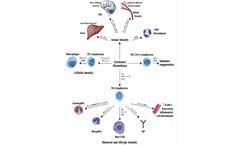
Cytokines are a class of small molecule proteins secreted by cells that mediate and regulate immune processes, and they act in an autocrine, paracrine and endocrine manner. More than 200 types of human cytokines have been identified, which can be generally classified into interleukins, interferons, tumor necrosis factors, colony-stimulating factors, chemokines, growth factors, etc. according to ...

Mesenchymal stem cells (MSC) differentiate towards multiple lineages that participate in bone formation and are often utilized for bone regeneration therapy. A 2019 review by Lee et al. explores the endogenous mechanical and biochemical environment of MSCs. Additionally, the article highlights the essential factors that lead to bone repair and how these factors can be leveraged to improve bone ...

Publication Summary: The identification of targets and biomarkers and development of therapeutics for nonalcoholic fatty liver disease (NAFLD) may be accelerated by the use of well-characterized primary cell and tissue reagents, as well as improved in vitro human cell-based disease models, including three-dimensional (3D) bioprinted liver tissue. The characteristics of donors from which the ...

Ankylosing Spondylitis (AS) is a rheumatic disease and almost 50% of the affected patients suffer from osteoporosis. The ratio of Receptor Activator of Nuclear Factor κB Ligand (RANKL) and Osteoprotegerin (OPG) has become an important marker to assess the status of systemic bone metabolism and has been shown to be dysregulated in AS patients. Combined Low-Dose Radon- and Hyperthermia Therapy ...

Exposure of phosphatidylserine (PS) on the cell surface occurs early during apoptosis and serves as a recognition signal for phagocytes. Clearance of apoptotic cells by a membrane PS receptor is one of the critical anti-inflammatory functions of macrophages. However, the PS binding receptors and their recognition mechanisms have not been fully investigated. Recently, we reported that stabilin-2 ...
Precise control of proliferation and differentiation of multipotent neural stem cells (NSCs) is crucial for proper development of the nervous system. Although signaling through the cell surface receptor Notch has been implicated in many aspects of neural development, its role in NSCs remains elusive. Here we examined how the Notch pathway cross talks with signaling for growth factors and ...
Cancer cells arise through sequential acquisition of mutations in tumor suppressors and oncogenes. c-Jun, a critical component of the AP-1 complex, is frequently overexpressed in diverse tumor types and has been implicated in promoting cellular proliferation, migration, and angiogenesis. Functional analysis of candidate genetic targets using germ line deletion in murine models can be compromised ...