
Electrochemistry Articles & Analysis
10 articles found

Oxygen monitoring during anesthesia remains fundamental to patient safety regardless of how medical standards have evolved over time. The American Society of Anesthesiologists (ASA) Standards for Basic Anesthetic Monitoring states that oxygen analyzers shall be positioned in the breathing circuit to monitor the concentration delivered to patients.1 The oxygen analyzer serves as one of the most ...
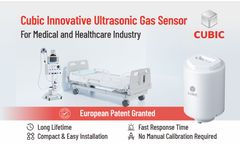
Cubic, an international manufacturer of advanced gas sensors and gas analyzers, is thrilled to announce the approval by European Patent Office (EPO) of a patent (EP 4083618) for its innovative V-shaped ultrasonic gas measurement technology behind Cubic ultrasonic gas sensors, including Gasboard-8500V-RH. The patented technology was developed to address the medical and healthcare industry's need ...

Acetamide has various uses in electrochemistry and the organic synthesis of pharmaceuticals, pesticides, and antioxidants for plastics. ...

Already now, an exoskeleton is a resuscitated fantasy, a device that helps ordinary people get the physical abilities of a superhero. But this is far below the limits of contemporary technical capabilities. Presently there are several exoskeleton varieties. Subject to their intended purpose, these could be for military or medical use. The former enable to massively enhance the strength and ...

Advancement in assistive technology has led to the commercial availability of multi-dexterous robotic prostheses for the upper extremity. The relatively low performance of the currently used techniques to detect the intention of the user to control such advanced robotic prostheses, however, limits their use. This article explores the use of force myography (FMG) as a potential alternative to ...

Breath has lots of moisture. To see, just blow on a mirror and watch it fog up. Getting rid of the moisture on the mirror is easy: just wipe it off. Getting rid of moisture in a breath sample is more complex, but can be done with a bit of engineering and Nafion™ tubing. We have found ways to remove up to 90% of moisture from a patient’s breath sample. Moisture: Why You Need it Gone? ...

A localised and release–controlled carrier is essential to enhance the effectiveness of bone morphogenetic protein in bone regeneration and repair. In this work, TiO2 nanotubes with diameter larger than 350 nm were successfully fabricated for the first time by electrochemical method using diethylene glycol electrolyte. The diameter of the nanotubes reaches 550 nm and 680 nm at 90 V and 100 V, ...
We describe the process of modification of the platinum (Pt) nanowire surface and subsequent immobilisation of enzyme glucose oxidase (GOx) on Pt nanowires (PtNWs) for direct glucose measurement. A cyclic voltammetry technique was used to measure electrochemical oxidation between GOx and glucose. PtNW arrays were first fabricated and then functionalised with cysteamine, which in turn acted as a ...
Brushite (CaHPO4.2H2O) was coated on titanium alloy substrate by electrochemical deposition technique. Then, it was converted to hydroxyapatite [Ca10 (PO4)6 (OH) 2] by NaOH treatment. Different Ca/P ratios (0.335, 0.67, 1.0, 1.667) were applied. The surface morphology, chemical composition and phase identification of the coatings were investigated. The results showed that the coating layer is ...
Carbon-nanotubes (CNT) represent an important group of nanomaterials with useful properties that enable their use for many important applications and made them extremely attractive for the task of electrochemical detection. Here, the author uses CNT to enhance the sensitivity of a multi-enzyme-based electrochemical bioassay for breast cancer gene (BRCA1) detection. Giant enzyme-based ...