
Hepa Articles & Analysis
23 articles found
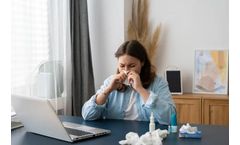
To catch microscopic allergens, vacuum with a HEPA filter. Bedding Care: To destroy dust mites, wash bedding, pillowcases, and curtains in hot water regularly. ...
Maintaining sterile storage conditions is necessary to protect medical instruments, drugs, surgical implants, and other equipment from contaminants. ARON guidelines on sterilization are straightforward: temperatures should not exceed 72°F (22°C) to 78°F (26°C), relative humidity should not exceed 60%, and airflow should be positive pressure with at least four total air changes per ...

Specifically, consistent relative air humidity and temperature were set to 50% and 22 °C, and the air quality was controlled with the use of stand-alone air handling units supplemented with a HEPA filter. Husbandry parameters were monitored using the ScanClime (Scanbur) units. ...
Airsafe medical aerosol high-flow suction system protect patients and healthcare operators in each phase of Covid-19 pandemic. It is in everyday situations that aerosol suction systems prove to be fundamental to keep spread of infection under control. Daily situations like vaccination: central stage in the fight against pandemic. As a fact, healthcare operators take the risk of exposure every ...
ByAirsafe
Following the coronavirus emergency, surgeries and medical offices shall be reorganised to work safely. One of the first safety measure to adopt concerns suction of aerosol potentially infected. ...
ByAirsafe
The pressure on clinical laboratories has increased significantly in recent years and the need for fast, accurate and thorough data is reaching unprecedented levels. COVID-19 has put an intense spotlight on automated liquid handling systems in particular, and with worldwide reliance and investment in PCR testing capabilities, this insatiable demand for rapid testing is unlikely to dissipate soon. ...

Material: Powder Dust Loadings: Less than 0.5 mg/m3 Installation: LEAK ALERT 65-02 post vacuum pump Filter Type: HEPA (High efficiency particulate air) ...
ByENVEA

The size of these is from 100 to 500 base pairs which equals 30–200 nanometers. Traditional HEPA filters have insufficient capability to filter those amplicons”, he adds. ...
In addition, existing isolation rooms which utilized HEPA filters were not functioning as expected. In Dammam Central Hospital, for example, the air pressure could not be kept stable in the rooms. The quality of air varied, so that the staff could not be certain of its safety and purity. When the HEPA filters needed changing, the isolation rooms had to be ...
Result With Genano’s tested technology, that is specifically developed for Air Decontamination in hospitals, laboratories, clinics and clean areas, a mobile and agile solution provides more efficient infection control to critical areas, where HEPA is not enough. This mobile solution enables effective prevention of nosocomial infections where needed. ...
Ideally, you want to get something with a HEPA filter as those tend to be the most ...
ByAirfree
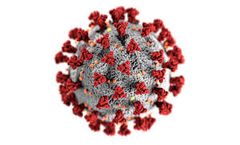
Benefits Removes ultra fine dust quickly and efficiently 99% filtration efficiency Captures and inactivates viruses Particularly low energy consumption Outperforms HEPA technology Lower absenteeism due to healthy indoor air No risk of fungal or bacterial growth as in textile or paper filters Easily movable Does not affect the indoor climate Low maintenance costs Low ...

The devices are now available in Louisiana to keep schools and other public spaces safe. The devices use HEPA (high efficiency particulate air) filtration technology that is designed to capture 99.97% of all air particles, with added UV-C light that sterilizes viruses, mold or other dangerous particles in the air or on ...
ByAMPOL
The novel coronavirus continues to present a threat to business operations. Under the “new normal,” it’s crucial to implement higher levels of sanitation and ensure that your business can safely open. Unfortunately, there is a lot of misinformation spreading about both the virus itself and how to prevent its transmission. Here is a thorough overview of how to create an effective ...
ByAMPOL
The CDC guidelines for isolation spaces include a minimum of 12 air changes per hour, a minimum negative pressure delta of 0.01” with the surrounding space, and a significant reduction in particles (0.5 μm and larger) via use of a HEPA filter. The objective of this study was to show how a portable isolation unit can dramatically reduce particle counts inside surge ...
Electric air purification also removes ultrafine particles Indoor air can be effectively purified, and the number of airborne viruses can be significantly reduced. Conventional HEPA and ULPA air purifiers, based on fibre filters, pick up the largest particles in the air well. ...

AG Industries provides a critical component for this device – a HEPA filter that provides bacterial and viral protection so that the air that patients breathe is safe. ...
Some applications will require a higher level of filtration consisting of a 2 stage pre-filtration (usually a G4 panel then an F8 panel) followed by a 2 stage HEPA filtration section all with Safe Change capabilities. In other applications a Safe Change function is not required if the contaminant is not toxic and an in-line HEPA might be the most suitable ...
Offices—even hospitals—don’t have HEPA filters in their air handlers. Likely the filters will remove some pollen but not all. ...
The amount of silica in the air can be reduced by using a water spray or by collecting the dust as it forms with a HEPA vacuum. In many cases respiratory protection such as a NIOSH/MSHA approved dust mask is still needed. ...