
Refine by
Implant Materials Articles & Analysis
18 articles found
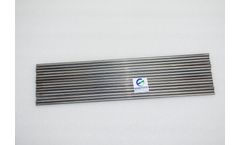
• Biocompatibility Nitinol is biocompatible and has corrosion resistance similar to other implant materials. • Fatigue resistance Nitinol stents are fatigue resistant and can withstand large recoverable strains. ...
The Evolution of Orthopedic Implants with Nitinol Technology Orthopedic surgery has undergone remarkable advancements, particularly in spine, foot, and ankle procedures. Traditional rigid implants are being replaced by innovative materials that enhance patient outcomes—and Nitinol, a shape-memory alloy, is leading this transformation. ...

Advantages of Bioglass l Bioactivity: The most significant advantage of bioglass is its ability to bond with living tissue. This makes it an excellent material for implants and prosthetics, as it can integrate seamlessly with the body. ...
ByMatexcel

Posterolateral Rabbit Spinal Fusion Study I. Introduction Autologous bone has long been the gold standard for bone graft substitute in spinal fusion procedures. The limited supply and morbidity associated with using autologous graft material led to the development of alternative bone grafting materials. Bioactive glass has a long history of biomedical use and has been shown to facilitate mineral ...
What is biofilm? Biofilms are defined as communities of micro-organisms attached to a surface, or one another, and encased within a matrix of extracellular polymeric substance (EPS). The EPS makes up the largest component of the biofilm, and in the biological environment is generally composed of polysaccharides, proteins, glycolipids, blood products, cellular debris, extracellular enzymes, metal ...

What are Biocompatible Materials in 3D Printing? Biocompatible materials play a crucial role in various applications, particularly in the biomedical field. ...
Compared with the traditional stainless steel metal materials, polylactic acid materials avoid the secondary surgery to remove the fixed material after healing due to the biodegradability and absorbability of lactic acid material. ...
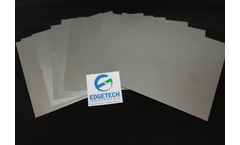
Titanium and its alloys have many advantages as surgical implant materials, such as low density, high strength, good toughness, good biocompatibility, non-toxicity, low elastic modulus, good corrosion resistance, and low X-ray absorption rate Etc., thus occupying an increasingly important position in medical metal materials. Titanium and its ...

Two weeks later, the implant sites were scored for abscess formation and explanted materials were halved for quantification of microbial recovery and histological analyses. ...

Osteogenesis, or new bone formation, begins in the early stages of embryonic development and continues postnatally until skeletal maturity is reached in early adulthood. Osteogenesis reoccurs in the event of bone trauma, such as a fracture or surgically created defect. Bone mass can also increase in response to chronic weight bearing from daily use or decrease due to a lack of movement or applied ...

Ryan Pawell is the founder and CEO of Indee Labs, a Berkeley biotech. The mission of Indee Labs is to use microfluidic vortex shedding as a scalable method to deliver CRISPR reagents into cells for developing affordable cell and gene therapies in the future. In our previous blog post, we summarized the work from their latest publication on CRISPR-editing in T cells using microfluidic devices. In ...
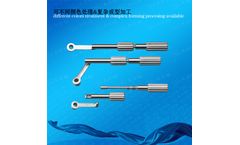
Description Application domain: Implant Material: Ultra high anti-rust & high-hardness stainless steel, titanium, titanium alloy, high anti-rust stainless steel Type: Open type, closed type LZQ is an OEM factory for all kinds of dental implant wrenches, such as, Drill Key,Parallel Pin, Wrench , Screwdriver, Tap, Lance Drill, etc. ...
In the chemical industry, niobium is a high-quality acid and liquid metal corrosion resistant material that can be used in cooking machines heaters and coolers. Based on its high transition temperature, niobium is the perfect material for superconducting cables and magnets. Based on its high level of biocompatibility, niobium is also used as a ...

We discuss the fabrication of flexible implantable probes for recording neuronal activity in the rat brain. We fabricated such probes bearing 12 platinum electrodes, using polyimide as a substrate and SU–8 as an insulation layer. ...
Mixing techniques used to reduce porosity in bone cement demonstrate large improvements in fatigue behaviour in test specimens, but do not appear to reduce the rate of loosening of implants in vivo. We examined data showing the effect of notches on fatigue strength and found, surprisingly, that notches with low stress-concentration factors (Kt Keywords: mixing technique, fatigue ...

One of the obstacles that an MRI Technologist endures is that some implanted materials that have been considered safe for many years are now contraindicated on a 3T system. ...
Implant materials composed of hard and soft phases (composite materials) have shown much promise for total bone replacement. ...
Titanium may be considered a relatively new engineering material. It was discovered much later than the other commonly used metals, its commercial application starting in the late 1940s. Its usage as an implant material began in the 1960s, despite the fact that titanium exhibits superior corrosion resistance and tissue acceptance when compared ...