
Refine by
Printing Pro Solution Articles & Analysis
5 articles found
Every business owner in Pakistan has been facing the same problem for years: rising electricity bills month after month and voltage fluctuations that put sensitive machinery at risk. Alpha Solar experts have spoken with hundreds of factory managers and shop owners over the years, and the frustration is the same every time. You try to grow your business, but the power situation refuses to ...

Introduction Microarray printing technology has revolutionized the field of genomics and proteomics, and its application in glycobiology is no exception. Glycobiology, the study of carbohydrates and their biological functions, relies heavily on the ability to analyze large-scale carbohydrate interactions. Microarray printing in glycobiology enables the precise and high-throughput analysis of ...

Bio-ink is a revolutionary material that is rapidly changing the fields of medicine, tissue engineering, and even bioprinting food. This fascinating substance is essentially a type of ink made from living cells and other biocompatible materials that can be used to 3D print complex biological structures. What is Bio-Ink Made Of? The composition of bio-ink can vary depending on the desired ...
ByMatexcel

Developments in 3D printing have changed the prosthetics game forever. Through additive and 3D manufacturing technology, bionic hands can be made more durable and affordable than ever, providing users the prostheses they deserve. Even beyond price and durability, 3D printing offers so much more - which is why the Zeus is made using 3D printing technology. But, we know that there are still ...
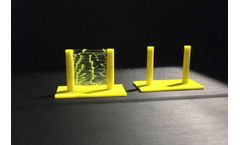
Space bio-3D printing from Human Cartilage to Thyroid Gland in Rodents and to Space Artificial Meat: SUNKYE Satisfies the Connection and Signal System of Bio-3D Printing in Micro-gravity Environment Space bio-3D printing may be a concept we've heard recently. But as with 3D printing technology, there was only a short accumulation before it happened! Do we need Space bio-3D printing? Can't we ...