
Self Expanding Stent Articles & Analysis
6 articles found
The tubing’s flexibility ensures smooth insertion while retaining the strength to resist kinking or collapsing. Stents: In the medical field, superelastic tubing is utilized to produce self-expanding stents that can be deployed inside blood vessels. Its superelastic nature allows the stent to return to its ...
The mesh design allows it to be folded and reduced in diameter, and then delivered to the blood vessels or digestive tract through a catheter, and released at the affected area, using its own superelastic self-expansion to be placed inside the duct. High-hardness cobalt-chromium alloy stents can be used for thinner blood vessels in the coronary arteries near the ...
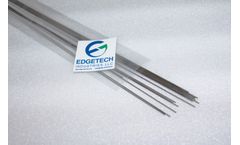
The Role of Nitinol Tubing in Medical Devices: Nitinol tubing is a critical component in various medical devices, including stents, guidewires, and catheters. Its ability to return to its original shape after deformation allows for minimally invasive procedures, reducing patient trauma and recovery time. Key Applications: Stents: Nitinol Tube is used in ...

Nitinol has been used to create self-expanding stents for treating blocked arteries, orthodontic wires, and shape memory alloys for the aerospace industry. ...

The new AV crossing devices and the use of direct fluoroscopic visualization instead of ultrasound are designed to avoid contrast injection and unnecessary manipulation in the tibial veins. Stent Graft Deployment The initial LimFlow System used a pin/pull stent graft delivery system for stent graft deployment. ...

Several options to treat US exist, including repeated dilatations, stents, and open surgery. A urethral stent is a good, minimally invasive option but has major limitations, such as stent migration, mucosal growth, and incontinence, especially for bladder-neck strictures. ...