
Sewage Articles & Analysis
30 articles found

While science and technology are highly developed, environmental purification, especially the purification of industrial wastewater and domestic sewage, has a very important significance as a measure to protect nature. ...
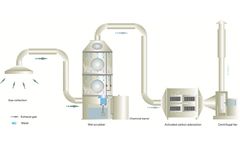
The bottom of the circulating water tank is provided with a sewage interface, and the saturated wastewater is discharged through the sewage pipeline to the owner's sewer pipeline for centralized treatment. ...

He was able to narrow the source to a sewage contaminated water pump on Broad Street. As science advanced, so too did testing of both water and wastewater. ...

Auxiliary process drainage: water, power equipment cooling water, circulating cooling water, system sewage, water ring vacuum equipment drainage, deionized water preparation process drainage, distillation (heating) equipment condensate, etc. ...

But aren’t PPCPs removed at a wastewater treatment plant? Unfortunately, conventional sewage treatment methods cannot thoroughly remove many PPCPs. But researchers say a new adsorbent membrane shows promise for purifying PPCP-contaminated water. ...

Project Description Abbeylands Nursing Home required a sewage treatment plant to maximise the cleaning of the wastewater for discharge to an adjoining stream. ...

The purpose of this study was to identify triclosan tolerant heterotrophic plate count (HPC) bacteria from sewage effluent and to determine cross-resistance to antibiotics. R2 agar supplemented with triclosan was utilised to isolate triclosan resistant bacteria and 16S rRNA gene sequencing was conducted to identify the isolates. ...

Chemical contaminants must be diluted to a ratio of 2,000 to 1 in order to be returned to the normal sewage system in accordance with UK fire service regulations. If this level of dilution cannot be guaranteed, the use of strip screens and water sumps allow you to collect the surplus water for safe and effective disposal and minimising ...

Among its multiple applications and due to its powerful oxidising nature, it is widely used forwater purificationin sewage treatment plants and as a disinfectant in other applications. In sewage treatment plants, instead of treating the water directly with chlorine gas,hypochlorite solutions are used that gradually release chlorine into the water and are capable ...
Therefore the population of total bacteria, Escherichia coli, enterococci and staphylococci during sewage treatment and in receiving river water was compared by agar plating and quantitative polymerase chain reaction (qPCR) assays. ...
The retention of paracetamol on the dehydrated sewage sludge and on Posidonia oceanica showed a relatively significant adsorption with a maximal quantity of 0.956 mg g−1 and 1.638 mg g−1 for the dehydrate sludge and P. oceanica, respectively. ...
Pilot tests as basis for the design, implementation and operation of a future full-scale oxidation plant completing the existing sewage treatment in Linköping, Sweden, were performed. Using an ozonation step between bio-sedimentation and post-denitrification processes, the primary goal was the removal of the highest priority substances to effluent water levels that will not ...
This study suggests that the CBZ and CTMT can be considered as suitable chemical sewage indicators based on their low sorption affinity and high resistance to biodegradation. ...
Rhodospirillum rubrum has the potential for biomass resource recycling combined with sewage purification. However, low biomass production and yield restricts the potential for sewage purification. ...

Following a review of Chinese data on estrogen discharge from a range of sewage treatment plants, low, median and high discharge rates were identified and used as best, expected and worst case scenarios, respectively. ...
Concentrations and percent loadings of pharmaceutically‐active compounds (PhACs) and other emerging contaminants (ECs) released from healthcare facilities (2 hospitals and a long‐term‐care facility) to a sewage treatment plant (STP) in a large urban sewershed was evaluated. ...
This study showcases (1) the variation of antibiotics in sanitary sewage depending on different timescales and (2) a method to assess the antibiotic resistance based on an inhibition test. ...
The C(t) values observed for a 2-log reduction of HEV were 0.41 in buffered demand-free water and 11.21 mg/L × min in the presence of 1% sewage. The results indicate that the inactivation kinetics of HEV and HAdV2 are equivalent and support the use of chlorine disinfection as an effective strategy to control HEV waterborne transmission. ...
(S)‐NAP was detected in influents and effluents of sewage treatment plants (STPs) located in the Tama River basin Tokyo at concentrations of 0.03–0.43 µg L−1 and 0.01–0.11 µg L−1, respectively. ...
They have been detected in wastewater, surface runoff, and effluents from sewage treatment plants. As such, they could potentially reach agriculture land through the application of municipal biosolids or reclaimed water. ...