
Stimulate Innate Immune Articles & Analysis
13 articles found

The field of immunology has experienced significant advancements over recent years, particularly in the area of recombinant vaccine production. This innovative approach has revolutionized the way vaccines are developed, manufactured, and administered, offering a promising alternative to traditional methods. By utilizing recombinant DNA technology, scientists can produce vaccines that are more ...

Adjuvants work by stimulating the innate immune system, which can lead to a stronger and longer-lasting immune response. ...

Poly(lactic-co-glycolic acid) (PLGA) is a functional polymer organic compound randomly polymerized by lactic acid (PLA) and glycolic acid (PGA). It has been approved by the U.S. Food and Drug Administration It is certified by the Food and Drug Administration (FDA) and is a copolymer material available on the market. PLGA has good biocompatibility, biodegradability, mechanical strength, good ...

Cytokines are a broad class of tiny proteins that are essential for controlling inflammation and immunological responses. Numerous cell types, including fibroblasts, endothelial cells, immunological cells, and epithelial cells, produce these signaling molecules. Serving as intermediaries, they synchronize various cell functions to elicit the body's defense mechanisms against infections, tissue ...

Among them, adjuvants play a crucial role in enhancing the immune response to vaccines, thereby increasing their effectiveness, notably as carriers, depots and stimulators of the immune response. Mechanism of Vaccine Adjuvants Vaccine excipients, including adjuvants, are added to vaccine formulations to enhance the immune ...
Scientists at the Scripps Research Institute have found that the immune protein CSF1 may cause anxiety during alcohol withdrawal. Some nuclei have the corticotropin-releasing factor receptor 1 crhr1 gene, and the glutamate transporter slc17a7 gene, but the glutamate decarboxylase gene gad2 does not, suggesting that they mainly constitute an excitatory population in the medial prefrontal cortex. ...
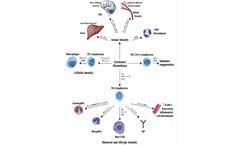
Cytokines are a class of small molecule proteins secreted by cells that mediate and regulate immune processes, and they act in an autocrine, paracrine and endocrine manner. More than 200 types of human cytokines have been identified, which can be generally classified into interleukins, interferons, tumor necrosis factors, colony-stimulating factors, chemokines, growth factors, etc. according to ...
Researchers at the Children's Hospital of Philadelphia (CHOP) have made a breakthrough in the treatment of aggressive solid cancers, and they have developed a new cancer treatment that targets proteins within tumor cells that are essential for tumor growth and survival, but this has not been possible before. Using the power of large data and advanced computational methods, researchers can ...

Natural killer (NK) cells are a distinct lineage of lymphocytes that mediate cytotoxic activity and secrete cytokines upon immune stimulation. CD94 (Group of Differentiation 94), also known as Killer cell lectin-like receptor subfamily D member 1 (KLRD1), is expressed on the surface of natural killer cells in the innate immune ...
It is certain that RNA therapy is no longer a no-man's land for medical innovation. Not only have several products been launched and received good market response, but there are also many pipelines in the research and development side to advance to the middle and late clinical stage, and behind the boom are the technological breakthroughs of scientists. There are three key points in the ...

Researchers have delved further into our understanding of coronavirus, while the race to develop a vaccine continues. New advances in coronavirus understanding New research has put paid to some of the conspiracy theories surrounding coronavirus. A team comprising researchers from both the US, Australia and the UK has analyzed the receptor-binding domain (RBD) and the cleavage site present on ...

Many of the heparin dependent antibodies, including those with the IgG isotype, are asymptomatic, and only a subgroup of antibodies is positive in platelet activation assays. What differentiates pathogenic from asymptomatic antibodies is not fully understood, with the exception that there is some relationship between antibody concentration and occurrence of HIT, and that antibodies with the ...

Single and fractionated Whole-Body Irradiation (WBI) of the BALB/c mice with total doses of 0.1 or 0.2 Gy X-rays led to reductions in the number of pulmonary tumour colonies. Single and fractionated WBI with 0.1 or 0.2 Gy, as well as the fractionated exposure to 1.0 Gy X-rays, significantly stimulated: the cytotoxicity of macrophages (Mφ) and Natural Killer (NK) cells mediated mainly by ...