
Tumor Necrosis Articles & Analysis
27 articles found

Simple Summary The present study investigated possible administration of pectin derived from apple pomace as a beneficial and cost-effective feed additive to be used in trout culture. To achieve the aim, a range of parameters were measured including immune parameters (both at physiological and molecular levels), growth performance and digestive enzyme activity. The results showed promising ...
Some of the primary classes include interleukins (IL), interferons (IFN), tumor necrosis factors (TNF), colony-stimulating factors (CSF), chemokines, and growth factors (GF). ...
Th17 cells can secrete cytokines such as IL-17, IL-6, IL-21, IL-22 and tumor necrosis factor-alpha, of which IL-17 is the most important cytokine. ...

Upon activation, it potentiates the production of pro-inflammatory cytokines, such as tumor necrosis factor-alpha (TNF-α), interleukin-1 beta (IL-1β), and interleukin-6 (IL-6), thereby exacerbating the inflammatory cascade. ...

Because nanobodies are smaller in size and have stronger tumor tissue penetration capabilities, researchers are currently applying them to ADC drugs for the treatment of solid tumors, hoping to improve the solid tumor tissue penetration effects of current ADC drugs.Nanobody StructureGenerally, the relative molecular mass of nanobodies is about ...
NIR-PIT drugs can form a new targeted anti-tumor platform that irradiates infrared light to the tumor site through the device. ...
They induce an antiviral state in neighboring cells, hindering viral replication. Tumor Necrosis Factors (TNFs): TNFs are potent proinflammatory cytokines that are involved in a variety of immune responses, including inflammation, apoptosis, and cell differentiation. ...
It is a new type of precision targeted therapy for the treatment of tumors. Compared with traditional chemotherapy and hematopoietic stem cell transplantation, it is more precise in killing tumor cells and significantly reduces toxic side effects while improving efficacy. ...

Then, cells were stimulated by the addition of tumor necrosis factor alpha (TNF-α) (Sigma-Aldrich, St. Louis, Missouri, USA) for 30 min at 37°C, 5% CO2, followed by treatment with different zapnometinib concentrations and a DMSO (solvent) control for 1 h. ...
With Luminex xMAP technology, various cytokines such as interleukin, interferon, tumor necrosis factor, colony-stimulating factor, chemokine, and growth factor can be detected. ...
Cytokine Classification Cytokines are categorized into various subtypes, including interleukins (IL), interferons (IFN), tumor necrosis factor (TNF), colony-stimulating factor (CSF), chemokines, and growth factors (GF). ...

Other studies suggest that IL-17D is associated with viral and tumor diseases, especially through the recruitment of natural killer cells (NK cells). However, current data regarding IL-17D in the development of tumors are contradictory. In animal models, the absence of IL-17D leads to a higher susceptibility to viruses [3]. ...
Classification and function Cytokines can be classified into different groups based on their functions, including: interleukin (IL), interferon (IFN), tumor necrosis factor (TNF), colony stimulating factor (CSF), chemokine family, growth factor (GF), and TGF-β family. ...
TSLP and TH2 In allergic inflammation, TSLP can strongly activate DCs (dendritic cells), which subsequently drive the development of naive TH cells into "inflammatory" effector TH2 cells that express classical TH2 cytokines, pro-inflammatory tumor necrosis factor-alpha (TNF-α), and anti-inflammatory IL-10. ...
Cytokines are small soluble proteins that are secreted by immune cells and tissue cells to play a regulatory role between cells, including interferon (IFN), interleukin (IL), chemokines, colony-stimulating factors (CSF), tumor necrosis factors (TNF) and so on. Cytokines function in autocrine, paracrine or endocrine forms, and can regulate cell growth and ...
It promotes neutrophil development and maturation and stimulates the production of inflammatory transmitters such as IL-6, IL-8, granulocyte colony-stimulating factor and prostaglandin E2 (PGE2) by epithelial cells, endothelial cells, macrophages and fibroblasts, and increases the expression of ICAM-1 on the surface of fibroblasts. Tumor necrosis factor-α ...

Tumor Necrosis Factor Alpha (TNF-a) is a potent cytokine that is over-expressed by cells during chronic intestinal inflammation. ...
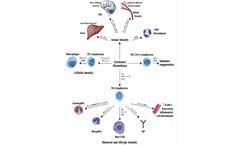
More than 200 types of human cytokines have been identified, which can be generally classified into interleukins, interferons, tumor necrosis factors, colony-stimulating factors, chemokines, growth factors, etc. according to their structure as well as function. ...

One of the proposed mechanisms for the progression of ALDs is binding of LPS to Toll-like receptor 4 (TLR4) in both Kupffer cells and hepatic stellate cells in the liver, which results in increased hepatic pro-inflammatory cytokines, such as tumor necrosis factor-α (TNF-α) and interleukin-1β (IL-1β) (Louvet and Mathurin, 2015, Paik et al., ...

Using a red fluorescence fusion protein, we localized AfMnt1 in compact, brefeldin A-sensitive organelles that most likely represent fungal Golgi equivalents. The tumor necrosis factor alpha response of murine macrophages to hyphae was not affected by the lack of the afmnt1 gene, but the corresponding mutant was attenuated in a mouse model of infection. ...