
Vegf Articles & Analysis
11 articles found

For example, vascular endothelial growth factor (VEGF) levels are commonly monitored in angiogenesis research, while transforming growth factor-beta (TGF-β) can indicate fibrotic or tumorigenic activity. ...
Growth factors such as epidermal growth factor (EGF), basic fibroblast growth factor (bFGF), keratinocyte growth factor (KGF), vascular endothelial growth factor (VEGF), insulin-like growth factor (IGF), and fibroblast growth factor (FGF) are commonly used in aesthetic applications to promote skin regeneration and repair. ...

It promotes tumor cell proliferation by regulating the cell cycle, apoptosis, and signaling pathways like EGFR, β-catenin/cyclin D1, VEGF, and AKT/ERK[18]. Interestingly, CD73, aside from its enzymatic function, also facilitates cell-to-cell adhesion, migration, invasion of cancer cells, and promotes stemness[19]. ...
Growth cytokines, such as EGF, bFGF, KGF, VEGF, IGF, and FGF, play a significant role in bio-aesthetic applications, contributing to tissue regeneration and ...

Vascular endothelial growth factor (VEGF) is a marker of angiogenesis. VEGF stimulates hair growth and increases the diameter of hair follicles by promoting the supply of nutrients in the hair follicles. Minoxidil can promote hair growth by up-regulating the expression of VEGF in dermal papilla cells. 3. Open the ATP potassium channel Potassium ...
As the tumor continues to grow, nearby blood vessels also undergo rapid and chaotic growth, with these newly formed capillaries appearing disorganized, much like the tumor itself. About VEGF Vascular Endothelial Growth Factor (VEGF) is a highly biologically active functional glycoprotein. ...
A study conducted under the Lung Cancer Master Protocol (Lung-MAP) found that when treated with a combination of ramuzumab (Cyramza) and Keytruda, Patients with advanced NSCLC whose cancer progressed during prior immunotherapy lived significantly longer than when treated with one of the current standard therapies for this cancer. The hazard ratio (80% confidence interval) for overall survival ...

The combination of MMP14-APEC with anti-VEGF antibody and immune checkpoint inhibitors dramatically reduced tumor growth and extended survival in the PDX model of colorectal cancer in mice (80% vs 0). ...
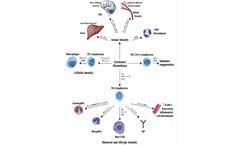
Growth factor (GF) is a group of cytokines that promote the growth and differentiation of corresponding cells, such as nerve growth factor (NGF), vascular endothelial growth factor (VEGF), epidermal growth factor (EGF), fibroblast growth factor (FGF), transforming growth factor-β (TGF-β), etc. ...

We analyzed mice deficient in both of the known VEGFR-3 ligands, VEGF-C and VEGF-D. Unlike the Vegfr3–/– embryos, the Vegfc–/–; Vegfd–/– embryos displayed normal blood vasculature after embryonic day 9.5. ...

Ebola Virus (EBOV) presents a challenge for vaccine development because immune correlates of protection in humans are not well known. In earlier studies we developed a concept of local similarity which refers to resemblance of structural patterns of unrelated proteins as a function of their amino acid composition. The search for local similarities between human and EBOV proteins was performed. ...