
- Home
- Articles
- north america
- dna binding
Refine by
Dna Binding Articles & Analysis
20 articles found

Understanding sgRNAs sgRNAs are short RNA sequences that guide the Cas9 protein to the target DNA. Typically, they consist of approximately twenty nucleotides complementary to the target DNA sequence, paired with a scaffold region that recognizes and binds to Cas9. ...

The classic example is in gene expression. Histone proteins, which package DNA into chromatin, are rich in lysine residues. The acetylation of these lysines reduces the histones' affinity for the negatively charged DNA, leading to a more relaxed, open chromatin structure. This "euchromatin" state allows transcription factors and RNA polymerase to access the ...
It is widely used in the separation of monoclonal antibodies and polyclonal antibodies, the separation of fusion proteins, the separation of enzymes, and the separation of DNA binding proteins. Creative Proteomics can provide customers with vaccine characterization services, including vaccine identification, vaccine purity analysis, modification analysis, and ...

The antibody will bind to a specific location on the DNA sequence, and then a technology called fluorescence labeling is used to label the antibody. When the fluorescently labeled antibody binds to the DNA, the DNA sequence can be accurately read by detecting changes in the fluorescent signal. ...

These yeast cells now contain the DNA sequence of interest linked to the reporter gene. Library Screening: A library of cDNA or genomic DNA encoding potential DNA-binding proteins is introduced into the yeast cells containing the bait-reporter construct. ...
It is widely used in the separation of monoclonal antibodies and polyclonal antibodies, the separation of fusion proteins, the separation of enzymes, and the separation of DNA binding proteins. Creative Proteomics can provide customers with vaccine characterization services, including vaccine identification, vaccine purity analysis, modification analysis, and ...
MST allows researchers to study these interactions in a label-free and non-destructive manner, providing valuable information about binding affinities, kinetics, and thermodynamics. DNA-Protein Interactions MST is also widely used to investigate the interactions between DNA and proteins. By measuring the binding affinity and ...

Introduction to Microbial Epigenetics Epigenetics has been defined as the study of stable alterations in gene expression potentials that arise during development and cell proliferation, or alterations in DNA function without alterations in DNA sequence. Modern epigenetic features refer to the alteration of DNA and/or associated proteins without ...

Mechanism of Action of Trofinetide Most cases of Rett syndrome are associated with loss-of-function mutations in the gene encoding methyl CpG-binding protein 2 (MECP2). MECP2 is a DNA-binding protein that plays a role in the epigenetic regulation of gene expression. ...

Fluorescent Microspheres for Nucleic Acid Detection Microspheres encoded with up-converting luminescent materials of different colors can be used to bind different reporter labels, and when bound to single-stranded DNA, the fluorescence intensity will be different. ...

The protein-DNA docking technique is a computational approach that involves predicting the binding mode and binding affinity of protein-DNA complexes. ...
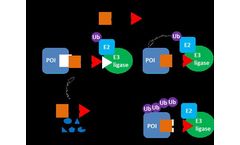
PROTAC is a heterobifunctional molecule with one end connected to a ligand that binds the target protein, one end to an E3 ubiquitin ligase, and a suitable Linker in the middle. ...
Single-nucleotide polymorphisms (SNPs) are a kind of DNA polymorphisms caused by single-nucleotide variants in both coding and non-coding regions, which are the most common and smallest variants. ...
Studies have shown that lncRNAs are quite complex in function and play an important role in various biological processes such as development, differentiation, proliferation, metastasis, apoptosis, stem cell pluripotency, and DNA damage. Therefore, those non-coding fragments in human genes are also vital and not the so-called "transcriptional noise". ...
GAL4 consists of two separate but functionally necessary domains, the DNA binding domain (DNA-BD) at the N-terminal and the activation domain (AD) at the C-terminal. DNA-BD can recognize the upstream activating sequence (UAS) located in GAL4-responsive gene (GAL4-responsivegene) and bind to it. ...

Second, we propose to deliver siRNA within DNA-wrapped RNA-containing nanoparticle formed by partial dsRNA-DNA triplex. The DNA core will be chemically modified to promote triplex formation/folding. ...

DDB1 was isolated as a UV-damaged DNA-binding protein, but recent studies established that it plays a role as a component of cullin 4A ubiquitin ligases. ...
Induction of the SCF promoter required the c-Jun DNA-binding domain. c-Jun bound to the SCF promoter in chromatin immunoprecipitation assays. Mutation of the c-Jun binding site abolished c-Jun-mediated induction of the SCF promoter. These studies demonstrate an essential role of c-Jun in cellular migration through induction of ...
The hallmarks of ALT in telomerase-negative cancer cells include a unique pattern of telomere length heterogeneity, rapid changes in individual telomere lengths, and the presence of ALT-associated promyelocytic leukemia bodies (APBs) containing telomeric DNA and proteins involved in telomere binding, DNA replication, and recombination. The ALT ...
Transcriptional activator proteins function by binding to specific DNA sequences and recruiting the transcriptional machinery to the promoters of genes under their control. ...