
Biofilm Articles & Analysis
29 news found

Exosomes are extracellular vesicles secreted by human cells that exhibit biofilm characteristics. They have a particle size of 30-150 nanometers. ...

” Ace Therapeutics’ vaccine development services leverage the latest research in immunology and microbiology to design and produce vaccines that target specific strains of superbugs including outer membrane proteins, bacterial toxins, biofilms, antibiotic-resistance genes, and quorum sensing. The company’s vaccine development capabilities span delivery system ...

The new enzyme product from Creative Enzymes is a unique blend of enzymes that work together to break down the biofilm that builds up on teeth and gums. Biofilm is a complex mixture of bacteria and other microorganisms that forms a sticky layer on the surface of teeth. This biofilm can lead to plaque formation, cavities, and other dental problems ...
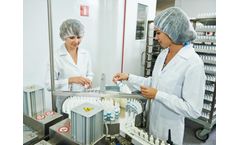
This new industrial wastewater treatment plant consists of a homogenisation basin in civil works, a Vespa dissolved air flotation unit, a moving bed biofilm reactor (MBBR) in civil works, a chlorination chamber, all the electromechanical elements necessary for the operation of the plant, hydraulic interconnection pipes and an electrical control panel with an automaton. ...
BySalher

The objectives of these studies were to further understand the mechanism of action of pravibismane, in both planktonic and biofilm phenotypes. Financial support for this study was provided by CARB-X. ...
Pravibismane exhibits broad-spectrum, potent in vitro activity against pathogens and their biofilms including MRSA, CRE, and multidrug resistant P. aeruginosa. ...

A research team in Zurich, Switzerland has presented results from an in vitro study showing that photodisinfection achieved >99.99% eradication (4-7 log10 kill) of the key pathogens in biofilms associated with implantable joint infections, with no reported regrowth. ...
“We have now shown that photodisinfection is capable of safely eliminating these ESKAPE microbes in minutes, without provoking resistance. We also demonstrated this in biofilm – the tough polymeric matrix surrounding bacterial colonies making them very difficult to attack, along with specialized dormant cells called persister cells that cause long term recalcitrant ...
“Our topical diabetic foot ulcer infection program is well aligned to the Navy’s interest in innovative wound care technologies to treat and prevent biofilm-related infections, since biofilm contamination is a hallmark characteristic of chronic foot ulcer infections. Further exploration of pravibismane’s safety and efficacy in overcoming ...

This patent covers the use of shockwaves to remove barnacles, algae, biofilms and other undesired materials from the hulls of ships, propellers, rudders, inlet ports for cooling of nuclear submarines, outlet ports, sonar housings, protective grills, and other structures that are submerged in salt or freshwater environments. ...

The proprietary technology allows for the creation of low-frequency ultrasound waves that can be utilized for a variety of medical applications, including for disruption of biofilms and bacterial colonization, as well as for pain relief. The Company’s primary products include PainShield® and UroShield®, which are portable devices suitable for administration at home ...
The proprietary technology allows for the creation of low-frequency ultrasound waves that can be utilized for a variety of medical applications, including for disruption of biofilms and bacterial colonization, as well as for pain relief. The devices can be administered at home without the assistance of medical professionals. ...

Besides microbial protein expression system services, Creative BioMart Microbe also provides microbial metabolite test services, microbial growth controlling service, bacterial plasmids isolation service, enzyme activity assay service and biofilms technical service for microbial physiology services. If you would like to know more, please visit ...

Army Medical Research and Development Command’s (USAMRDC) Military Infectious Diseases Research Program (MIDRP) to accelerate clinical development of an antibiofilm version of its next-generation Microlyte® Matrix wound dressing that can kill bacteria hidden in biofilms. The contract was awarded through Medical Technology Enterprise Consortium (MTEC) for prototype ...

Established in 2012, the Company’s primary focus is on the development and commercialisation of its proprietary XbioTM technology to reduce the impact of biofilm based infections in human health. XbioTM is a unique, non-toxic technology with proven efficacy in eradicating both biofilm based and free-floating bacteria. ...
XPERIENCE and SURGX are both powered by XBIO™ Technology, which disrupts the biofilm’s extracellular polymeric substance, making the bacteria within the biofilm more vulnerable to attack. Biofilms, which are powerful communities of bacteria that function as a single entity with behaviors and defenses, are a leading contributor to ...
BlastX™ is a breakthrough antimicrobial wound gel that is powered by Next Science’s patented, non-toxic, biofilm-disruption Xbio™ technology. BlastX™ breaks down biofilm, destroys bacteria within the gel and defends against reinfection. Biofilm, which is a naturally occurring substance, accounts for a significant ...

Within hours, these tubes become breeding grounds for biofilms, pathogenic bacteria, fungi and viruses. This often leads to deadly secondary infections that can be multidrug resistant, and other complications. ...

Biofilm creation - among others - is one of the most important factors linked to infections and almost the only one that can be measured through simulation. T-Control demonstrated superiority vs gold standard, i.e. significant differences were observed between the biofilm quantity generated on the product´s surface. This result reinforces the hypothesis ...
In contrast, conventional endotracheal tubes allow pathogenic bacteria to grow on the tube surfaces within hours and form slime-like aggregations of millions of pathogenic cells as a biofilm. In the 1918 influenza pandemic, 95% of influenza patient deaths were caused by secondary bacterial infections. ...