
Contaminated Soil Articles & Analysis
14 news found

Histoplasma capsulatum lives in the environment, particularly in soil or other materials that contain large amounts of bird droppings or bat guano. The Centers for Disease Control and Prevention (CDC) reports that Histoplasma spores circulate in the air after contaminated soil or materials are disturbed. When people breathe in the spores, they ...

The fungus lives in the environment, particularly in soil or other materials that contain large amounts of bird or bat droppings. ...

VOCs are organic chemicals that easily evaporate into the air from liquids and some solids. These chemical contaminants are commonly found in office, school, industrial, and residential environments, and can be a source of irritating odors and even health concerns. ...

Sources of lead include housing contaminated with lead-based paint, soil contaminated by historical sources of lead including automobile gasoline and activities such as lead mining or smelting, drinking water lead service lines, and lead in household plumbing materials. Children may also be exposed to lead through ingestion of ...

The multi-purpose BioHoop is perfect for safely collecting emesis, urine, soiled dressings, and any contaminated on-scene equipment, like laryngoscope blades or airway management products. ...
“Imagine if a public toilet was your only sanitation option. In the best of times it’s a scary and unpleasant choice. Now imagine being asked to stay home when you don’t have a toilet in-house.” Journalist and Co-Founder of SEE Change Magazine, Elisa Birnbaum, spent some time last month speaking with SOIL’s own Sasha Kramer about the impact the coronavirus pandemic ...
Pollution in the air, water, soil and in the workplace is linked to an estimated nine million deaths each year worldwide – equivalent to one in six (16%) of all deaths, according to a ground-breaking new report in the leading medical journal The Lancet. In the EU alone, pollution causes more than 400,000 deaths which represents 7.8% of all deaths. Most of these deaths are due to ...
Since then, through EPA, state, and tribal cleanup activities, lead-contaminated soil has been removed from 2,887 residential yards and public properties in the area. ...
The second phase will include an assessment of the nature and extent of non-containerized hazardous substances, including radiological contamination. Preliminary screening of soils at the back door of the lab facility has detected beta radiation at elevated levels. ...
This assessment will also allow for a better understanding of the risks posed to communities from exposure to TCE in soil, water and air. It will provide federal, state, local and other policy makers with the latest scientific information to make decisions about cleanup and other actions to protect people's health. ...
The spores from C. neoformans live in bird droppings, especially pigeon droppings, and in soil contaminated with bird droppings. Humans can get cryptococcal infections by the inhalation of airborne fungi which are spread from these sources. ...
Cryptococcus is a fungus that is found in the soil, usually in association with bird droppings. The major species of Cryptococcus that causes illness in human is Cryptococcus neoformans, which is found worldwide. ...

Its organic ingredient purchases keep over 180,000 farm acres free of toxic, persistent pesticides and chemical fertilizers that can contaminate soil, rivers and drinking water. To help reduce climate change, Stonyfield offsets all of the C02 emissions generated from its facility energy use. ...
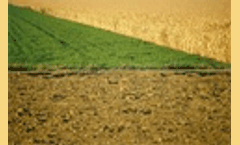
Soil respiration (SR) plays a major role in moving carbon from the ecosystem to the atmosphere. Converting land for agricultural use accelerates CO2 emissions via SR. Planting trees (afforestation) has been heralded as a potential climate change mitigation approach. However, new research suggests that the effects of agricultural practices on peatland remain for decades and can continue to ...